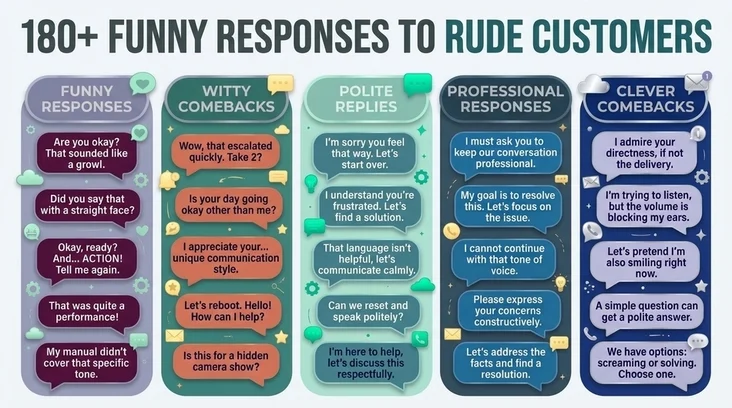
The best funny responses to rude customers are witty, calm, and professional without making a difficult situation worse. Whether you’re dealing with an impatient shopper, an angry client, or someone being unnecessarily disrespectful, the right words can help you handle the moment with confidence.
Top alternatives: I appreciate your enthusiasm, Let’s keep things friendly, Customer service isn’t a wrestling match, I’m happy to help when you’re ready, Let’s try that again politely.
Dealing with rude customers is never anyone’s favorite part of the job. Whether you’re working in retail, handling customer service calls, responding to difficult emails, or managing complaints in person, some people seem determined to test your patience. One minute you’re having a perfectly normal day, and the next, someone is treating you like you personally invented their problem. That’s where funny responses to rude customers can make a difference. A clever reply can lighten the mood, set boundaries, and help you stay confident without turning a small disagreement into a workplace drama. Of course, not every situation calls for humor, especially when emotions are running high.
The trick is knowing when to use a little wit and when to keep things strictly professional. Here are some fresh, funny, polite, and clever responses to help you handle difficult customers without losing your cool.
1. Funny Responses to Rude Customers
Sometimes, a little humor can take the tension out of an uncomfortable customer interaction. These replies are playful enough to make a point without unnecessarily escalating the situation.
- I see we’re bringing extra energy to the conversation today.
Example: Use this when a customer approaches you with an unnecessarily aggressive attitude.
Meaning: It humorously acknowledges their mood without directly insulting them. - Let’s keep the drama for the weekend.
Example: Use this when a customer makes a minor issue unnecessarily dramatic.
Meaning: It encourages a calmer approach with a playful touch. - I promise the solution is friendlier than the problem.
Example: Use this when someone complains before allowing you to explain the solution.
Meaning: It shifts attention from frustration toward resolving the issue. - My customer service smile is working overtime today.
Example: Use this when a difficult interaction is testing your patience.
Meaning: It expresses frustration through lighthearted humor. - Let’s make this conversation a little less spicy.
Example: Use this when a customer starts raising their voice.
Meaning: It suggests lowering the tension without sounding confrontational. - I came prepared with solutions, not a boxing ring.
Example: Use this when someone treats a simple complaint like a personal battle.
Meaning: It reminds them that the purpose of the interaction is problem-solving. - We’re both here for a happy ending, right?
Example: Use this when trying to turn a tense complaint into a productive discussion.
Meaning: It encourages cooperation and a positive outcome. - Let’s not make a small problem the main character.
Example: Use this when someone is exaggerating a relatively minor inconvenience.
Meaning: It gently encourages perspective. - My patience has a customer loyalty program.
Example: Use this when someone repeatedly tests your patience.
Meaning: It turns an irritating situation into a playful joke. - I think we could both use a commercial break.
Example: Use this when a conversation becomes unnecessarily heated.
Meaning: It suggests taking a moment to reset. - Good news, we can solve problems without special effects.
Example: Use this when someone makes a complaint overly dramatic.
Meaning: It encourages a straightforward approach. - Let’s turn this customer service episode into a success story.
Example: Use this when redirecting an unhappy customer toward a solution.
Meaning: It communicates optimism and a willingness to help.
2. Sarcastic Responses to Rude Customers
A little sarcasm can communicate that someone’s attitude is unnecessary. Keep these replies light and controlled, especially when speaking with customers in a professional setting.
- Well, that’s certainly one way to start a conversation.
Example: Use this when a customer opens with a rude remark.
Meaning: It subtly points out their poor approach. - I can see politeness took the day off.
Example: Use this when someone speaks disrespectfully.
Meaning: It humorously highlights the lack of courtesy. - That’s quite an introduction.
Example: Use this when a customer begins an interaction by complaining aggressively.
Meaning: It expresses surprise at their approach. - Let’s add a little kindness to the shopping experience.
Example: Use this when someone is being unnecessarily unpleasant in a store.
Meaning: It encourages better behavior. - I didn’t realize we were having a competition in frustration.
Example: Use this when a customer turns a simple disagreement into an argument.
Meaning: It points out the unnecessary tension. - Your enthusiasm is definitely unforgettable.
Example: Use this when someone expresses dissatisfaction in an exaggerated way.
Meaning: It acknowledges their strong reaction with subtle sarcasm. - That was an interesting choice of words.
Example: Use this when a customer makes a disrespectful comment.
Meaning: It signals that their language was inappropriate. - Let’s try the conversation without the extra attitude.
Example: Use this when someone repeatedly interrupts or speaks rudely.
Meaning: It asks them to communicate more respectfully. - I appreciate the enthusiasm, even if the delivery needs work.
Example: Use this when someone makes a complaint with an unnecessarily harsh tone.
Meaning: It separates their concern from their attitude. - Well, this conversation certainly has personality.
Example: Use this when a customer makes an ordinary interaction unnecessarily uncomfortable.
Meaning: It uses humor to acknowledge the unusual situation. - We can disagree without making it a performance.
Example: Use this when someone is arguing loudly in front of others.
Meaning: It encourages a more mature conversation. - Let’s save the dramatic commentary for another occasion.
Example: Use this when someone exaggerates every detail of a complaint.
Meaning: It suggests focusing on facts rather than unnecessary drama.
3. Polite Responses to Rude Customers
Being polite doesn’t mean accepting disrespect. These responses help you maintain good manners while making it clear that respectful communication matters.
- I’d be happy to help if we can keep things respectful.
Example: Use this when a customer speaks rudely while requesting assistance.
Meaning: It establishes a polite boundary while offering help. - Let’s work together to find the best solution.
Example: Use this when a disagreement is preventing progress.
Meaning: It encourages cooperation instead of confrontation. - I understand your frustration, and I’m listening.
Example: Use this when someone is upset about a service issue.
Meaning: It acknowledges their feelings without agreeing with disrespectful behavior. - Thank you for sharing your concern. Let’s address it calmly.
Example: Use this when a customer makes an emotional complaint.
Meaning: It redirects the conversation toward a constructive discussion. - I appreciate your patience while we work through this.
Example: Use this when someone becomes impatient during a resolution process.
Meaning: It encourages understanding and cooperation. - Your concern matters, and I’d like to understand it better.
Example: Use this when a customer feels ignored or misunderstood.
Meaning: It shows that their issue deserves attention. - Let’s focus on what we can do to make this right.
Example: Use this when a customer keeps repeating their frustration.
Meaning: It moves the conversation toward practical solutions. - I’m here to help, not to make things more difficult.
Example: Use this when someone assumes you’re unwilling to assist.
Meaning: It communicates your helpful intentions. - I respect your opinion, and I hope we can keep the discussion respectful.
Example: Use this when a customer expresses disagreement rudely.
Meaning: It acknowledges different opinions while setting a boundary. - Let’s take this one step at a time.
Example: Use this when a customer becomes overwhelmed by a complicated issue.
Meaning: It encourages patience and clear communication. - I’d like to resolve this in a way that works for everyone.
Example: Use this when negotiating a solution with an unhappy customer.
Meaning: It demonstrates fairness and professionalism. - Thank you for giving me the opportunity to help.
Example: Use this when you want to reset an uncomfortable interaction.
Meaning: It introduces a positive tone and encourages cooperation.
4. Professional Responses to Rude Customers
Professional communication is especially important when dealing with clients, customers, business partners, and workplace complaints. These replies help you stay composed without sounding weak.
- I’d appreciate the opportunity to address your concern professionally.
Example: Use this when a customer makes personal remarks during a business interaction.
Meaning: It brings the discussion back to professional communication. - Let’s focus on the issue so I can assist you effectively.
Example: Use this when a customer repeatedly changes the subject to criticize you.
Meaning: It keeps attention on the actual problem. - I understand your expectations, and I’ll explain the available options.
Example: Use this when a customer demands something outside company policy.
Meaning: It acknowledges their expectations while offering realistic choices. - I’m happy to continue once we can communicate respectfully.
Example: Use this when a customer becomes verbally aggressive.
Meaning: It sets a clear professional boundary. - Let’s review the facts before reaching a conclusion.
Example: Use this when someone makes accusations without understanding the situation.
Meaning: It encourages a fair and evidence-based discussion. - I want to make sure we’re working toward the same outcome.
Example: Use this when a disagreement creates confusion about the next steps.
Meaning: It emphasizes shared goals. - I can explain the policy and the alternatives available to you.
Example: Use this when someone refuses to accept a company rule.
Meaning: It communicates transparency and willingness to assist. - Your feedback is important, and I’ll make sure it’s addressed appropriately.
Example: Use this when handling a formal complaint.
Meaning: It shows that the concern is being taken seriously. - Let’s keep our discussion constructive and solution-focused.
Example: Use this when a customer becomes argumentative during a meeting.
Meaning: It encourages professional behavior. - I can assist with the matter, but personal remarks aren’t necessary.
Example: Use this when a customer directs insulting comments toward you.
Meaning: It separates legitimate complaints from personal attacks. - I’ll do my best to clarify any misunderstanding.
Example: Use this when a customer believes they received incorrect information.
Meaning: It demonstrates accountability and a willingness to explain. - Let’s identify the next practical step to resolve this.
Example: Use this when a conversation is going in circles.
Meaning: It encourages action instead of continued disagreement.
5. Brutally Honest but Respectful Responses to Rude Customers
Sometimes, being direct is more effective than trying to make every difficult interaction funny. These responses communicate boundaries clearly without relying on personal insults.
- You can express dissatisfaction without disrespecting others.
Example: Use this when a customer confuses complaining with insulting staff.
Meaning: It makes the difference between feedback and disrespect clear. - I’m listening to your complaint, not accepting personal attacks.
Example: Use this when someone repeatedly makes insulting comments.
Meaning: It establishes a firm boundary. - Being upset doesn’t make disrespect acceptable.
Example: Use this when a customer uses frustration to justify rude behavior.
Meaning: It reminds them that emotions don’t excuse mistreatment. - Let’s discuss the problem rather than attack the person helping you.
Example: Use this when a customer directs anger toward an employee.
Meaning: It redirects attention toward the issue. - I can handle criticism, but I expect basic courtesy.
Example: Use this when receiving harsh feedback from a customer.
Meaning: It shows confidence while requesting respectful treatment. - A louder voice doesn’t change the facts.
Example: Use this when someone raises their voice to pressure you.
Meaning: It communicates that aggression won’t change the situation. - Respect works better than intimidation.
Example: Use this when someone tries to force an immediate response through threats or anger.
Meaning: It emphasizes the importance of mutual respect. - I won’t take your frustration personally, but I won’t ignore disrespect.
Example: Use this when someone repeatedly crosses professional boundaries.
Meaning: It balances emotional control with self-respect. - We can solve the issue without making it personal.
Example: Use this when a customer turns a service complaint into a personal argument.
Meaning: It encourages a more productive approach. - Your complaint deserves attention, and so does basic courtesy.
Example: Use this when someone demands assistance while insulting staff.
Meaning: It communicates that respect should go both ways. - I won’t argue, but I will explain the situation clearly.
Example: Use this when a customer wants to turn a discussion into an argument.
Meaning: It demonstrates confidence and emotional control. - Let’s be honest without being disrespectful.
Example: Use this when a customer uses blunt language to criticize your service.
Meaning: It supports honest communication while maintaining boundaries.
6. Witty Responses to Rude Customers
Witty replies are perfect when you want to make a point without delivering a long explanation. They add personality while keeping the conversation under control.
- I’m here to solve problems, not collect arguments.
Example: Use this when a customer keeps looking for something to disagree about.
Meaning: It communicates that your priority is finding a solution. - Let’s put our problem-solving hats on.
Example: Use this when a customer becomes unnecessarily argumentative.
Meaning: It encourages a practical and positive mindset. - I think we skipped the friendly introduction.
Example: Use this when someone starts a conversation with a rude comment.
Meaning: It gently highlights their lack of courtesy. - Let’s turn that complaint into a useful conversation.
Example: Use this when a customer repeatedly complains without explaining the issue.
Meaning: It encourages constructive feedback. - I have answers, not magic tricks, but let’s see what we can do.
Example: Use this when someone expects an impossible solution.
Meaning: It sets realistic expectations with humor. - A little teamwork could make this much easier.
Example: Use this when a customer refuses to cooperate.
Meaning: It encourages both sides to contribute to a solution. - Let’s not let one bad moment ruin the entire conversation.
Example: Use this when an interaction starts becoming unpleasant.
Meaning: It offers an opportunity to reset the mood. - I’ve got solutions on standby. Shall we use one?
Example: Use this when a customer keeps arguing instead of considering available options.
Meaning: It playfully redirects attention toward resolving the complaint. - We’re closer to a solution than you think.
Example: Use this when someone becomes impatient during troubleshooting.
Meaning: It provides reassurance and encourages patience. - Let’s give cooperation a chance.
Example: Use this when a customer refuses to listen to explanations.
Meaning: It encourages a more collaborative approach. - The goal is a solution, not a sequel to this argument.
Example: Use this when the same disagreement keeps repeating.
Meaning: It highlights the need to move forward. - I think a little clarity could save us both some time.
Example: Use this when a customer makes vague or confusing complaints.
Meaning: It encourages direct and useful communication.
7. Calm Responses to Angry Customers
When someone is already angry, humor and sarcasm may make things worse. A calm response can lower tension and show that you’re willing to listen.
- I can see that this situation has been frustrating for you.
Example: Use this when a customer expresses strong dissatisfaction.
Meaning: It acknowledges their frustration without escalating the situation. - Let’s take a moment and work through this together.
Example: Use this when someone becomes overwhelmed during a complaint.
Meaning: It encourages patience and cooperation. - I’m listening, and I want to understand what happened.
Example: Use this when a customer feels they haven’t been heard.
Meaning: It shows genuine attention and concern. - I understand this wasn’t the experience you expected.
Example: Use this when someone complains about poor service.
Meaning: It recognizes the gap between expectations and experience. - Let’s slow things down so nothing gets misunderstood.
Example: Use this when a conversation becomes heated.
Meaning: It encourages clear communication. - I’d like to help you get this sorted out.
Example: Use this when a customer is upset about an unresolved issue.
Meaning: It demonstrates a willingness to assist. - Thank you for explaining what went wrong.
Example: Use this when someone finally shares the details of a complaint.
Meaning: It acknowledges their effort to explain the problem. - Let’s look at the available options together.
Example: Use this when someone is unhappy with the initial solution.
Meaning: It promotes cooperation and informed decisions. - I understand why this matters to you.
Example: Use this when a customer is emotionally invested in a problem.
Meaning: It communicates empathy. - I’ll do what I can within the available guidelines.
Example: Use this when someone requests something you cannot fully provide.
Meaning: It sets realistic expectations. - We don’t have to agree immediately to find a solution.
Example: Use this when both sides have different opinions.
Meaning: It encourages patience and compromise. - Let’s focus on getting you the help you need.
Example: Use this when emotions are distracting from the original complaint.
Meaning: It brings the discussion back to the customer’s needs.
8. Confident Responses to Disrespectful Customers
Confidence helps you avoid taking every rude comment personally. These responses communicate self-respect while keeping the interaction under control.
- I’m confident we can handle this respectfully.
Example: Use this when someone questions your ability to assist them.
Meaning: It communicates confidence and professionalism. - I know how to help, and I’d be glad to show you.
Example: Use this when a customer doubts your knowledge.
Meaning: It demonstrates confidence without becoming defensive. - Let’s keep the conversation respectful and productive.
Example: Use this when someone repeatedly makes disrespectful remarks.
Meaning: It reinforces your expectations for communication. - I don’t need to argue to explain the facts.
Example: Use this when someone tries to provoke you into an argument.
Meaning: It shows emotional maturity and self-assurance. - I can remain professional without agreeing with everything.
Example: Use this when a customer expects you to accept every demand.
Meaning: It establishes that professionalism doesn’t mean automatic agreement. - My goal is to help, and that’s where my attention belongs.
Example: Use this when someone tries to distract you with personal criticism.
Meaning: It demonstrates focus and confidence. - I respect your concerns, and I expect the same courtesy.
Example: Use this when a customer speaks disrespectfully.
Meaning: It communicates the importance of mutual respect. - I can explain the situation clearly without raising my voice.
Example: Use this when someone tries to turn the discussion into a shouting match.
Meaning: It shows that calm communication is a strength. - Let’s not confuse confidence with confrontation.
Example: Use this when someone interprets your professional response as an attitude.
Meaning: It reinforces your right to communicate clearly. - I’m comfortable addressing the issue, not entertaining insults.
Example: Use this when a customer makes personal attacks.
Meaning: It separates problem-solving from disrespect. - I know my responsibilities, and I’ll handle them professionally.
Example: Use this when someone questions your work unfairly.
Meaning: It communicates competence and self-respect. - Respectful communication makes everything easier.
Example: Use this when a conversation needs a clear reminder about manners.
Meaning: It encourages a more positive interaction.
9. Funny Responses to Impatient Customers
Some customers want everything immediately, including things that take time. These playful replies can help address impatience without dismissing legitimate concerns.
- I wish I had a fast-forward button for this process.
Example: Use this when a customer wants a service completed instantly.
Meaning: It acknowledges their impatience with humor. - Good things take a little time, including great customer service.
Example: Use this when someone keeps asking for immediate results.
Meaning: It encourages patience while maintaining a positive tone. - My magic wand is currently unavailable.
Example: Use this when someone expects an instant solution to a complicated problem.
Meaning: It humorously communicates that some processes require time. - We’re moving as quickly as the system allows.
Example: Use this when a customer becomes impatient with a technical delay.
Meaning: It provides a straightforward explanation. - I promise the clock isn’t working against you personally.
Example: Use this when someone becomes frustrated by waiting.
Meaning: It uses gentle humor to ease tension. - Let’s give the process a chance to do its thing.
Example: Use this when someone repeatedly interrupts a necessary procedure.
Meaning: It encourages patience and cooperation. - We’re aiming for fast and correct, not fast and regrettable.
Example: Use this when a customer wants you to skip important steps.
Meaning: It explains why accuracy matters. - Even superheroes need a moment to complete their missions.
Example: Use this when someone expects an immediate outcome.
Meaning: It makes waiting feel less frustrating through humor. - I appreciate your enthusiasm for getting this done.
Example: Use this when someone keeps asking for updates.
Meaning: It acknowledges their urgency politely. - The solution is loading, not ignoring you.
Example: Use this when a technical process takes longer than expected.
Meaning: It reassures the customer that progress is happening. - Let’s not rush a good solution into becoming another problem.
Example: Use this when someone demands that you skip important checks.
Meaning: It highlights the value of doing things properly. - We’re making progress, one step at a time.
Example: Use this when a customer is frustrated by a lengthy process.
Meaning: It reassures them that their concern is being addressed.
10. Short and Clever Responses to Rude Customers
Sometimes, less is more. These quick replies are useful when you don’t want to spend your entire afternoon explaining basic manners.
- Let’s keep it respectful.
Example: Use this when someone makes an inappropriate remark.
Meaning: It establishes a simple boundary. - I’m here to help.
Example: Use this when a customer assumes you’re unwilling to assist.
Meaning: It communicates your willingness to resolve the issue. - Kindness costs nothing.
Example: Use this when someone treats staff unnecessarily poorly.
Meaning: It reminds them that courtesy is a simple choice. - Let’s stick to the facts.
Example: Use this when someone makes emotional or inaccurate accusations.
Meaning: It encourages a fact-based discussion. - We can do better than this.
Example: Use this when an interaction becomes disrespectful.
Meaning: It suggests that both sides can improve the conversation. - I prefer solutions over arguments.
Example: Use this when a customer repeatedly disagrees without offering anything constructive.
Meaning: It communicates your priorities. - Let’s start again, politely.
Example: Use this when a conversation gets off to a bad start.
Meaning: It offers a fresh beginning. - Respect goes both ways.
Example: Use this when someone expects courtesy but refuses to show it.
Meaning: It emphasizes mutual respect. - I’m listening, so let’s talk.
Example: Use this when someone needs to explain a complaint calmly.
Meaning: It invites communication. - No need to make this harder.
Example: Use this when a customer complicates a straightforward issue.
Meaning: It encourages a simpler approach. - Let’s keep things constructive.
Example: Use this when someone starts making personal comments.
Meaning: It redirects the interaction. - A little patience goes a long way.
Example: Use this when someone becomes impatient during a service process.
Meaning: It encourages understanding.
11. Funny Responses to Customers Who Insult Your Intelligence
A customer questioning your knowledge can feel personal, especially when you’re doing your best to help. These replies keep the focus on your expertise rather than their attitude.
- I may not know everything, but I know how to find the answer.
Example: Use this when someone questions your knowledge about a product or service.
Meaning: It demonstrates confidence and a willingness to learn. - Let’s give the facts a chance to speak.
Example: Use this when a customer dismisses your explanation without listening.
Meaning: It encourages them to consider the information. - I’m happy to double-check, accuracy is part of the service.
Example: Use this when someone challenges information you’ve provided.
Meaning: It shows confidence without refusing to verify details. - My job is to help you, not win a quiz show.
Example: Use this when someone keeps testing your knowledge unnecessarily.
Meaning: It humorously redirects the conversation toward assistance. - Questions are welcome, personal comments aren’t necessary.
Example: Use this when a customer makes insulting remarks about your abilities.
Meaning: It welcomes genuine questions while establishing a boundary. - Let’s solve the problem before grading my performance.
Example: Use this when someone constantly criticizes your work.
Meaning: It redirects attention toward the issue. - I appreciate the feedback, but let’s keep it relevant.
Example: Use this when criticism becomes personal.
Meaning: It encourages useful and respectful feedback. - I have a solution, not an argument to offer.
Example: Use this when someone tries to provoke you about your competence.
Meaning: It shows that you’re focused on helping. - Let’s check the information instead of making assumptions.
Example: Use this when a customer insists you’re wrong without evidence.
Meaning: It promotes accuracy and fairness. - Experience teaches, and I’m always learning.
Example: Use this when someone makes a dismissive comment about your knowledge.
Meaning: It communicates humility and confidence. - We can disagree about the answer without questioning each other.
Example: Use this when a customer becomes personal during a disagreement.
Meaning: It separates different opinions from personal criticism. - I’m happy to explain it again, minus the unnecessary commentary.
Example: Use this when someone interrupts your explanation with sarcastic remarks.
Meaning: It offers assistance while discouraging disrespect.
12. Friendly Responses That Turn Rude Customers Into Happy Customers
Not every difficult customer wants an argument. Sometimes, a friendly response can completely change the direction of an interaction.
- Let’s see how we can turn your day around.
Example: Use this when someone arrives frustrated about a service issue.
Meaning: It introduces a positive and helpful attitude. - I’d love to help make this experience better.
Example: Use this when a customer expresses disappointment.
Meaning: It shows genuine interest in improving their experience. - We’re on the same team when it comes to finding a solution.
Example: Use this when a customer assumes you’re working against them.
Meaning: It emphasizes cooperation. - Let’s find a reason to end this conversation with a smile.
Example: Use this when an interaction begins with frustration.
Meaning: It encourages a positive outcome. - A fresh start sounds like a good idea.
Example: Use this when a conversation has become uncomfortable.
Meaning: It offers both sides an opportunity to reset. - I’d rather make your experience better than argue about it.
Example: Use this when someone keeps returning to the same disagreement.
Meaning: It prioritizes customer satisfaction over conflict. - Let’s work some customer service magic together.
Example: Use this when trying to encourage a customer to cooperate.
Meaning: It adds friendliness to the problem-solving process. - Your feedback gives us a chance to improve.
Example: Use this when a customer offers criticism about a product or service.
Meaning: It frames feedback as an opportunity for improvement. - I’m rooting for a happy ending to this situation.
Example: Use this when a customer is losing patience during a complaint.
Meaning: It expresses optimism and goodwill. - Let’s make the next step a better one.
Example: Use this when the previous interaction hasn’t gone smoothly.
Meaning: It encourages progress instead of dwelling on frustration. - I appreciate you giving us another chance to help.
Example: Use this when someone returns after an earlier disappointing experience.
Meaning: It expresses gratitude and a willingness to improve. - A good solution is always better than a long argument.
Example: Use this when a customer seems ready to cooperate.
Meaning: It reinforces the value of finding common ground.
13. Responses to Customers Who Refuse to Listen
Some customers want to be heard but aren’t always willing to listen. These responses help you regain control of the discussion and communicate important information clearly.
- I’d love to finish explaining so you have the full picture.
Example: Use this when a customer repeatedly interrupts your explanation.
Meaning: It politely requests an opportunity to speak. - Let’s hear each other out before deciding.
Example: Use this when both sides are talking over one another.
Meaning: It encourages balanced communication. - I promise the explanation is shorter than this disagreement.
Example: Use this when someone keeps arguing instead of listening.
Meaning: It uses gentle humor to encourage attention. - One conversation works better when both people get a turn.
Example: Use this when a customer refuses to let you respond.
Meaning: It emphasizes the importance of listening. - I have some useful information that might help.
Example: Use this when someone rejects your assistance before hearing it.
Meaning: It encourages them to consider your explanation. - Let’s not skip the part where we understand the problem.
Example: Use this when a customer jumps to conclusions.
Meaning: It encourages careful communication. - I’m not interrupting your concern, so please allow me to explain.
Example: Use this when someone repeatedly talks over you.
Meaning: It requests mutual consideration. - We might be closer to agreement if we listen first.
Example: Use this when a disagreement continues because of misunderstandings.
Meaning: It encourages active listening. - There’s room for both your concern and my explanation.
Example: Use this when a customer refuses to consider your side.
Meaning: It promotes balanced communication. - Let’s give the facts a full sentence before responding.
Example: Use this when someone interrupts every explanation.
Meaning: It humorously requests a moment to communicate. - I think we’re missing each other’s points.
Example: Use this when a discussion becomes repetitive and confusing.
Meaning: It recognizes a communication problem. - Listening might be the shortcut we’re looking for.
Example: Use this when a customer refuses to hear the available solution.
Meaning: It suggests that cooperation can save time.
14. Responses to Customers Who Make Unreasonable Demands
Customers sometimes expect exceptions to every rule. These responses help you explain limitations while remaining friendly and confident.
- I wish I could make that happen with a snap of my fingers.
Example: Use this when someone requests an impossible or unavailable service.
Meaning: It communicates limitations through lighthearted humor. - Let’s work with the options we actually have.
Example: Use this when a customer demands something outside company policy.
Meaning: It brings attention to realistic alternatives. - I’d love to offer everything, but let’s start with what’s possible.
Example: Use this when someone expects more than the service provides.
Meaning: It manages expectations without sounding dismissive. - Unfortunately, magic isn’t included in the service package.
Example: Use this when a customer expects an instant or impossible result.
Meaning: It uses humor to communicate practical limitations. - I can offer a solution, not rewrite the entire rulebook.
Example: Use this when someone repeatedly asks for policy exceptions.
Meaning: It establishes the limits of your authority. - Let’s find the next best option.
Example: Use this when the customer’s first choice isn’t available.
Meaning: It encourages flexibility and problem-solving. - I’d rather promise what we can deliver than disappoint you later.
Example: Use this when someone demands an unrealistic guarantee.
Meaning: It communicates honesty and accountability. - The good news is that we still have a few options.
Example: Use this when explaining that a requested service isn’t possible.
Meaning: It keeps the conversation optimistic. - I can help within the guidelines, and I’ll explain every option.
Example: Use this when someone refuses to accept company policies.
Meaning: It communicates transparency and professionalism. - Let’s aim for realistic expectations and excellent results.
Example: Use this when a customer demands something unreasonable.
Meaning: It encourages a fair understanding of what can be achieved. - I can’t change the rules, but I can help you understand them.
Example: Use this when someone argues about established procedures.
Meaning: It offers guidance without making false promises. - A workable solution is better than an impossible promise.
Example: Use this when a customer insists on receiving something unavailable.
Meaning: It prioritizes honesty and practical solutions.
15. Classy Responses to Rude Customers That End the Conversation
Sometimes, the best response is one that ends an uncomfortable exchange gracefully. These replies help you maintain your dignity and avoid unnecessary arguments.
- I believe we’ve covered everything needed to move forward.
Example: Use this when a discussion has reached a reasonable conclusion.
Meaning: It politely signals that the conversation can end. - Thank you for your time. I’ll leave it here for now.
Example: Use this when a customer refuses to communicate constructively.
Meaning: It closes the interaction without inviting further conflict. - I hope the rest of your day goes more smoothly.
Example: Use this when ending an unpleasant conversation.
Meaning: It offers a polite closing without matching their attitude. - I’ll be happy to assist when you’re ready to continue respectfully.
Example: Use this when a customer continues making personal remarks.
Meaning: It establishes that respectful communication is necessary. - I think we’ve reached the point where a fresh perspective would help.
Example: Use this when a discussion becomes repetitive.
Meaning: It suggests taking a break or involving another representative. - Let’s pause here and revisit this when things are calmer.
Example: Use this when emotions are preventing a productive conversation.
Meaning: It creates space for a more constructive discussion. - I’ve shared the available information and options.
Example: Use this when you’ve already explained the situation several times.
Meaning: It confirms that you’ve provided the necessary assistance. - I appreciate your feedback, and I’ll make sure it reaches the right place.
Example: Use this when ending a complaint that requires further review.
Meaning: It acknowledges the customer’s concerns. - I’m going to focus on resolving the matter through the appropriate process.
Example: Use this when a conversation needs to move beyond personal disagreements.
Meaning: It emphasizes procedure and professionalism. - We can continue this conversation when we’re both ready to move forward.
Example: Use this when a customer refuses to cooperate.
Meaning: It offers another opportunity without accepting continued hostility. - I appreciate your understanding. Have a pleasant day.
Example: Use this when politely closing a completed service interaction.
Meaning: It ends the conversation on a courteous note. - I’ll let the solution speak for itself.
Example: Use this when someone keeps criticizing despite receiving the necessary assistance.
Meaning: It communicates confidence without continuing the argument.
Frequently Asked Questions (FAQs)
What Does It Mean When a Customer Is Rude?
A rude customer communicates disrespectfully through insults, impatience, aggressive language, or unreasonable demands.
Why Are Some Customers Rude to Customer Service Employees?
Frustration, unmet expectations, misunderstandings, and personal stress can influence how customers behave.
What Is the Best Funny Response to a Rude Customer?
Try saying, “Let’s keep the drama for the weekend.” It adds humor without directly attacking anyone.
How Do You Respond to a Customer Who Insults You?
Stay calm, avoid personal arguments, and politely explain that respectful communication is expected.
Can You Be Sarcastic With a Rude Customer?
Yes, but only when the situation allows light humor without increasing tension or violating workplace policies.
What Is a Professional Way to Tell a Customer to Be Polite?
Say, “I’d be happy to help if we can keep our conversation respectful.”
How Do You Respond to an Angry Customer Without Being Rude?
Acknowledge their frustration, listen carefully, and focus on finding a practical solution.
What Should You Say When a Customer Is Being Disrespectful?
Try saying, “I understand your concern, but personal remarks aren’t necessary.”
Is Humor Appropriate When Dealing With Rude Customers?
Humor works best when the customer is mildly frustrated and the situation is suitable for a lighthearted response.
How Do You Handle a Customer Who Keeps Complaining?
Listen to their concerns, clarify the problem, explain available options, and establish boundaries when necessary.
Conclusion
Dealing with rude customers isn’t always easy, but the right response can make an uncomfortable interaction much more manageable. Whether you prefer funny comebacks, clever one-liners, polite boundaries, or confident professional replies, knowing what to say can help you protect your peace while maintaining excellent customer service. Remember, being professional doesn’t mean allowing someone to disrespect you. It means knowing how to respond without losing your composure.
Save these funny responses to rude customers for the moments when you need a little inspiration, share your favorite replies with coworkers, and try the ones that match your personality. Stay confident, keep your cool, and let kindness do the talking!