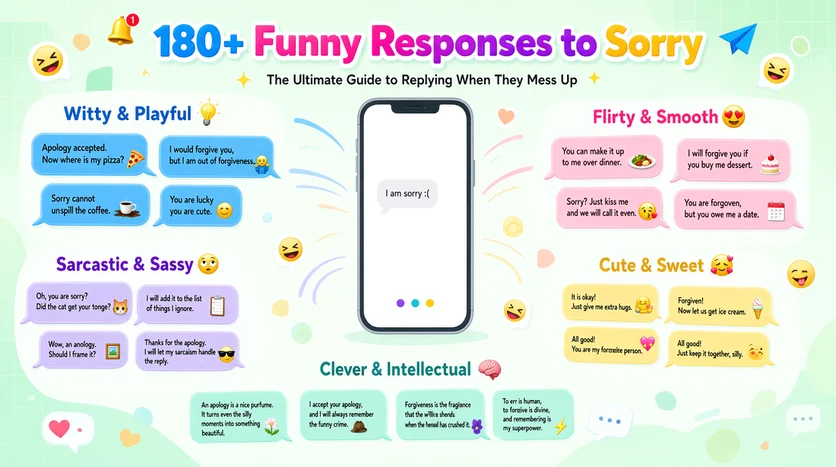
The best funny responses to sorry can turn an awkward moment into a hilarious conversation without making things uncomfortable. Whether a friend apologizes for being late, someone makes a silly mistake, or your crush says sorry, the right comeback can add humor and personality.
Top alternatives: Apology accepted, but snacks are required, You’re lucky I’m adorable, I’ll forgive you for a small fee, Don’t let it happen again, Your apology has been received.
We’ve all heard that little word, “Sorry,” at the most unexpected moments. Maybe your friend is apologizing for showing up an hour late, someone accidentally ruins your favorite shirt, or your crush sends an adorable apology after leaving you on read. Sometimes, a simple “It’s okay” feels too ordinary, and you want a response that makes everyone smile instead. That’s where funny responses to sorry come in handy. A clever comeback can break the awkward silence, make an apology feel lighter, and keep a conversation entertaining.
Whether you’re texting friends, replying in DMs, joking with coworkers, or teasing someone special, having the right response ready makes a difference. From playful one-liners to sarcastic comebacks, this collection has plenty of ways to accept an apology with humor and personality.
1. Funny Responses to Sorry
Sometimes, the best way to accept an apology is with a little humor. These replies keep things light while making the other person laugh.
- Apology accepted, payment pending.
Example: When a friend apologizes for eating your fries.
Meaning: You’re forgiving them but jokingly expecting compensation. - I’ll allow it this time.
Example: When someone makes a harmless mistake.
Meaning: You’re accepting the apology with playful authority. - Your apology has been forwarded to management.
Example: When a friend sends an unnecessarily serious apology.
Meaning: You’re pretending the situation requires official approval. - Don’t worry, I’ve survived worse.
Example: When someone feels bad about a tiny mistake.
Meaning: You’re showing that the situation isn’t serious. - It’s okay, my therapist will hear about this.
Example: When a friend accidentally embarrasses you.
Meaning: You’re exaggerating the emotional damage for comedy. - I forgive you, but my memory doesn’t.
Example: When someone repeats a funny mistake.
Meaning: You’re accepting the apology while teasing them. - No worries, we’re all professionally imperfect.
Example: When someone apologizes for a minor error.
Meaning: You’re making imperfection sound like a qualification. - Accepted. Please don’t make me update my complaint.
Example: When a friend apologizes after annoying you.
Meaning: You’re pretending to have an official complaint. - It’s fine, I’ll add it to your collection of mistakes.
Example: When someone has a habit of messing up.
Meaning: You’re joking about their unforgettable track record. - I was waiting for that apology episode.
Example: When a friend finally admits they were wrong.
Meaning: You’re treating the apology like an entertaining TV episode. - All forgiven, now bring snacks.
Example: When someone apologizes after eating your food.
Meaning: You’re accepting the apology with a playful condition. - You’re lucky I’m in a forgiving mood.
Example: When someone makes a silly mistake.
Meaning: You’re pretending to be generous and powerful.
2. Sarcastic Responses to Sorry
A little sarcasm can make an apology memorable, especially when you’re joking with someone who understands your humor.
- Wow, an apology! What a historic moment.
Example: When a stubborn friend finally apologizes.
Meaning: You’re teasing them for rarely admitting mistakes. - I almost thought you’d never say that.
Example: When someone takes forever to apologize.
Meaning: You’re pointing out their delayed apology. - Should I frame this apology?
Example: When someone apologizes for the first time in ages.
Meaning: You’re making their apology sound extraordinary. - Well, miracles really do happen.
Example: When a friend finally accepts responsibility.
Meaning: You’re sarcastically celebrating their apology. - Sorry doesn’t come with a refund, unfortunately.
Example: When someone apologizes for a small inconvenience.
Meaning: You’re joking that the damage cannot be reversed. - I’ll pretend that never happened.
Example: When someone makes an embarrassing mistake.
Meaning: You’re offering humorous forgiveness. - A little late, but beautifully delivered.
Example: When an apology arrives hours after the incident.
Meaning: You’re sarcastically commenting on the timing. - Congratulations, you’ve discovered the word sorry.
Example: When someone struggles to apologize.
Meaning: You’re teasing them about finally saying it. - My expectations were low, but here we are.
Example: When someone unexpectedly apologizes.
Meaning: You’re expressing playful surprise. - I’ll accept that for the plot.
Example: When a friend apologizes during a dramatic situation.
Meaning: You’re treating the apology like part of a story. - Don’t hurt yourself trying to be nice.
Example: When a sarcastic friend gives a rare apology.
Meaning: You’re playfully teasing their unusual politeness. - Apology received. My judgment remains pending.
Example: When someone apologizes after a silly argument.
Meaning: You’re joking that forgiveness requires further review.
3. Brutal but Playful Responses to Sorry
When someone deserves a little teasing, these confident comebacks deliver a sharp punchline without turning the conversation into a serious argument.
- You should be, honestly.
Example: When someone jokingly apologizes for annoying you.
Meaning: You’re playfully agreeing that they made a mistake. - I’ll forgive you when the stars approve.
Example: When a friend keeps repeating the same mistake.
Meaning: You’re exaggerating how difficult forgiveness will be. - That’s a start, keep going.
Example: When someone offers a half-hearted apology.
Meaning: You’re joking that their apology needs improvement. - My patience deserves a medal.
Example: When someone finally apologizes after testing your patience.
Meaning: You’re highlighting how much you’ve tolerated. - Your apology needs a little more effort.
Example: When a friend gives a lazy apology.
Meaning: You’re teasing them for not trying hard enough. - I expected better, but I’m entertained.
Example: When someone makes an unbelievable mistake.
Meaning: You’re expressing disappointment through humor. - Let’s call that your first warning.
Example: When a friend does something silly.
Meaning: You’re jokingly giving them another chance. - You owe my peace of mind an apology too.
Example: When someone creates unnecessary drama.
Meaning: You’re teasing them about disturbing your calm. - I’ve seen better apologies in movies.
Example: When someone delivers an unconvincing apology.
Meaning: You’re joking that their apology lacks emotion. - I’ll forgive you, but don’t test the sequel.
Example: When someone repeats a mistake.
Meaning: You’re warning them not to repeat the behavior. - Your apology is cute, though.
Example: When a friend tries to make up for a mistake.
Meaning: You’re accepting their effort while keeping a teasing tone. - You almost lost your membership here.
Example: When someone annoys you in a funny way.
Meaning: You’re joking that their behavior nearly ended your friendship privileges.
4. Cute Responses to Sorry
Want to make someone feel better without losing your playful personality? These adorable replies are perfect for friends, family, and people you care about.
- Aww, come here, you’re forgiven.
Example: When a close friend apologizes sincerely.
Meaning: You’re accepting their apology affectionately. - It’s okay, little human.
Example: When someone feels guilty about a tiny mistake.
Meaning: You’re offering gentle and playful reassurance. - Don’t worry, sunshine.
Example: When someone apologizes for being slightly late.
Meaning: You’re making them feel appreciated and comfortable. - Your apology made me smile.
Example: When someone sends a thoughtful apology.
Meaning: You’re appreciating their effort. - All good, my favorite troublemaker.
Example: When a close friend makes a silly mistake.
Meaning: You’re forgiving them with affection. - You’re too sweet to stay mad at.
Example: When someone adorable apologizes.
Meaning: You’re showing affection while accepting the apology. - Hugs accepted, apology approved.
Example: When someone wants to make things right.
Meaning: You’re welcoming their apology warmly. - No tears, we’re good.
Example: When someone feels unnecessarily guilty.
Meaning: You’re reassuring them that everything is fine. - I forgive you, cupcake.
Example: When teasing someone close to you.
Meaning: You’re combining forgiveness with a cute nickname. - You’re safe in my good books.
Example: When a friend worries about upsetting you.
Meaning: You’re letting them know your relationship is fine. - It’s okay, hugs fix everything.
Example: When someone apologizes after a small disagreement.
Meaning: You’re choosing affection over unnecessary tension. - Apology accepted with extra cuddles.
Example: When your partner apologizes sweetly.
Meaning: You’re turning forgiveness into an affectionate moment.
5. Flirty Responses to Sorry
When your crush or partner says sorry, you don’t always have to respond seriously. Add a little charm and turn their apology into a fun opportunity to flirt.
- I’ll forgive you if you take me on a date.
Example: When your crush apologizes for a small mistake.
Meaning: You’re playfully suggesting a romantic date. - You’re too cute to stay mad at.
Example: When someone attractive sends an apology.
Meaning: You’re using their charm as an excuse to forgive them. - Make it up to me with a kiss.
Example: When your partner apologizes affectionately.
Meaning: You’re suggesting a romantic way to make peace. - I was waiting for your attention anyway.
Example: When your crush apologizes for replying late.
Meaning: You’re turning their apology into a flirty moment. - Your apology sounds better in person.
Example: When someone apologizes over text.
Meaning: You’re hinting that you’d like to meet. - I’ll forgive you over coffee.
Example: When someone you like makes a small mistake.
Meaning: You’re creating an excuse for a coffee date. - You can make it up to me by smiling.
Example: When your crush feels bad about something minor.
Meaning: You’re giving them a sweet compliment. - I was never really mad at you.
Example: When someone special apologizes nervously.
Meaning: You’re reassuring them while showing affection. - One apology, unlimited flirting.
Example: When your conversation is already playful.
Meaning: You’re keeping the romantic energy alive. - I forgive you, handsome.
Example: When your partner apologizes for a small mistake.
Meaning: You’re mixing forgiveness with a compliment. - Your smile is your best apology.
Example: When someone charming tries to make things right.
Meaning: You’re expressing attraction through playful affection. - Only because I like you a little too much.
Example: When your crush apologizes for teasing you.
Meaning: You’re subtly revealing your feelings.
6. Polite Responses to Sorry
Not every apology needs sarcasm or a clever comeback. Sometimes, a friendly and respectful response is the best way to keep things comfortable.
- No worries at all.
Example: When someone apologizes for a minor inconvenience.
Meaning: You’re showing that you aren’t bothered. - It’s completely fine.
Example: When someone makes an understandable mistake.
Meaning: You’re accepting the apology without judgment. - Don’t give it another thought.
Example: When someone feels guilty about something small.
Meaning: You’re encouraging them to move on. - I appreciate you saying that.
Example: When someone sincerely apologizes.
Meaning: You’re acknowledging their effort. - We’re all human, no problem.
Example: When someone accidentally makes a mistake.
Meaning: You’re showing understanding and compassion. - Thank you for acknowledging it.
Example: When someone takes responsibility for their actions.
Meaning: You’re appreciating their honesty. - It’s alright, let’s move forward.
Example: When you want to end a minor disagreement.
Meaning: You’re choosing a positive fresh start. - No harm done.
Example: When someone accidentally interrupts you.
Meaning: You’re communicating that nothing serious happened. - I understand, these things happen.
Example: When someone explains an unexpected mistake.
Meaning: You’re showing patience and understanding. - Thank you, I appreciate the apology.
Example: When someone offers a thoughtful apology.
Meaning: You’re responding with maturity and respect. - It’s okay, let’s not worry about it.
Example: When someone keeps apologizing unnecessarily.
Meaning: You’re helping them feel comfortable. - We’re good, don’t worry.
Example: When a friend wants reassurance after a mistake.
Meaning: You’re confirming that everything is fine.
7. Professional Responses to Sorry
Workplace apologies call for a slightly different approach. These replies are respectful, confident, and appropriate for colleagues, managers, and business conversations.
- No problem, thank you for letting me know.
Example: When a colleague apologizes for a delayed update.
Meaning: You’re acknowledging the apology professionally. - That’s alright, let’s focus on the next steps.
Example: When a team member makes a minor mistake.
Meaning: You’re encouraging progress instead of blame. - I appreciate you addressing the issue.
Example: When a coworker takes responsibility for an error.
Meaning: You’re recognizing their accountability. - No worries, these things happen.
Example: When someone apologizes for a scheduling mistake.
Meaning: You’re responding with patience. - Thank you for clarifying.
Example: When a colleague apologizes for a misunderstanding.
Meaning: You’re keeping communication professional. - It’s alright, let’s get back on track.
Example: When a meeting starts late because of a mistake.
Meaning: You’re focusing on productivity. - I understand, thanks for the update.
Example: When a client apologizes for a delayed response.
Meaning: You’re acknowledging their explanation. - No issue, we can work around it.
Example: When a coworker apologizes for a small scheduling conflict.
Meaning: You’re showing flexibility and cooperation. - I appreciate your honesty.
Example: When someone admits a professional mistake.
Meaning: You’re valuing transparency. - Let’s consider it a learning opportunity.
Example: When a team member makes an understandable error.
Meaning: You’re encouraging improvement without embarrassment. - Thanks for taking responsibility.
Example: When an employee acknowledges an issue.
Meaning: You’re appreciating their accountability. - All good, let’s keep things moving.
Example: When a colleague apologizes for a minor delay.
Meaning: You’re keeping the workplace conversation positive.
8. Creative Responses to Sorry
If ordinary replies aren’t your thing, try something imaginative. These responses add a little originality to everyday conversations.
- Apology successfully uploaded to my forgiveness folder.
Example: When a tech-loving friend apologizes.
Meaning: You’re pretending to process forgiveness digitally. - Your apology passed the vibe check.
Example: When someone offers a funny apology.
Meaning: You’re approving their apology in a modern, playful way. - The forgiveness department is now open.
Example: When someone apologizes after a silly disagreement.
Meaning: You’re pretending forgiveness is an official service. - Consider your apology officially stamped.
Example: When a friend wants confirmation that you’re okay.
Meaning: You’re giving humorous official approval. - Your apology has entered the acceptance zone.
Example: When someone apologizes through a long message.
Meaning: You’re treating forgiveness like a special destination. - Peace has been restored to the kingdom.
Example: When a playful argument finally ends.
Meaning: You’re dramatically announcing that everything is fine. - The apology committee approves.
Example: When a friend apologizes in a group chat.
Meaning: You’re pretending a committee has reviewed their apology. - Your forgiveness request is under review.
Example: When someone apologizes for a silly mistake.
Meaning: You’re creating a funny approval process. - The clouds have cleared, you’re forgiven.
Example: When someone worries about upsetting you.
Meaning: You’re describing forgiveness as a fresh beginning. - A new chapter begins with this apology.
Example: When you want to move past an argument.
Meaning: You’re suggesting a positive restart. - Your apology has earned a gold star.
Example: When someone gives a particularly sweet apology.
Meaning: You’re rewarding their effort playfully. - Forgiveness activated successfully.
Example: When replying to a friend’s apology by text.
Meaning: You’re making acceptance sound like a completed digital action.
9. Chill and Casual Responses to Sorry
Sometimes, you just want to keep the conversation moving without making a big deal out of anything. These casual replies work perfectly for everyday chats.
- You’re good.
Example: When a friend apologizes for being a few minutes late.
Meaning: You’re letting them know there’s no issue. - It’s all cool.
Example: When someone apologizes for a small mistake.
Meaning: You’re keeping things relaxed. - No biggie.
Example: When someone accidentally interrupts you.
Meaning: You’re showing that the situation doesn’t matter much. - All good on my end.
Example: When a coworker apologizes for a minor delay.
Meaning: You’re confirming that everything is fine. - We’re cool, don’t stress.
Example: When a friend worries about upsetting you.
Meaning: You’re reassuring them casually. - It happens, honestly.
Example: When someone makes an everyday mistake.
Meaning: You’re showing that mistakes are normal. - No sweat.
Example: When someone apologizes for a small inconvenience.
Meaning: You’re communicating that you’re not bothered. - Forget about it.
Example: When someone keeps apologizing for something minor.
Meaning: You’re encouraging them to move on. - We’re totally fine.
Example: When a friend wants to know if you’re upset.
Meaning: You’re confirming that there’s no tension. - It’s whatever, we’re good.
Example: When someone apologizes for a harmless mistake.
Meaning: You’re keeping your response easygoing. - No stress, my friend.
Example: When someone feels bad about a minor inconvenience.
Meaning: You’re offering friendly reassurance. - Water under the bridge.
Example: When you want to move past an old disagreement.
Meaning: You’re showing that the issue is in the past.
10. Dramatic Responses to Sorry
Why accept an apology normally when you can turn the moment into a full theatrical performance? These over-the-top replies are perfect for friends who love drama.
- I shall forgive you, mortal.
Example: When a friend apologizes for a silly mistake.
Meaning: You’re pretending to have royal authority. - The kingdom has decided to spare you.
Example: When someone apologizes after annoying you.
Meaning: You’re making forgiveness sound like a royal decision. - My heart has suffered, but I shall recover.
Example: When a friend eats your last slice of pizza.
Meaning: You’re dramatically exaggerating a tiny disappointment. - Let the forgiveness ceremony begin.
Example: When someone finally apologizes.
Meaning: You’re making a normal apology sound like a grand event. - History will remember this moment.
Example: When someone admits they were wrong.
Meaning: You’re joking about the importance of their apology. - I accept your apology with great emotion.
Example: When a friend apologizes for something silly.
Meaning: You’re pretending to be deeply moved. - My forgiveness is a gift, cherish it.
Example: When someone makes a harmless mistake.
Meaning: You’re playfully presenting forgiveness as a rare privilege. - The storm has passed, but the legend remains.
Example: When a funny argument finally ends.
Meaning: You’re celebrating the end of the drama. - A thousand apologies shall be remembered.
Example: When someone keeps saying sorry.
Meaning: You’re exaggerating their repeated apologies. - I rise above this tragedy.
Example: When a friend accidentally spoils your favorite show.
Meaning: You’re making a small disappointment sound monumental. - Let the records show that I forgave you.
Example: When a friend apologizes in a group chat.
Meaning: You’re officially announcing your forgiveness for comedic effect. - Peace returns to my troubled soul.
Example: When someone finally makes up with you.
Meaning: You’re humorously celebrating the end of tension.
11. Clever Responses to Sorry
A clever response doesn’t need to be harsh or overly dramatic. These witty one-liners make your reply memorable without making the other person uncomfortable.
- Better an apology than an excuse.
Example: When someone admits a genuine mistake.
Meaning: You’re appreciating honesty over unnecessary explanations. - Apology accepted, lesson unlocked.
Example: When someone learns from a small mistake.
Meaning: You’re treating the experience as a useful lesson. - Mistakes happen, apologies matter.
Example: When someone sincerely takes responsibility.
Meaning: You’re emphasizing the importance of accountability. - We’re human, not software updates.
Example: When a friend feels bad about making a mistake.
Meaning: You’re reminding them that perfection isn’t realistic. - Forgiveness is my favorite shortcut.
Example: When you want to end a minor disagreement.
Meaning: You’re choosing peace over unnecessary conflict. - An apology is a good place to restart.
Example: When someone wants to fix a misunderstanding.
Meaning: You’re encouraging a fresh beginning. - No damage to the friendship detected.
Example: When a close friend apologizes.
Meaning: You’re reassuring them through a playful technical reference. - Let’s not turn a comma into a full stop.
Example: When a small argument threatens a friendship.
Meaning: You’re suggesting the relationship should continue. - Apology accepted, wisdom hopefully installed.
Example: When someone promises not to repeat a mistake.
Meaning: You’re joking that they should learn from the experience. - Good intentions deserve a second chance.
Example: When someone makes an honest mistake.
Meaning: You’re expressing understanding and forgiveness. - The best apology is a better next move.
Example: When someone wants to rebuild trust.
Meaning: You’re emphasizing that actions matter after an apology. - Let’s turn the page, not the situation into a series.
Example: When a disagreement is becoming unnecessarily long.
Meaning: You’re encouraging everyone to move forward.
12. Sweet Responses to Sorry
A sincere apology deserves a kind response. These sweet messages are ideal when you want someone to feel appreciated, understood, and comfortable.
- Thank you for caring enough to apologize.
Example: When someone sincerely acknowledges their mistake.
Meaning: You’re appreciating their consideration. - It’s okay, I know you didn’t mean it.
Example: When someone accidentally hurts your feelings.
Meaning: You’re recognizing their good intentions. - We’re stronger than one little mistake.
Example: When a close friend worries about your friendship.
Meaning: You’re showing that your relationship matters more. - I appreciate your kind heart.
Example: When someone offers a heartfelt apology.
Meaning: You’re recognizing their thoughtfulness. - Let’s keep the good memories coming.
Example: When you want to move past a disagreement.
Meaning: You’re focusing on positive moments together. - Your apology means a lot to me.
Example: When someone takes responsibility for their behavior.
Meaning: You’re showing that their effort matters. - It’s okay, we can always start fresh.
Example: When a loved one wants to make things right.
Meaning: You’re offering another chance. - Thank you for making things right.
Example: When someone tries to repair a misunderstanding.
Meaning: You’re appreciating their willingness to improve things. - I value you more than this little mistake.
Example: When a close friend feels guilty.
Meaning: You’re reminding them that your relationship comes first. - Let’s leave the bad moment behind us.
Example: When both people want to move forward.
Meaning: You’re choosing positivity over resentment. - A little misunderstanding can’t change everything.
Example: When someone worries about losing your friendship.
Meaning: You’re offering reassurance and emotional comfort. - We’re okay, and that’s what matters.
Example: When someone apologizes after a minor disagreement.
Meaning: You’re prioritizing your connection.
13. Short and Witty Responses to Sorry
Sometimes, less is more. These short replies are perfect for WhatsApp, Instagram DMs, text messages, and quick conversations.
- Forgiven-ish.
Example: When a friend makes a tiny mistake.
Meaning: You’re offering playful, slightly reluctant forgiveness. - Case closed.
Example: When someone apologizes after a small argument.
Meaning: You’re announcing that the issue is over. - Noted, human.
Example: When someone apologizes in a funny group chat.
Meaning: You’re acknowledging them with playful formality. - Peace restored.
Example: When a misunderstanding gets resolved.
Meaning: You’re confirming that everything is fine. - Apology unlocked.
Example: When a friend finally apologizes.
Meaning: You’re treating their apology like an achievement. - You’re off the hook.
Example: When someone apologizes for a harmless mistake.
Meaning: You’re letting them know they’re forgiven. - All is forgiven.
Example: When someone wants reassurance.
Meaning: You’re accepting their apology. - Consider yourself pardoned.
Example: When joking with a close friend.
Meaning: You’re pretending to grant official forgiveness. - We move.
Example: When you want to end an awkward conversation.
Meaning: You’re choosing to move forward. - Apology accepted, legend.
Example: When a friend apologizes casually.
Meaning: You’re accepting their apology with friendly appreciation. - No harm, no drama.
Example: When someone apologizes for something small.
Meaning: You’re keeping things relaxed and positive. - Peace out, problem.
Example: When a minor disagreement finally ends.
Meaning: You’re humorously saying goodbye to the issue.
14. Funny Responses to Sorry in Text Messages
Texting gives you plenty of room for funny replies. Whether someone sends a quick apology or a long paragraph, these responses make your messages more entertaining.
- Your apology has been delivered successfully.
Example: When someone apologizes through WhatsApp.
Meaning: You’re confirming receipt in a playful way. - Typing my forgiveness… 99% complete.
Example: When a friend waits for your response.
Meaning: You’re jokingly making them wait for forgiveness. - Sorry accepted. Notification sent to my heart.
Example: When someone sends a sweet apology.
Meaning: You’re adding a playful emotional touch. - This conversation has officially returned to normal.
Example: When a texting disagreement ends.
Meaning: You’re announcing that the awkwardness is over. - Your apology deserves a heart reaction.
Example: When someone sends a thoughtful message.
Meaning: You’re appreciating their apology in a social-media style. - I was about to send a disappointed emoji.
Example: When someone apologizes before you respond.
Meaning: You’re teasing them about nearly receiving an unhappy reaction. - Message received, forgiveness processing.
Example: When a friend apologizes through a long text.
Meaning: You’re pretending to process their apology digitally. - Okay, but don’t disappear after this.
Example: When someone apologizes for not replying.
Meaning: You’re playfully asking them to stay in touch. - Apology accepted. Now send a meme.
Example: When a friend apologizes in your DMs.
Meaning: You’re requesting a funny way to restore the mood. - You owe me one funny voice note.
Example: When someone apologizes through text.
Meaning: You’re asking them to make the conversation entertaining again. - Screenshotting this rare apology.
Example: When a stubborn friend finally says sorry.
Meaning: You’re joking that their apology is worth preserving. - Okay, emoji peace treaty accepted.
Example: When someone sends a heart or peace emoji with an apology.
Meaning: You’re accepting their playful attempt to make peace.
15. Funny Responses to Sorry From Friends and Family
Friends and family members know exactly how to test your patience. These replies are perfect for keeping everyday relationships full of laughter.
- You’re family, so the fine is doubled.
Example: When a sibling apologizes for borrowing your things.
Meaning: You’re teasing them about getting special treatment. - I forgive you because I have no other choice.
Example: When a close family member makes a silly mistake.
Meaning: You’re joking about being stuck together. - Friendship discount applied.
Example: When a best friend apologizes for being annoying.
Meaning: You’re offering playful forgiveness because of your friendship. - You’re lucky I know your secrets.
Example: When a sibling or friend apologizes after teasing you.
Meaning: You’re joking about your shared history. - Fine, but you’re buying the next pizza.
Example: When a friend apologizes for eating your food.
Meaning: You’re accepting the apology with a funny condition. - Blood relations come with unlimited forgiveness.
Example: When a sibling apologizes for a minor mistake.
Meaning: You’re highlighting the lasting family connection. - I forgive you, family subscription included.
Example: When a relative makes a harmless mistake.
Meaning: You’re joking about the benefits of being family. - Your friendship privileges remain active.
Example: When a best friend worries about upsetting you.
Meaning: You’re confirming that your friendship is still strong. - I’ll let it slide because you’re my favorite headache.
Example: When a close friend apologizes for being irritating.
Meaning: You’re expressing affection through friendly teasing. - You’re forgiven, but the family group chat knows.
Example: When a sibling does something embarrassing.
Meaning: You’re joking about sharing the incident with everyone. - We argue, we forgive, we eat together.
Example: When a family disagreement comes to an end.
Meaning: You’re emphasizing that family bonds remain strong. - All forgiven, now act like the good person you claim to be.
Example: When a friend apologizes after a playful argument.
Meaning: You’re accepting the apology while teasing them to behave better.
Frequently Asked Questions (FAQs)
1. What does sorry mean in everyday conversations?
Sorry expresses regret, acknowledges a mistake, or shows sympathy for someone’s situation.
2. What is a funny response to sorry?
Try “Apology accepted, but snacks are required” to make the moment lighter.
3. How do you respond when your crush says sorry?
Use a playful reply like “You’re too cute to stay mad at.”
4. What does it mean when someone says sorry with a heart?
It may express affection, warmth, or a sincere attempt to make things right.
5. How do you respond professionally to sorry?
Say “No problem, thank you for letting me know” to remain polite and professional.
6. What should you say if you don’t accept an apology?
Be honest and say, “I appreciate the apology, but I need some time.”
7. Is it okay to respond to sorry with humor?
Yes, when the mistake is minor and the other person understands your sense of humor.
8. How do you reply to sorry without saying it’s okay?
Try “I appreciate you acknowledging it” or “Let’s move forward.”
9. What is a cute response to sorry?
Say “Aww, you’re forgiven, little troublemaker” to keep things affectionate.
10. Should you always forgive someone who apologizes?
No. A sincere apology matters, but forgiveness and rebuilding trust can take time.
Conclusion
A simple “Sorry” doesn’t always need a boring “It’s okay” in return. Sometimes, a funny comeback, a little sarcasm, or a sweet response can turn an awkward moment into a memorable conversation. The best funny responses to sorry depend on who you’re talking to, what happened, and the kind of impression you want to make. Use playful replies with friends, charming lines with your crush, and respectful responses in professional situations. Remember, humor works best when it makes everyone feel comfortable.
Save your favorite replies, share this collection with your funniest friends, and never run out of clever ways to accept an apology. Keep smiling and let your personality do the talking!