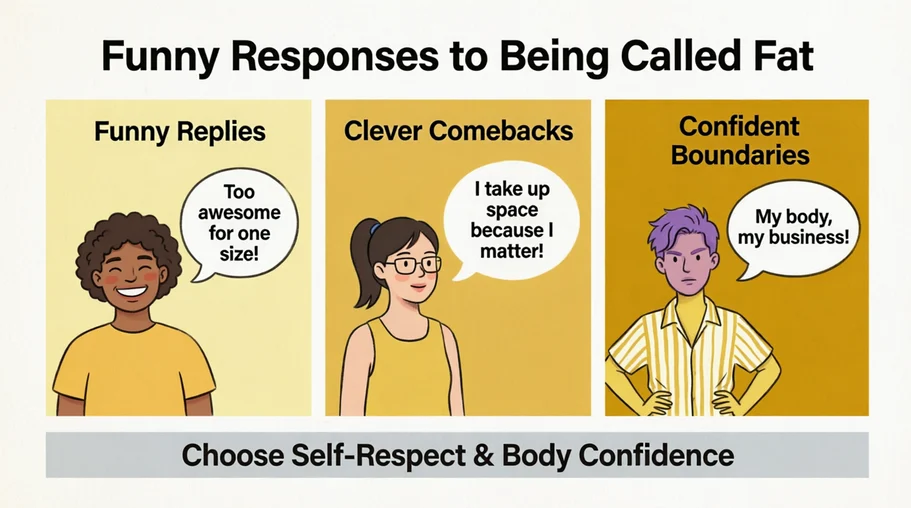
The best funny responses to being called fat let you handle an awkward comment with humor, confidence, or calm self-respect. Choose a comeback that fits the situation, whether you’re teasing a friend, responding to a rude remark, or setting a clear boundary.
Top replies: “And yet, my personality is still bigger,” “Did you rehearse that comment?”, “My body isn’t your business,” “I’m comfortable being me,” “Your opinion wasn’t requested.”
Getting called fat can turn an ordinary conversation into an uncomfortable moment, whether it happens in a group chat, through a social media DM, at work, or while hanging out with friends. Sometimes the comment comes from someone joking around, but other times it feels personal. And let’s be honest, thinking of the perfect comeback five minutes later doesn’t exactly help! That’s where funny responses to being called fat can come in handy.
The right reply can lighten the mood, show confidence, or make it clear that someone’s comment crossed a line. You don’t have to insult anyone back, explain your body, or pretend something hurtful was funny. Instead, you can choose a playful one-liner, a clever responsethat feels natural to you.
1. Funny Responses to Being Called Fat
- My personality takes up more space. Example: Use it when a friend makes a teasing remark and you want to keep things light.
Meaning: It shifts attention toward your personality instead of your appearance. - Good thing I’m not taking body reviews today. Example: Try it when someone offers an unsolicited opinion about your size.
Meaning: It humorously dismisses their unwanted commentary. - Was that supposed to be your best joke? Example: Use it when someone expects everyone to laugh at their remark.
Meaning: It challenges the joke without turning the moment into a serious argument. - Breaking news: You have an opinion! Example: Say it when someone announces your size as though nobody noticed.
Meaning: It makes their unnecessary observation sound unremarkable. - My confidence didn’t get the memo. Example: Use it when you want to show that the comment hasn’t defined your mood.
Meaning: It communicates self-assurance with a playful twist. - And your manners are on vacation. Example: Try it when someone makes a rude comment in front of others.
Meaning: It points out their lack of courtesy through humor. - Thanks for the extremely unnecessary update. Example: Use it when someone states the obvious about your appearance.
Meaning: It shows that their observation was neither helpful nor needed. - I came here for good vibes, not body commentary. Example: Say it during a casual gathering when the conversation gets personal.
Meaning: It redirects attention toward a more enjoyable topic. - Did my body ask for a press conference? Example: Try it when someone discusses your size as though it’s public news.
Meaning: It humorously questions why your appearance became a topic. - My life isn’t a before-and-after episode. Example: Use it when someone makes assumptions about your body or lifestyle.
Meaning: It reminds them that your life is more than your appearance. - Please submit your opinion to the department of nobody asked. Example: Say it to a friend who keeps offering unsolicited comments.
Meaning: It playfully signals that their opinion isn’t welcome. - I was enjoying my day before the commentary began. Example: Use it when someone interrupts a pleasant moment with a personal remark.
Meaning: It makes your preference for a peaceful conversation clear.
2. Clever Responses to Being Called Fat
- That’s an observation, not a personality trait. Example: Use it when someone acts as though your body tells your whole story.
Meaning: It separates physical appearance from personal identity. - You’ve noticed my appearance but missed my character. Example: Try it when someone judges you based on looks alone.
Meaning: It highlights the limits of judging people by their bodies. - Interesting how my body became your main topic. Example: Say it when someone repeatedly brings up your size.
Meaning: It encourages them to consider why they’re so focused on you. - You can notice something without needing to announce it. Example: Use it when someone makes an unnecessary public observation.
Meaning: It reminds them that not every thought needs to be spoken. - My worth isn’t measured in clothing sizes. Example: Say it when someone tries to connect your size with your value.
Meaning: It firmly rejects appearance-based judgments. - That’s a lot of confidence for an unsolicited opinion. Example: Try it when someone speaks as though their judgment is important.
Meaning: It questions their entitlement to comment on your body. - I didn’t realize you were conducting a personal assessment. Example: Use it when a casual conversation suddenly becomes judgmental.
Meaning: It exposes how intrusive their comment sounds. - A body description isn’t a character reference. Example: Say it when someone assumes appearance determines personality.
Meaning: It emphasizes that physical traits don’t define someone’s character. - You know my size, but do you know my story? Example: Use it when someone makes assumptions about your life.
Meaning: It invites a more thoughtful perspective. - My identity has more chapters than your observation. Example: Try it when someone reduces you to one physical characteristic.
Meaning: It reminds them that people are complex individuals. - Being noticed and being understood are two different things. Example: Use it during a conversation about judgment and appearance.
Meaning: It distinguishes superficial attention from genuine understanding. - Let’s discuss something that actually matters. Example: Say it when you want to move past an unhelpful comment.
Meaning: It redirects the conversation without escalating the disagreement.
3. Sarcastic Responses to Being Called Fat
- Thank you for that groundbreaking discovery. Example: Use it when someone points out your appearance unnecessarily.
Meaning: It makes their observation sound less impressive than they think. - Should I expect a full report later? Example: Try it when someone keeps analyzing how you look.
Meaning: It sarcastically questions their interest in your body. - And here I thought we were having a normal conversation. Example: Say it when a friendly chat takes an uncomfortable turn.
Meaning: It highlights how inappropriate the comment feels. - Your commentary has been officially noted. Example: Use it when you want to acknowledge a remark without entertaining it.
Meaning: It communicates polite dismissal with a hint of sarcasm. - Was there a question hidden in that statement? Example: Try it when someone makes a random remark about your size.
Meaning: It challenges the purpose of their comment. - I see your filter took the day off. Example: Say it when someone speaks rudely without thinking.
Meaning: It points out their lack of tact. - Congratulations on saying the quiet part out loud. Example: Use it when someone voices an unnecessary judgment.
Meaning: It calls attention to their poor choice of words. - That comment really needed a second draft. Example: Try it when someone’s attempt at humor falls flat.
Meaning: It suggests their remark could have been more thoughtful. - I hope that observation made your day. Example: Say it when someone seems unusually pleased with their comment.
Meaning: It lightly mocks the importance they’re giving the remark. - Did your manners get left at home? Example: Use it when a person crosses a social boundary.
Meaning: It sarcastically calls out their rudeness. - I’ll add that to my collection of unsolicited opinions. Example: Try it when someone offers another unwanted judgment.
Meaning: It shows that you aren’t treating their opinion as valuable advice. - What an unexpected contribution to this conversation. Example: Say it when a remark adds nothing useful to the discussion.
Meaning: It dismisses the comment with dry humor.
4. Confident Responses to Being Called Fat
- I’m comfortable with who I am. Example: Use it when someone expects you to feel embarrassed about your appearance.
Meaning: It communicates self-acceptance without inviting debate. - My confidence doesn’t depend on your approval. Example: Say it when someone tries to make you feel insecure.
Meaning: It establishes that your self-worth is independent of their opinion. - I know who I am, and I’m good with that. Example: Use it when you want to end an appearance-based argument.
Meaning: It expresses a grounded sense of identity. - I don’t need to defend my body to anyone. Example: Try it when someone demands an explanation for your appearance.
Meaning: It sets a clear boundary around your privacy. - I’m more than what you see. Example: Say it when someone judges you based only on looks.
Meaning: It emphasizes your individuality and personal qualities. - My self-respect isn’t up for discussion. Example: Use it when a remark becomes insulting or persistent.
Meaning: It firmly protects your dignity. - I choose confidence over comparison. Example: Try it when someone compares your body with another person’s.
Meaning: It shows that you don’t want to compete over appearance. - I can respect myself without your permission. Example: Say it when someone acts as though their approval matters.
Meaning: It reinforces personal independence. - My body doesn’t determine my value. Example: Use it when someone suggests that size affects your worth.
Meaning: It rejects the idea that appearance defines a person’s value. - I’m not here to meet your beauty standards. Example: Try it when someone imposes their preferences on you.
Meaning: It makes clear that their expectations aren’t your responsibility. - I deserve respect at every size. Example: Say it when you need a direct response to a hurtful remark.
Meaning: It affirms that respect isn’t conditional on appearance. - I’m living my life, not auditioning for your approval. Example: Use it when someone behaves as though they’re judging a competition.
Meaning: It expresses confidence while refusing their judgment.
5. Polite Responses to Being Called Fat
- I’d appreciate it if you didn’t comment on my body. Example: Use it when someone makes an unwanted personal remark.
Meaning: It sets a respectful and direct boundary. - Let’s keep the conversation respectful, please. Example: Say it when you want to address a rude comment calmly.
Meaning: It asks for better behavior without insulting the other person. - I’m not comfortable discussing my appearance. Example: Try it when someone asks personal questions about your size.
Meaning: It communicates discomfort and protects your privacy. - I don’t think that comment was necessary. Example: Use it when a remark feels hurtful or irrelevant.
Meaning: It points out the problem without escalating the situation. - I’d rather we talk about something else. Example: Say it when you want to move the conversation forward.
Meaning: It redirects the discussion politely. - Please be mindful of how your words affect others. Example: Use it when someone doesn’t seem aware of their impact.
Meaning: It encourages empathy and consideration. - I know you may not have meant harm, but that wasn’t helpful. Example: Try it when a friend makes an insensitive joke.
Meaning: It acknowledges possible good intentions while expressing your feelings. - My appearance isn’t something I want to debate. Example: Say it when someone keeps questioning your body.
Meaning: It closes the door to an unwanted discussion. - Let’s avoid comments about each other’s bodies. Example: Use it in a group where appearance-based teasing is common.
Meaning: It encourages a more considerate atmosphere. - I’d prefer a kinder choice of words. Example: Try it when someone speaks without much tact.
Meaning: It requests a change in tone without attacking them. - That felt personal, and I’d appreciate more consideration. Example: Say it to someone whose comment genuinely hurt you.
Meaning: It honestly explains the emotional impact. - Thank you for understanding my boundary. Example: Use it when someone agrees to stop commenting on your appearance.
Meaning: It reinforces respectful communication.
6. Brutal but Respectful Comebacks
- Your manners need more work than my appearance ever will. Example: Use it when someone makes a deliberately insulting remark.
Meaning: It redirects attention toward their behavior rather than your body. - You could have kept that thought to yourself. Example: Say it when someone shares an unnecessary opinion.
Meaning: It points out that their comment wasn’t needed. - Being rude isn’t the same as being honest. Example: Try it when someone excuses an insult as honesty.
Meaning: It challenges the idea that bluntness justifies hurtful behavior. - You don’t get bonus points for being disrespectful. Example: Use it when someone seems proud of their harsh words.
Meaning: It makes clear that rudeness isn’t an achievement. - Your opinion doesn’t give you authority over my body. Example: Say it when someone acts entitled to judge your appearance.
Meaning: It rejects their attempt to control or evaluate you. - You can do better than a comment about someone’s body. Example: Try it when someone attempts an immature insult.
Meaning: It challenges them to show more maturity. - If kindness is an option, why skip it? Example: Use it when someone could easily have spoken more thoughtfully.
Meaning: It questions their decision to be unkind. - You don’t have to like my appearance to respect me. Example: Say it when someone confuses personal preferences with acceptable behavior.
Meaning: It separates their preferences from your right to dignity. - That says more about your behavior than my body. Example: Use it when a personal remark reveals the speaker’s attitude.
Meaning: It shifts the focus to their choice to insult you. - I’m not accepting criticism I never asked for. Example: Try it when someone presents their judgment as helpful feedback.
Meaning: It declines unwanted commentary. - You can keep the opinion and reconsider the delivery. Example: Say it when someone claims their rude words are justified.
Meaning: It challenges their communication style without becoming abusive. - Respect is free, but apparently not everyone remembers that. Example: Use it when someone repeatedly ignores basic courtesy.
Meaning: It delivers a firm reminder about treating others well.
7. Chill and Casual Responses to Being Called Fat
- Okay, and? Example: Use it when someone expects your appearance to be a big deal.
Meaning: It shows that you’re not interested in making the remark a major issue. - Anyway, what’s the plan for today? Example: Try it when you’d rather keep the conversation moving.
Meaning: It casually changes the subject. - I’m just here enjoying my day. Example: Say it when someone interrupts a relaxed moment with a personal comment.
Meaning: It shows that you’re focused on your own experience. - Let’s not make this a whole thing. Example: Use it when a minor remark threatens to derail a gathering.
Meaning: It keeps the moment from becoming unnecessarily dramatic. - Noted. Moving on. Example: Try it when you don’t want to give the comment any more attention.
Meaning: It acknowledges the remark while ending the discussion. - That’s not what I came here to discuss. Example: Say it when someone brings up your size during another conversation.
Meaning: It brings the discussion back to the original topic. - Let’s talk about literally anything else. Example: Use it when the conversation has become awkward.
Meaning: It invites everyone to change the subject. - I’m good, thanks for the commentary. Example: Try it when you want a brief response with a little dry humor.
Meaning: It signals that the remark wasn’t needed. - No body reviews today, please. Example: Say it when a friend starts commenting on everyone’s appearance.
Meaning: It sets a casual but clear limit. - Cool, now what’s for lunch? Example: Use it with friends when you want to move on with humor.
Meaning: It changes the focus to something ordinary and lighthearted. - We’re really discussing this right now? Example: Try it when a comment feels out of place.
Meaning: It expresses mild disbelief without creating a confrontation. - Let’s keep the vibes positive. Example: Say it when you want the group to return to a friendly mood.
Meaning: It encourages a more pleasant conversation.
8. Cute and Playful Responses to Being Called Fat
- I’m a whole person, not a rating. Example: Use it when someone tries to turn your appearance into a score.
Meaning: It playfully reinforces that your worth can’t be ranked. - My sparkle doesn’t come in a size. Example: Try it when you want a cheerful answer to an insensitive remark.
Meaning: It expresses confidence in your personality and charm. - I’m keeping my smile, thanks. Example: Say it when someone expects their comment to ruin your mood.
Meaning: It shows that you intend to protect your happiness. - Too busy being me to worry about that. Example: Use it when you want to sound relaxed and self-assured.
Meaning: It communicates that you’re focused on living authentically. - My vibe is still adorable. Example: Try it when a friend makes a harmless joke and you want a lighthearted comeback.
Meaning: It keeps the tone cheerful without agreeing with the insult. - Kindness looks good on everyone. Example: Say it when someone needs a gentle reminder to be considerate.
Meaning: It encourages a friendlier way of treating people. - I came with personality included. Example: Use it when someone focuses too much on physical appearance.
Meaning: It humorously highlights that you’re more than your looks. - My joy is not available for review. Example: Try it when someone seems determined to make you feel self-conscious.
Meaning: It protects your happiness from outside judgment. - Smiles suit me better than arguments. Example: Say it when you want to avoid a drawn-out disagreement.
Meaning: It shows a preference for peace over confrontation. - I’m a limited edition, thank you very much. Example: Use it when you want a cute, confident response among friends.
Meaning: It celebrates individuality and self-worth. - My personality deserves its own spotlight. Example: Try it when someone ignores your qualities and focuses on your size.
Meaning: It reminds them that your character deserves attention too. - Let’s choose kindness and cute energy today. Example: Say it when a conversation needs a gentle reset.
Meaning: It encourages a positive mood without accepting hurtful remarks.
9. Witty Responses to Being Called Fat
- That’s a bold way to introduce your lack of manners. Example: Use it when someone makes an insulting first impression.
Meaning: It turns their comment into a reflection of their behavior. - I didn’t know we were handing out unsolicited reviews. Example: Try it when someone treats your appearance like a product.
Meaning: It points out how unnecessary their evaluation is. - Can we get back to the plot? Example: Say it when a conversation takes an awkward detour into body commentary.
Meaning: It redirects attention to what actually matters. - Your observation has entered the chat uninvited. Example: Use it in a group chat when someone makes an unnecessary remark.
Meaning: It playfully calls out their interruption. - That comment could use a little editing. Example: Try it when someone says something insensitive without thinking.
Meaning: It suggests their wording needs more consideration. - My body isn’t today’s discussion topic. Example: Say it when someone repeatedly brings up your appearance.
Meaning: It establishes a clear conversational boundary. - You brought an opinion when we needed a conversation. Example: Use it when someone judges rather than participates respectfully.
Meaning: It highlights the difference between meaningful discussion and criticism. - That joke missed its destination. Example: Try it when someone’s attempt at humor makes people uncomfortable.
Meaning: It points out that the joke didn’t land. - Let’s give that comment a polite little exit. Example: Say it when you want to end an awkward exchange with humor.
Meaning: It dismisses the remark without escalating the situation. - My appearance isn’t a group project. Example: Use it when several people start discussing your body.
Meaning: It reminds everyone that your appearance isn’t theirs to manage. - You have the freedom to think, not the obligation to announce everything. Example: Try it when someone shares every judgment aloud.
Meaning: It distinguishes private opinions from necessary conversation. - That’s enough commentary for one episode. Example: Say it when someone keeps making personal remarks.
Meaning: It humorously signals that the subject should end.
10. Short One-Liner Responses to Being Called Fat
- And? Example: Use it when you want a brief, confident reply.
Meaning: It refuses to treat the remark as an insult worth debating. - Stay respectful. Example: Say it when someone crosses a boundary.
Meaning: It clearly asks for better behavior. - Unnecessary comment. Example: Try it when someone states something personal without a good reason.
Meaning: It identifies the remark as unhelpful. - Not your business. Example: Use it when someone asks intrusive questions about your body.
Meaning: It protects your personal boundaries. - Try kindness. Example: Say it when a person could easily have chosen more thoughtful words.
Meaning: It encourages respectful communication. - I’m still me. Example: Use it when you want a reassuring reminder of your identity.
Meaning: It expresses self-acceptance. - Let’s move on. Example: Try it when you don’t want the comment to dominate the conversation.
Meaning: It closes the subject calmly. - Keep it classy. Example: Say it when someone makes a public insult.
Meaning: It calls for better manners. - Opinion declined. Example: Use it when someone offers judgment you didn’t request.
Meaning: It humorously rejects their commentary. - Respect goes both ways. Example: Try it when someone expects you to tolerate disrespect.
Meaning: It reminds them that courtesy should be mutual. - I’m good with myself. Example: Say it when someone expects you to feel insecure.
Meaning: It communicates self-confidence. - Let’s talk about something useful. Example: Use it when you want to redirect an unproductive discussion.
Meaning: It shifts attention toward a more constructive topic.
11. Dramatic Responses to Being Called Fat
- I came for a conversation, not an unexpected character review. Example: Use it when a casual chat suddenly turns personal.
Meaning: It exaggerates the awkwardness to make your point. - Somewhere, a perfectly good conversation just lost its direction. Example: Try it when someone introduces an irrelevant insult.
Meaning: It humorously highlights the sudden change in tone. - And just like that, the manners disappeared. Example: Say it when someone makes an unnecessarily harsh remark.
Meaning: It dramatizes their lack of courtesy. - The plot twist nobody ordered. Example: Use it when a comment catches you off guard.
Meaning: It makes an awkward moment sound like an unexpected scene. - I would like to thank absolutely nobody for that observation. Example: Try it when someone shares an unhelpful opinion.
Meaning: It turns dismissal into a mock award speech. - Please allow me a moment to recover from that lack of etiquette. Example: Say it when you want an exaggerated but funny reaction.
Meaning: It highlights the rudeness through theatrical humor. - This conversation has taken a deeply unnecessary turn. Example: Use it when someone changes a friendly discussion into body commentary.
Meaning: It expresses disbelief at the direction of the conversation. - Some comments should remain behind the scenes. Example: Try it when someone says something better left unsaid.
Meaning: It suggests that their remark didn’t need an audience. - I wasn’t prepared for today’s episode of unsolicited opinions. Example: Say it when someone surprises you with personal criticism.
Meaning: It frames the comment as an unwelcome plot development. - The drama was optional, but apparently the comment wasn’t. Example: Use it when someone creates tension unnecessarily.
Meaning: It playfully criticizes their choice to make things awkward. - And the award for unnecessary commentary goes to you. Example: Try it when a person keeps offering unwanted opinions.
Meaning: It uses mock recognition to call out their behavior. - Let the record show that nobody requested this scene. Example: Say it when a personal remark interrupts a good moment.
Meaning: It humorously declares the comment irrelevant.
12. Calm and Mature Responses to Being Called Fat
- I’d prefer that we speak to each other respectfully. Example: Use it when you want to address an insensitive comment without arguing.
Meaning: It sets a mature standard for the conversation. - I don’t believe my body needs to be discussed. Example: Say it when someone makes your appearance the subject.
Meaning: It establishes a calm and firm boundary. - That comment wasn’t necessary, and I’d like to move on. Example: Try it when someone says something hurtful during a group conversation.
Meaning: It identifies the problem and closes the subject. - We can disagree without making personal remarks. Example: Use it when an argument becomes focused on appearance.
Meaning: It encourages a healthier way to handle disagreements. - I’d rather focus on how we treat people. Example: Say it when someone judges another person by their body.
Meaning: It shifts the focus from appearance to behavior. - Please don’t make assumptions about my health or lifestyle. Example: Use it when someone draws conclusions about your life based on size.
Meaning: It protects your privacy and challenges unsupported assumptions. - I understand you have an opinion, but I don’t need to discuss it. Example: Try it when someone insists on giving you their perspective.
Meaning: It acknowledges their viewpoint without accepting an unwanted discussion. - Let’s keep personal judgments out of this conversation. Example: Say it during a meeting or group discussion that becomes inappropriate.
Meaning: It brings the conversation back to a respectful standard. - I’d appreciate it if you considered how that sounds. Example: Use it when someone seems unaware of the impact of their words.
Meaning: It encourages reflection without attacking them. - My appearance doesn’t change the respect I deserve. Example: Say it when someone treats you differently because of your size.
Meaning: It affirms that dignity should never depend on appearance. - I don’t want to turn this into an argument. Example: Try it when a conversation is becoming tense.
Meaning: It expresses a preference for peaceful resolution. - Let’s leave body comments out of our relationship. Example: Use it when a friend or relative repeatedly discusses your size.
Meaning: It establishes a lasting boundary for future interactions.
13. Responses to Being Called Fat by Friends
- Friendship came with support, not body commentary. Example: Use it when a friend makes a joke that doesn’t feel friendly.
Meaning: It reminds them that friendship should include consideration. - You know me better than that comment suggests. Example: Say it when a close friend makes an unfair judgment.
Meaning: It encourages them to remember your relationship and your qualities. - Roast my playlist, not my body. Example: Try it with a friend who enjoys playful teasing.
Meaning: It redirects their humor toward a less personal subject. - We’re friends, so let’s keep the jokes kind. Example: Use it when you want to preserve the friendship while addressing a remark.
Meaning: It sets a friendly boundary. - That joke didn’t feel like friendship today. Example: Say it when a comment genuinely hurts your feelings.
Meaning: It honestly communicates disappointment. - I signed up for friendship, not a body assessment. Example: Try it when a friend gives unsolicited opinions about your size.
Meaning: It highlights the difference between support and judgment. - You can tease me without making my body the punchline. Example: Use it when you enjoy jokes but dislike appearance-based teasing.
Meaning: It explains how your friend can respect your boundaries. - Besties are supposed to build each other up. Example: Say it when you want to remind a friend to be supportive.
Meaning: It reinforces the positive side of your friendship. - Let’s save the jokes for something we can both laugh about. Example: Use it when teasing has stopped being enjoyable.
Meaning: It encourages humor that everyone genuinely enjoys. - I love our friendship, but that comment wasn’t it. Example: Try it when you want to be honest without being harsh.
Meaning: It separates your affection for the person from your reaction to their words. - You know my sense of humor, so you know that crossed a line. Example: Say it when a close friend should understand your limits.
Meaning: It makes your boundary clear within the friendship. - Let’s be the kind of friends who make each other feel good. Example: Use it when you want to repair an uncomfortable moment.
Meaning: It encourages mutual kindness and emotional support.
14. Responses to Being Called Fat by Family Members
- I’d rather our conversations be about more than my appearance. Example: Use it when a relative frequently comments on your size.
Meaning: It asks your family to focus on other parts of your life. - I know you may care about me, but those comments hurt. Example: Say it when a family member claims their remarks come from concern.
Meaning: It acknowledges their possible intentions while expressing your feelings. - Please show me the same respect you’d want from me. Example: Try it when a relative dismisses your discomfort.
Meaning: It asks for mutual consideration. - Family should feel like a safe place, not a judging panel. Example: Use it when comments at family gatherings become uncomfortable.
Meaning: It reminds relatives that home and family should offer support. - I’d appreciate encouragement instead of comments about my size. Example: Say it when a relative offers repeated unsolicited advice.
Meaning: It explains what kind of support you would prefer. - Let’s enjoy our time together without discussing my body. Example: Use it during a family meal or celebration.
Meaning: It protects the occasion from unnecessary tension. - I love you, but I need you to respect this boundary. Example: Try it when a close relative struggles to stop making personal remarks.
Meaning: It combines affection with a clear request for change. - My body isn’t a family discussion topic. Example: Say it when several relatives begin commenting on your appearance.
Meaning: It firmly protects your privacy. - Concern feels different when it comes with kindness. Example: Use it when a family member says they’re only trying to help.
Meaning: It explains why the way advice is delivered matters. - I’d rather remember this gathering for the good moments. Example: Try it when a family conversation becomes unnecessarily personal.
Meaning: It redirects everyone’s attention toward enjoying time together. - You can care about me without criticizing my appearance. Example: Say it when a relative equates personal criticism with love.
Meaning: It distinguishes genuine care from unwanted judgment. - Let’s make kindness a family tradition. Example: Use it when you want to encourage more considerate conversations.
Meaning: It turns a boundary into a positive shared goal.
15. Strong Responses to Repeated Body-Shaming
- I’ve asked you to stop commenting on my body. Example: Use it when someone continues after you’ve expressed discomfort.
Meaning: It clearly reminds them of your existing boundary. - This isn’t the first time you’ve said that, and it needs to stop. Example: Say it when the same person repeatedly makes hurtful remarks.
Meaning: It identifies the pattern and demands a change. - I won’t continue a conversation where I’m being insulted. Example: Use it when someone refuses to speak respectfully.
Meaning: It establishes a consequence for continued disrespect. - My boundary isn’t an invitation to debate. Example: Try it when someone argues about your right to privacy.
Meaning: It makes clear that your limits aren’t up for negotiation. - I’ve heard your opinion, and I don’t want to hear it again. Example: Say it when someone repeatedly offers unwanted judgments.
Meaning: It firmly closes the subject. - If you can’t be respectful, I’ll leave this conversation. Example: Use it when a discussion becomes hostile or personal.
Meaning: It sets a clear expectation and next step. - Jokes stop being funny when someone asks you to stop. Example: Try it when a person excuses repeated insults as humor.
Meaning: It explains that intention doesn’t erase the need to respect boundaries. - I’m not going to keep defending my appearance. Example: Say it when someone repeatedly challenges your self-acceptance.
Meaning: It refuses to participate in an exhausting argument. - You don’t have to agree with me, but you do need to be respectful. Example: Use it when someone disagrees with your boundary.
Meaning: It separates personal opinions from acceptable behavior. - This conversation ends if the body comments continue. Example: Say it when someone ignores previous requests to stop.
Meaning: It makes the consequence of continued disrespect explicit. - I deserve to feel comfortable around the people I spend time with. Example: Use it when someone close to you repeatedly makes you feel judged.
Meaning: It affirms your right to respectful relationships. - I’m choosing distance from conversations that make me feel disrespected. Example: Try it when repeated remarks continue despite honest conversations.
Meaning: It communicates that protecting your peace may require stepping away.
Frequently Asked Questions
What does being called fat mean?
It describes body size, but the meaning depends on context, intention, and tone.
What is a funny response to being called fat?
Try “My personality takes up more space” for a playful comeback.
How do I respond confidently to body-shaming?
Say, “My confidence doesn’t depend on your approval,” and keep your boundary firm.
Can being called fat be a form of flirting?
Sometimes people tease while flirting, but body comments aren’t automatically romantic or affectionate.
What should I say if I feel hurt?
Say, “That comment hurt me, and I’d appreciate it if you didn’t repeat it.”
How do I respond professionally to body comments?
Say, “I’d prefer we keep personal appearance out of our workplace conversations.”
What if someone says they were only joking?
You can say, “I understand, but I didn’t find it funny. Please don’t repeat it.”
What if I don’t want to respond at all?
You can ignore the remark, change the subject, or walk away if that feels right.
Is humor appropriate when someone calls me fat?
Yes, if it feels comfortable to you, but you never have to laugh off disrespect.
How should I respond to a family member who comments on my size?
Say, “I know you care, but please stop making comments about my body.”
What’s a short comeback for body-shaming?
Try “Not your business” or “Let’s keep it respectful.”
How can I stop repeated comments about my body?
State your boundary clearly, repeat it when necessary, and step away if it continues.
Conclusion
The best funny responses to being called fat aren’t necessarily the sharpest comebacks. They’re the ones that help you feel comfortable, confident, and in control of how you respond. Whether you prefer a clever one-liner, a playful joke, a calm statement, or a firm boundary, there’s no single correct way to handle an uncomfortable comment. Your response can reflect your personality without making someone else’s opinion the center of your day.
Remember, humor is optional, and you never owe anyone an explanation about your body. Save your favorite replies, share them with a friend who might need a confidence boost, and choose the words that feel right for you.