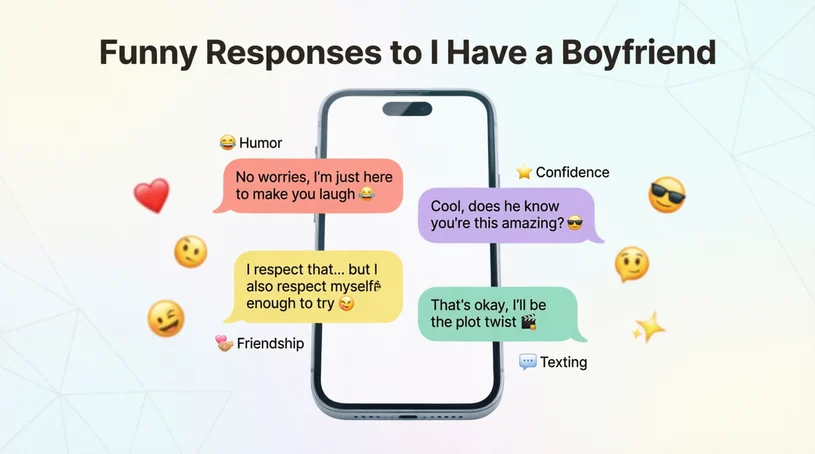
The best funny responses to I have a boyfriend keep things light, confident, and respectful without making the situation awkward. Whether you’re joking with friends, handling a playful rejection, or replying in a DM, the right comeback can make the moment memorable.
We’ve all been there: you’re chatting with someone, making a friendly comment, or testing the waters with a little flirtation when they suddenly say, “I have a boyfriend.” Cue the awkward pause! Whether you’re texting a crush, sliding into someone’s DMs, joking with friends, or navigating an unexpected conversation at work, that sentence can mean different things depending on the situation. The good news? You don’t need to panic, deliver a dramatic speech, or disappear from the conversation like a magician.
With the right words, you can keep things funny, confident, and comfortable. These funny responses to I have a boyfriend cover everything from witty comebacks and playful jokes to polite replies and clever ways to change the subject. The secret is knowing when to joke and when to respect the boundary.
1. Funny Responses to I Have a Boyfriend
- “Congratulations! When’s the wedding?”
Example: Use it when a friend announces her relationship in a playful conversation.
Meaning: It exaggerates the announcement for harmless humor. - “Does he come with a user manual?”
Example: Use it when joking with a friend about her partner.
Meaning: It playfully treats the boyfriend like a complicated gadget. - “Nice! I hope he has good Wi-Fi.”
Example: Use it in a casual conversation where everyone enjoys silly jokes.
Meaning: It adds an unexpected, internet-inspired twist. - “Should I send a congratulatory card?”
Example: Use it when someone shares the news in a joking tone.
Meaning: It humorously makes an ordinary relationship announcement sound official. - “Is there a waiting list for the position?”
Example: Use it among friends who enjoy exaggerated humor.
Meaning: It turns the relationship into a pretend job opportunity. - “Excellent! I was running out of relationship updates.”
Example: Use it when teasing a friend who regularly shares romantic news.
Meaning: It gently pokes fun at constant relationship updates. - “Does he know he’s dating a celebrity?”
Example: Use it when your friend loves a little playful flattery.
Meaning: It combines a compliment with light humor. - “Amazing! I’ll inform the neighborhood.”
Example: Use it when the conversation is already full of jokes.
Meaning: It exaggerates the news as if everyone needs an announcement. - “Should I RSVP to the anniversary party now?”
Example: Use it when teasing a close friend about her relationship.
Meaning: It playfully jumps ahead to a future celebration. - “Okay, but can he beat my high score?”
Example: Use it during a gaming conversation with a friend.
Meaning: It redirects the topic toward a friendly competition. - “Good for him! He’s clearly doing something right.”
Example: Use it when you want a funny compliment without flirting seriously.
Meaning: It praises the boyfriend while keeping the mood relaxed. - “Plot twist: I was just asking for restaurant recommendations.”
Example: Use it when someone misunderstands your innocent question.
Meaning: It humorously clears up a possible misunderstanding.
2. Witty Responses to I Have a Boyfriend
- “And I have a favorite pizza topping. We all have our things.”
Example: Use it with a friend who appreciates clever, random humor.
Meaning: It compares a relationship to an ordinary personal preference. - “Good to know. I’ll update my imaginary calendar.”
Example: Use it when you want a dry, playful comeback.
Meaning: It makes the announcement sound unnecessarily official. - “Excellent. I love a well-organized personal life.”
Example: Use it when teasing someone who enjoys sarcastic humor.
Meaning: It acknowledges the news with exaggerated formality. - “Is that the season finale, or are there more updates?”
Example: Use it when friends are discussing relationship news.
Meaning: It compares personal updates to an ongoing television series. - “Sounds like your relationship status is fully booked.”
Example: Use it when someone mentions their partner during casual conversation.
Meaning: It uses a reservation metaphor to describe being unavailable. - “Noted. My imaginary plans have been canceled.”
Example: Use it when you’re joking about a harmless misunderstanding.
Meaning: It creates a pretend cancellation for comic effect. - “Good thing I wasn’t applying for the boyfriend position.”
Example: Use it when you want to clarify that you were not flirting.
Meaning: It removes romantic pressure with a clever joke. - “Great! I was about to ask who stole the last slice of pizza.”
Example: Use it when you want to shift an awkward moment toward something silly.
Meaning: It changes the topic unexpectedly. - “That explains the romantic background music.”
Example: Use it when your friend is being unusually romantic.
Meaning: It jokingly gives the situation a movie-like atmosphere. - “Wonderful. The relationship department is fully staffed.”
Example: Use it when everyone is joking about dating.
Meaning: It presents romance as a workplace department. - “I respect a person with an established support system.”
Example: Use it with someone who appreciates dry humor.
Meaning: It describes a boyfriend in deliberately formal language. - “Thanks for the update. My imaginary spreadsheet is complete.”
Example: Use it when someone delivers the news very seriously.
Meaning: It exaggerates how much the information supposedly matters.
3. Sarcastic Responses to I Have a Boyfriend
- “Breaking news! Someone call the press.”
Example: Use it among friends who enjoy exaggerated sarcasm.
Meaning: It jokingly treats the announcement as headline-worthy news. - “Well, there goes my imaginary acceptance speech.”
Example: Use it when everyone is comfortable with playful teasing.
Meaning: It makes fun of a fictional romantic scenario. - “Thank you for this exclusive announcement.”
Example: Use it when someone shares the information with dramatic seriousness.
Meaning: It sarcastically frames an ordinary statement as an exclusive interview. - “I’ll alert the relationship authorities immediately.”
Example: Use it with friends who enjoy absurd humor.
Meaning: It invents an imaginary authority for comic effect. - “And here I was expecting a weather forecast.”
Example: Use it when the information comes completely out of nowhere.
Meaning: It highlights the unexpected change of topic. - “A groundbreaking development in today’s news.”
Example: Use it when you want a dry, exaggerated reaction.
Meaning: It jokingly presents familiar information as a major discovery. - “Should I take notes, or is there a presentation?”
Example: Use it when someone sounds unusually formal about their relationship.
Meaning: It teases the seriousness of the announcement. - “I’ll add that to the list of things I didn’t ask.”
Example: Use it only with close friends who understand your humor.
Meaning: It expresses mock indifference to unnecessary information. - “Thank goodness, my day was missing a plot twist.”
Example: Use it when the conversation is already playful.
Meaning: It exaggerates the announcement’s effect on your day. - “I see the press conference has officially begun.”
Example: Use it when someone dramatically announces their relationship status.
Meaning: It makes the situation sound like a public event. - “Should we celebrate with balloons and a marching band?”
Example: Use it with a friend who enjoys theatrical jokes.
Meaning: It exaggerates an ordinary announcement into a celebration. - “Excellent. I’ll file that under today’s unexpected information.”
Example: Use it when you want a restrained, sarcastic reply.
Meaning: It playfully suggests the information has little practical importance.
4. Flirty Responses to I Have a Boyfriend
Use these only when the conversation is clearly playful and the other person welcomes harmless flirting. If they’re setting a firm boundary, acknowledge it and move on.
- “Lucky guy! I hope he appreciates you.”
Example: Use it when you want to compliment someone without pursuing them.
Meaning: It expresses admiration while respecting their relationship. - “Fair enough. He clearly has excellent taste.”
Example: Use it after a friendly compliment receives a relationship-status clarification.
Meaning: It turns the moment into a lighthearted compliment. - “Then I’ll keep my compliments strictly friendly.”
Example: Use it when you want to make your intentions respectful.
Meaning: It establishes a friendly boundary. - “Good for him. You seem like a lovely person.”
Example: Use it when you’re genuinely complimenting someone during casual conversation.
Meaning: It shows appreciation without creating pressure. - “No worries. Your happiness is the important part.”
Example: Use it when someone politely turns down your romantic interest.
Meaning: It communicates maturity and goodwill. - “I’ll take that as my cue to behave.”
Example: Use it when a playful conversation needs a gentle reset.
Meaning: It acknowledges the boundary with humor. - “Respectfully, he has excellent luck.”
Example: Use it when you want to express admiration without pushing further.
Meaning: It compliments the person and respects their partner. - “Understood. Friendly conversation mode activated.”
Example: Use it when you want to keep chatting without romantic expectations.
Meaning: It signals a shift to a platonic interaction. - “That’s sweet. I hope you two make each other happy.”
Example: Use it when someone mentions a relationship they value.
Meaning: It offers sincere, supportive wishes. - “No competition here. I’m just appreciating good company.”
Example: Use it when your conversation was friendly rather than romantic.
Meaning: It clarifies your intentions without making things awkward. - “Got it. I’ll save my romantic movie soundtrack for another day.”
Example: Use it with a friend who enjoys playful, dramatic jokes.
Meaning: It humorously puts imagined romantic gestures on hold. - “All good. A compliment doesn’t need a sequel.”
Example: Use it when you want to end a flirtatious moment gracefully.
Meaning: It shows that you can appreciate someone without expecting anything back.
5. Polite Responses to I Have a Boyfriend
- “Oh, nice! I hope you two are happy together.”
Example: Use it when someone casually mentions their partner.
Meaning: It offers a warm and respectful acknowledgment. - “Thanks for letting me know.”
Example: Use it when someone clarifies their relationship status.
Meaning: It acknowledges their information without making assumptions. - “No problem at all. It was nice talking to you.”
Example: Use it when a conversation has reached a natural ending.
Meaning: It closes the interaction politely. - “That’s completely fine. I respect that.”
Example: Use it when someone is clearly communicating a boundary.
Meaning: It shows acceptance without argument. - “I understand. I didn’t mean to make you uncomfortable.”
Example: Use it when your comment may have sounded flirtatious.
Meaning: It recognizes their feelings and clears up your intentions. - “Of course. Thanks for being honest with me.”
Example: Use it when someone directly explains their situation.
Meaning: It appreciates their openness. - “No worries. I hope you have a lovely day.”
Example: Use it when you want to end the conversation warmly.
Meaning: It keeps the interaction pleasant and pressure-free. - “That’s lovely. How long have you been together?”
Example: Use it when you’re genuinely interested in a friendly conversation.
Meaning: It redirects the discussion toward their relationship. - “Understood. I was only being friendly.”
Example: Use it when your original intention was not romantic.
Meaning: It clarifies your intentions without sounding defensive. - “Absolutely, I appreciate you telling me.”
Example: Use it when someone wants to make their situation clear.
Meaning: It communicates respect and understanding. - “All good. No awkwardness from my side.”
Example: Use it when both people want to keep things comfortable.
Meaning: It reassures the other person that the conversation can move on. - “That’s fair. Wishing you both the best.”
Example: Use it when you want to respond graciously to a rejection.
Meaning: It ends the exchange on a positive note.
6. Confident Responses to I Have a Boyfriend
- “No worries. I know how to respect a boundary.”
Example: Use it when someone clarifies their relationship status.
Meaning: It communicates self-assurance and respect. - “All good. I can handle an honest answer.”
Example: Use it when you want to show emotional maturity.
Meaning: It demonstrates that rejection doesn’t threaten your confidence. - “Fair enough. Thanks for being straightforward.”
Example: Use it when someone communicates clearly.
Meaning: It appreciates honesty without creating tension. - “No hard feelings. We’re good.”
Example: Use it when you want to keep the atmosphere relaxed.
Meaning: It reassures the other person that there’s no resentment. - “Understood. I’ll keep it respectful.”
Example: Use it when someone sets a clear romantic boundary.
Meaning: It shows that you can accept their decision. - “That’s fine. I wasn’t looking to complicate anything.”
Example: Use it when you want to clarify that you aren’t pursuing them.
Meaning: It keeps your intentions calm and direct. - “I appreciate the honesty. No awkwardness necessary.”
Example: Use it after an unexpectedly direct response.
Meaning: It makes the interaction feel comfortable. - “No problem. I can take a hint without a presentation.”
Example: Use it with someone who appreciates dry humor.
Meaning: It combines confidence with a playful acknowledgment. - “Totally fair. Let’s keep things friendly.”
Example: Use it when you both want to continue a platonic conversation.
Meaning: It establishes a comfortable way forward. - “Thanks for clarifying. We’re on the same page.”
Example: Use it when you want to avoid misunderstandings.
Meaning: It confirms mutual understanding. - “No worries. I respect people who are clear about what they want.”
Example: Use it when someone states their relationship status directly.
Meaning: It turns a potentially awkward moment into an acknowledgment of honesty. - “All respect, no drama.”
Example: Use it when you want a short, composed response.
Meaning: It emphasizes maturity and emotional control.
7. Cute Responses to I Have a Boyfriend
- “Aww, I hope he brings you your favorite snacks.”
Example: Use it when a friend shares happy relationship news.
Meaning: It expresses affection through a small, relatable wish. - “Cute! I hope he makes you smile every day.”
Example: Use it when someone talks about their partner fondly.
Meaning: It offers a sweet wish for their happiness. - “Okay, but does he know your coffee order?”
Example: Use it when joking with a friend about romantic attention.
Meaning: It playfully highlights the little things that matter in a relationship. - “I hope he treats you like your favorite dessert.”
Example: Use it when you want a charming, lighthearted response.
Meaning: It compares affection to a comforting treat. - “That’s adorable. Love a happy ending.”
Example: Use it when hearing a positive relationship update.
Meaning: It celebrates romance in a cheerful way. - “Tell him he’s got a very important job: making you happy.”
Example: Use it when teasing a close friend about her partner.
Meaning: It playfully emphasizes care and affection. - “May your dates always include good food.”
Example: Use it when a friend mentions a new relationship.
Meaning: It offers a cute wish for enjoyable time together. - “I hope he knows your favorite song by heart.”
Example: Use it when talking about thoughtful romantic gestures.
Meaning: It celebrates the sweetness of being understood. - “A boyfriend and a built-in movie-night buddy? Nice!”
Example: Use it when discussing cozy date ideas with a friend.
Meaning: It highlights the companionship of a relationship. - “Sending you both a little happiness and a lot of snacks.”
Example: Use it when congratulating a couple in a playful way.
Meaning: It combines affection with lighthearted humor. - “I hope your love story has excellent background music.”
Example: Use it when a friend enjoys romantic movies.
Meaning: It imagines their relationship as a sweet film. - “May your relationship be full of hugs and shared fries.”
Example: Use it when you want to send a cute, funny wish.
Meaning: It celebrates everyday moments of closeness.
8. Brutal but Respectful Responses to I Have a Boyfriend
These replies work best as self-assured humor, not as insults. Avoid using them to pressure someone who has already said no.
- “Okay, and I respect that. Moving right along.”
Example: Use it when you want to end the romantic topic immediately.
Meaning: It shows that you can accept a boundary and move on. - “Thanks for the update. No further action required.”
Example: Use it when you enjoy dry, office-style humor.
Meaning: It makes the situation sound like a completed task. - “Understood. This conversation remains drama-free.”
Example: Use it when you want to keep things calm.
Meaning: It communicates that you’re not interested in an argument. - “Fair enough. I’m not here to audition.”
Example: Use it when you want to emphasize that you won’t compete for attention.
Meaning: It communicates self-respect without criticizing the other person. - “No worries. I’m perfectly fine with a clear answer.”
Example: Use it when someone turns down your interest.
Meaning: It presents rejection as an ordinary part of conversation. - “Got it. Boundary received and respected.”
Example: Use it when someone is direct about being unavailable.
Meaning: It confirms that you understand their message. - “All good. I don’t do relationship competitions.”
Example: Use it when you want to make your position clear.
Meaning: It rejects the idea of competing with someone’s partner. - “That’s fine. I have no interest in making things complicated.”
Example: Use it when you prefer a simple, honest interaction.
Meaning: It establishes that you won’t pursue an unavailable person. - “Message received, loud and clear.”
Example: Use it when a short response is all that’s needed.
Meaning: It signals that the conversation doesn’t need further explanation. - “No problem. I know when to leave a situation alone.”
Example: Use it when you want to demonstrate maturity.
Meaning: It emphasizes your willingness to respect someone’s decision. - “Fair enough. I came for a conversation, not a competition.”
Example: Use it when your original approach was friendly or casual.
Meaning: It distinguishes genuine conversation from romantic rivalry. - “Understood. I’ll leave it there, respectfully.”
Example: Use it when the other person wants the subject closed.
Meaning: It ends the exchange without hostility.
9. Chill and Casual Responses to I Have a Boyfriend
- “Oh, cool!”
Example: Use it when someone casually mentions their partner.
Meaning: It acknowledges the information without making a big deal of it. - “Nice, good for you!”
Example: Use it during a friendly conversation.
Meaning: It communicates a positive, relaxed reaction. - “Gotcha, no worries.”
Example: Use it when someone clarifies their relationship status.
Meaning: It shows that you understand and accept the information. - “All good, we’re just chatting.”
Example: Use it when you want to clarify that you’re being friendly.
Meaning: It removes unnecessary romantic tension. - “Fair enough!”
Example: Use it when you need a short and natural reply.
Meaning: It signals acceptance without overexplaining. - “Cool, hope things are going well.”
Example: Use it when the conversation is casual and friendly.
Meaning: It expresses goodwill without prying. - “No stress, we’re good.”
Example: Use it when someone seems worried about making things awkward.
Meaning: It reassures them that the conversation can continue comfortably. - “Okay, thanks for letting me know.”
Example: Use it when you want to keep the interaction straightforward.
Meaning: It acknowledges the information politely. - “Nice! Anyway, how was your weekend?”
Example: Use it when you’d like to move to another topic.
Meaning: It transitions the conversation naturally. - “Got it. What’s everyone up to today?”
Example: Use it when talking in a group setting.
Meaning: It shifts the discussion to something inclusive. - “That’s fair. No awkward vibes here.”
Example: Use it when both people want to remain friendly.
Meaning: It keeps the atmosphere relaxed. - “Cool beans. Back to our regularly scheduled conversation.”
Example: Use it with friends who enjoy silly expressions.
Meaning: It playfully returns the discussion to its original subject.
10. Clever Responses to I Have a Boyfriend
- “Good to know. I’ll keep this conversation in the friendship category.”
Example: Use it when you want to make your intentions clear.
Meaning: It separates friendliness from romantic interest. - “Sounds like the position is already filled.”
Example: Use it when someone announces their relationship status.
Meaning: It compares dating to a job vacancy. - “No application submitted, no problem.”
Example: Use it when you weren’t trying to flirt.
Meaning: It jokes about the idea of applying for a relationship. - “Thanks for clarifying the terms and conditions.”
Example: Use it when you enjoy a clever, formal-sounding joke.
Meaning: It makes the boundary sound like part of an agreement. - “Understood. Friendship remains available.”
Example: Use it when you’re happy to keep things platonic.
Meaning: It suggests a friendly connection without romantic expectations. - “Looks like that chapter is already written.”
Example: Use it when discussing relationships in a thoughtful conversation.
Meaning: It uses a book metaphor to describe an established relationship. - “No worries. I wasn’t trying to change the storyline.”
Example: Use it when the conversation feels like a romantic comedy.
Meaning: It acknowledges the relationship without interfering. - “Excellent. That clears up the plot.”
Example: Use it when someone explains their status after a misunderstanding.
Meaning: It compares the clarification to a plot reveal. - “Friendship mode: successfully installed.”
Example: Use it when both people enjoy tech-inspired jokes.
Meaning: It humorously signals a switch to platonic interaction. - “Thanks for making the situation crystal clear.”
Example: Use it when someone communicates directly.
Meaning: It appreciates clarity and avoids further confusion. - “Understood. No romantic subplot needed.”
Example: Use it when you want a movie-inspired response.
Meaning: It frames the interaction as a story without a romance. - “Good to know. I’ll keep my expectations where they belong.”
Example: Use it when you want to respond thoughtfully and confidently.
Meaning: It communicates realistic expectations and self-awareness.
11. Dramatic Responses to I Have a Boyfriend
- “My imaginary romantic comedy has been canceled!”
Example: Use it with friends who enjoy theatrical jokes.
Meaning: It turns a minor moment into a fictional movie tragedy. - “Somebody cue the sad violin music.”
Example: Use it when exaggerating an awkward moment for laughs.
Meaning: It adds mock sadness to the situation. - “And just like that, the soundtrack changed.”
Example: Use it when a conversation takes an unexpected turn.
Meaning: It compares the moment to a dramatic scene. - “I shall recover after three business days.”
Example: Use it when friends enjoy over-the-top humor.
Meaning: It exaggerates how long it might take to recover from rejection. - “My fictional love story lasted exactly seven seconds.”
Example: Use it when you want a self-aware romantic joke.
Meaning: It makes fun of an imagined crush. - “Someone dim the lights. The scene is over.”
Example: Use it when you want a theatrical punchline.
Meaning: It treats the moment as the end of a stage performance. - “Tell the orchestra to pack up.”
Example: Use it after a playful flirtation ends.
Meaning: It signals the end of the imaginary romance. - “I need a commercial break to process this information.”
Example: Use it when the news arrives unexpectedly.
Meaning: It exaggerates the need for a pause. - “My imaginary wedding playlist is devastated.”
Example: Use it among close friends who understand your humor.
Meaning: It creates a fictional romantic disappointment. - “What an unexpected season finale.”
Example: Use it when a conversation ends more quickly than expected.
Meaning: It compares the moment to a surprising television ending. - “And the award for fastest plot twist goes to you.”
Example: Use it when the relationship clarification surprises you.
Meaning: It jokingly celebrates the sudden change in the conversation. - “I shall now return to my regularly scheduled life.”
Example: Use it when you want to wrap up a playful moment.
Meaning: It brings the exaggerated drama to a humorous close.
12. Sweet and Supportive Responses to I Have a Boyfriend
- “That’s lovely. I hope he treats you well.”
Example: Use it when someone shares relationship news sincerely.
Meaning: It expresses genuine care for their happiness. - “I’m happy for you!”
Example: Use it when a friend tells you about their relationship.
Meaning: It communicates straightforward support. - “I hope you both keep making wonderful memories.”
Example: Use it when someone talks about a meaningful relationship.
Meaning: It wishes the couple a happy future. - “That’s sweet. You deserve kindness and respect.”
Example: Use it when a friend discusses a relationship they value.
Meaning: It emphasizes the importance of healthy treatment. - “Aww, I hope he makes you feel appreciated.”
Example: Use it when responding to positive relationship news.
Meaning: It expresses a wish for emotional care. - “Wishing you both lots of laughter and happiness.”
Example: Use it when congratulating someone on a relationship.
Meaning: It offers a warm wish for the couple. - “That’s wonderful. I hope you’re enjoying this chapter.”
Example: Use it when a friend talks about a new romance.
Meaning: It celebrates the experience without making assumptions. - “I hope you always feel comfortable being yourself with him.”
Example: Use it during a sincere conversation about relationships.
Meaning: It highlights authenticity and emotional safety. - “That’s nice! It’s great to have someone who cares.”
Example: Use it when a friend shares something positive about their partner.
Meaning: It appreciates the value of companionship. - “I hope your relationship keeps growing in a healthy way.”
Example: Use it when discussing a serious relationship.
Meaning: It wishes the couple lasting mutual growth. - “May you always find reasons to smile together.”
Example: Use it when you want a heartfelt response.
Meaning: It offers an affectionate wish for their future. - “That’s great news. I’m rooting for your happiness.”
Example: Use it when supporting someone you care about.
Meaning: It communicates sincere encouragement.
13. Short and Punchy Responses to I Have a Boyfriend
- “Lucky him!”
Example: Use it after a playful compliment.
Meaning: It offers a brief, positive acknowledgment. - “Fair enough!”
Example: Use it when someone states their relationship status.
Meaning: It accepts the information simply. - “Noted!”
Example: Use it when you want a dry, concise response.
Meaning: It confirms that you’ve heard them. - “All good!”
Example: Use it when you want to remove awkwardness.
Meaning: It keeps the interaction friendly. - “Respect that!”
Example: Use it when someone makes their boundary clear.
Meaning: It communicates acceptance. - “Gotcha!”
Example: Use it during an informal conversation.
Meaning: It signals understanding. - “No worries!”
Example: Use it when you want to reassure someone.
Meaning: It removes pressure from the situation. - “Case closed!”
Example: Use it when joking with a friend.
Meaning: It humorously ends the topic. - “Crystal clear!”
Example: Use it when someone is being direct.
Meaning: It confirms that their message is understood. - “We’re cool!”
Example: Use it when you want to maintain a friendly connection.
Meaning: It communicates that there’s no hard feeling. - “Friendship it is!”
Example: Use it when you’re happy to keep things platonic.
Meaning: It establishes a friendly direction. - “Message received!”
Example: Use it when a short, confident response is appropriate.
Meaning: It confirms that you understand the boundary.
14. Responses to I Have a Boyfriend in Texts and DMs
- “Haha, no worries! Just keeping the conversation friendly 😊”
Example: Use it when someone clarifies their status in a direct message.
Meaning: It removes pressure and keeps the tone warm. - “Got it! Hope you two are doing well.”
Example: Use it when replying to a relationship update over text.
Meaning: It acknowledges the relationship positively. - “All good, I promise my keyboard had innocent intentions 😂”
Example: Use it when your message may have sounded flirtatious.
Meaning: It uses humor to clarify your intentions. - “No problem! Back to sending memes, then.”
Example: Use it when you want to keep a friendly online connection.
Meaning: It returns the conversation to casual interaction. - “Thanks for the heads-up. No awkwardness on my end.”
Example: Use it when someone seems concerned about your reaction.
Meaning: It reassures them that you understand. - “Understood. I’ll keep the DMs strictly friendly.”
Example: Use it when you want to make your intentions explicit.
Meaning: It sets a respectful tone for future messages. - “Haha, fair enough. What’s your favorite movie, anyway?”
Example: Use it when the conversation can naturally move to another topic.
Meaning: It redirects the discussion without lingering on romance. - “No stress! I was just being nice.”
Example: Use it when your original message was a simple compliment.
Meaning: It clarifies your intention without becoming defensive. - “All good. I hope your notifications are treating you kindly.”
Example: Use it when you want a lighthearted change of subject.
Meaning: It keeps the interaction playful and casual. - “Noted 😂 I’ll retire my imaginary pickup lines.”
Example: Use it when you share a joking tone with the other person.
Meaning: It humorously acknowledges the end of the flirtation. - “No worries! Consider this a friendly internet interaction.”
Example: Use it when you want to remove ambiguity in an online conversation.
Meaning: It makes your intentions clear. - “Got it. Sending good vibes, not mixed signals.”
Example: Use it when you want to maintain a positive tone.
Meaning: It emphasizes friendliness and clarity.
15. Responses to I Have a Boyfriend When You Were Just Being Friendly
- “Oh, I wasn’t flirting, but thanks for letting me know!”
Example: Use it when your comment was genuinely innocent.
Meaning: It clarifies your intention without criticizing their response. - “No worries! I talk to people, not just potential dates.”
Example: Use it when you want to explain your friendly nature.
Meaning: It separates everyday conversation from romantic interest. - “Haha, I was asking about your coffee order, not your relationship status.”
Example: Use it when someone misunderstands an ordinary question.
Meaning: It gently points out the misunderstanding. - “All good! My friendliness doesn’t come with a proposal.”
Example: Use it when a casual interaction becomes unexpectedly serious.
Meaning: It humorously distinguishes kindness from romantic intent. - “No problem. Friendly conversation is still allowed, right?”
Example: Use it when you want to keep chatting platonically.
Meaning: It invites a return to ordinary conversation without demanding one. - “I understand. I was just trying to be nice.”
Example: Use it when you want a straightforward clarification.
Meaning: It communicates your intentions calmly. - “Fair enough! I wasn’t planning our anniversary.”
Example: Use it with someone who appreciates a silly joke.
Meaning: It exaggerates the difference between friendliness and romance. - “Haha, no secret agenda here.”
Example: Use it when you want to remove any uncertainty about your motives.
Meaning: It communicates that your conversation was straightforward. - “We’re good. I can compliment someone without expecting anything.”
Example: Use it when you want to emphasize a respectful approach.
Meaning: It shows that a compliment doesn’t create an obligation. - “No stress. I was just making conversation.”
Example: Use it when a casual question has been misunderstood.
Meaning: It explains your intention in a relaxed way. - “It’s all good. I respect your relationship and your space.”
Example: Use it when you want to make your respect explicit.
Meaning: It acknowledges their relationship and personal boundaries. - “No worries. Let’s pretend my sentence came with subtitles.”
Example: Use it when a friendly misunderstanding needs a lighthearted ending.
Meaning: It jokes that your intentions were not communicated clearly.
Frequently Asked Questions
What does “I have a boyfriend” mean?
It usually means someone is in a relationship and may be setting a romantic boundary.
What does it mean when someone says “I have a boyfriend” flirtatiously?
They may be joking, but don’t assume interest. Respect the boundary unless they clearly clarify otherwise.
How should I respond professionally to “I have a boyfriend”?
Say, “Thanks for letting me know. No worries at all.” Keep the interaction respectful.
What should I say if I don’t actually mean to flirt?
Try, “Oh, I was just being friendly! No worries.”
Is humor appropriate when someone says “I have a boyfriend”?
Yes, if the mood is comfortable. Avoid jokes that pressure, insult, or embarrass them.
Should I keep flirting after someone says they have a boyfriend?
No. Acknowledge their statement and avoid pursuing them unless their circumstances clearly change.
What’s the funniest short response to “I have a boyfriend”?
Try, “Congratulations! When’s the wedding?” with friends who enjoy playful jokes.
How do I respond without making things awkward?
Keep it simple: “Got it, no worries!” Then change the subject naturally.
Can I use these responses in text messages?
Yes. Choose a reply that fits your relationship, the conversation, and the other person’s tone.
What if someone says “I have a boyfriend” rudely?
Stay calm and say, “Understood. Take care.” You don’t need to argue or prove anything.
Conclusion
Knowing how to respond when someone says “I have a boyfriend” can turn an awkward moment into a relaxed, memorable interaction. The best funny responses to I have a boyfriend aren’t about winning an argument or changing someone’s mind. They’re about expressing your personality while respecting the other person’s relationship and boundaries. Whether you prefer witty one-liners, sarcastic jokes, sweet comments, or confident replies, choose words that feel natural to you.
Remember, humor works best when everyone can enjoy it. A simple acknowledgment can sometimes make a better impression than the cleverest comeback. Save your favorite replies, share them with friends, and try the ones that match your style.