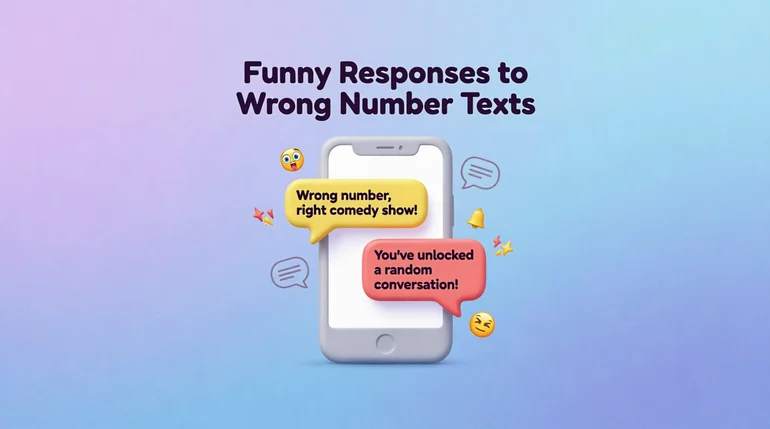
The best funny responses to wrong number texts turn an awkward mix-up into a memorable moment. Whether you want to be polite, sarcastic, playful, or witty, the right reply can make the unexpected message entertaining without taking things too far.
Top 5 replies: “Wrong number, right comedy,” “I think your contacts need an update,” “Sorry, this phone only accepts messages from celebrities,” “New phone, who dis?” and “You’ve reached the wrong legend.”
Ever received a text from someone asking about dinner plans, confirming a meeting, or greeting you like you’ve been friends for years? Then you check the number and realize you’ve never met this person in your life. Welcome to the wonderfully awkward world of wrong number texts! These unexpected messages can arrive while you’re relaxing at home, working, scrolling through social media, or chatting with your crush.
Sometimes, a simple “Sorry, wrong number” is enough. Other times, a witty comeback can make the situation much more entertaining. The best funny responses to wrong number texts depend on the sender, the message, and your mood. You might prefer a clever one-liner, a polite correction, or a playful response that leaves the sender smiling.
1. Funny Responses to Wrong Number Texts
These replies are perfect when you want to make an unexpected message a little more entertaining without being rude.
1. Wrong number, right comedy! Example: Use it when someone sends a confusing message meant for somebody else. Meaning: You find the mix-up amusing rather than annoying.
2. I think your contacts need a software update. Example: Send it after receiving a message meant for another person. Meaning: You jokingly suggest that their contact list needs fixing.
3. You’ve reached the wrong legend. Example: Use it when the sender greets you like an old friend. Meaning: You introduce yourself with playful confidence.
4. Sorry, this number comes with zero context. Example: Send it when someone mentions plans you know nothing about. Meaning: You point out the confusion humorously.
5. Plot twist: I’m not who you think I am. Example: Use it when the sender assumes they know you. Meaning: You turn the mistake into a funny surprise.
6. Your phone has officially betrayed you. Example: Send it when someone texts the wrong person twice. Meaning: You blame the technology for the awkward situation.
7. I was not expecting this crossover episode. Example: Use it when a stranger suddenly enters your messages. Meaning: You compare the unexpected text to a surprising TV moment.
8. Wrong number, unexpected entertainment. Example: Send it when the message genuinely makes you laugh. Meaning: You appreciate the accidental humor.
9. I think we skipped the introduction. Example: Use it when the sender starts chatting as if you already know each other. Meaning: You highlight the missing introduction playfully.
10. Congratulations, you’ve unlocked a random stranger! Example: Send it when the sender seems confused about your identity. Meaning: You make the accidental contact sound like a game achievement.
11. Sorry, I don’t recognize this episode of my life. Example: Use it when someone refers to a shared memory you don’t have. Meaning: You humorously reject the unfamiliar situation.
12. Well, this conversation took an unexpected turn. Example: Send it after a surprising message from an unknown number. Meaning: You acknowledge the mix-up with lighthearted amusement.
2. Sarcastic Responses to Wrong Number Texts
A little sarcasm can work when the sender’s message is harmless and you want to answer with a witty edge.
1. Ah yes, the famous art of texting the wrong person. Example: Use it when someone accidentally sends a message meant for a friend. Meaning: You lightly tease them about the mistake.
2. My crystal ball says you’ve got the wrong number. Example: Send it when the sender seems certain they know you. Meaning: You use exaggerated humor to correct their assumption.
3. Amazing communication skills, truly. Example: Use it after an obvious contact-list mistake. Meaning: You deliver a playful sarcastic jab.
4. Should I pretend I know what you’re talking about? Example: Send it when the message contains unfamiliar plans. Meaning: You point out the confusion with dry humor.
5. Five stars for effort, zero for accuracy. Example: Use it when someone repeatedly gets the number wrong. Meaning: You tease their texting accuracy.
6. Your contacts are playing hide-and-seek again. Example: Send it after an accidental message. Meaning: You jokingly blame their contact list.
7. Well, someone needs to check their address book. Example: Use it when the sender confidently addresses you by another name. Meaning: You suggest a correction with a sarcastic tone.
8. I would answer, but I wasn’t invited to this conversation. Example: Send it when the sender discusses a private plan. Meaning: You emphasize that the message wasn’t meant for you.
9. A mysterious message from a mysterious stranger. How original. Example: Use it when an unknown sender starts a confusing conversation. Meaning: You make the situation sound like an amusing mystery.
10. Did my phone number win a random selection contest? Example: Send it when you receive an unexpected invitation. Meaning: You joke about being selected by mistake.
11. I see your keyboard is making independent decisions. Example: Use it when autocorrect or a saved contact may have caused the mistake. Meaning: You blame the phone in a witty way.
12. I’ll forward this to the department of incorrect numbers. Example: Send it when the sender’s message is particularly confusing. Meaning: You invent a fictional department to emphasize the error.
3. Polite Responses to Wrong Number Texts
Not every mix-up needs a joke. These replies help you correct the sender without making them feel embarrassed.
1. Hi, I think you may have the wrong number. Example: Use it when a stranger sends a normal personal message. Meaning: You correct the mistake in a friendly way.
2. Sorry, I don’t think we’ve met. Example: Send it when someone greets you by a familiar nickname. Meaning: You clarify that you don’t recognize them.
3. I believe this message was meant for someone else. Example: Use it when the text contains personal plans. Meaning: You politely explain the likely mistake.
4. Hey, just letting you know you’ve reached the wrong person. Example: Send it when the sender asks a straightforward question. Meaning: You give a clear and considerate correction.
5. No worries, but I think you have the wrong contact. Example: Use it when the sender apologizes for their mistake. Meaning: You reassure them that the mix-up is understandable.
6. I don’t know that person, so you may want to double-check the number. Example: Send it when someone asks about a mutual friend you don’t know. Meaning: You explain the issue and offer a helpful suggestion.
7. I think you meant to message somebody else. Have a good day! Example: Use it when you want to end the exchange warmly. Meaning: You correct the mistake while remaining courteous.
8. Sorry, this isn’t the number you’re looking for. Example: Send it when the sender seems confused. Meaning: You deliver a simple correction.
9. Thanks for reaching out, but I believe there’s been a mix-up. Example: Use it for a message that sounds formal or business-related. Meaning: You address the sender respectfully.
10. I think you may have one digit wrong. Example: Send it when the message seems intended for a specific individual. Meaning: You suggest a possible explanation without blaming anyone.
11. You’ve got the wrong number, but I hope you find the right person! Example: Use it when you want to be especially friendly. Meaning: You correct the mistake and wish the sender well.
12. No problem at all. These things happen! Example: Send it after the sender apologizes. Meaning: You show understanding and remove any awkwardness.
4. Brutally Witty Responses to Wrong Number Texts
These sharp replies are for harmless situations when you want your humor to be direct and memorable without insulting the sender personally.
1. Wrong number. Even your phone knows you need new contacts. Example: Use it when a friend-like message reaches a stranger. Meaning: You make a playful joke about their contact list.
2. I’m a stranger, not your missing contact. Example: Send it when someone expects you to recognize them. Meaning: You firmly establish that they have the wrong person.
3. Your message has arrived at the wrong destination. Example: Use it when the sender discusses private arrangements. Meaning: You point out the error with a crisp delivery.
4. Please redirect your expectations elsewhere. Example: Send it when someone expects an answer about plans you never made. Meaning: You make it clear that their assumptions don’t apply to you.
5. That conversation belongs to somebody else’s inbox. Example: Use it when the sender shares details meant for a friend. Meaning: You explain that the message has landed in the wrong place.
6. I can’t help you. I’m not even in this storyline. Example: Send it when someone asks about a situation you don’t recognize. Meaning: You distance yourself from their confusion humorously.
7. You’ve mistaken a stranger for a supporting character. Example: Use it when the sender acts as if you are part of their plans. Meaning: You highlight your unexpected role in their message.
8. Your confidence is impressive. Your number accuracy needs work. Example: Send it when someone confidently insists they know you. Meaning: You contrast their certainty with the obvious mistake.
9. I have no idea who you are, but your phone seems convinced. Example: Use it when the sender refuses to recognize the error. Meaning: You highlight the mismatch between their assumption and reality.
10. This inbox has no record of your storyline. Example: Send it when someone references an unfamiliar event. Meaning: You use a fictional-record joke to emphasize the confusion.
11. Wrong recipient. Please adjust your aim. Example: Use it after a mistaken invitation or greeting. Meaning: You deliver a concise, sharp correction.
12. I’m not the person you’re looking for, and my résumé proves it. Example: Send it when the sender mistakes you for a professional contact. Meaning: You make the identity mix-up sound amusingly official.
5. Flirty Responses to Wrong Number Texts
Sometimes an accidental message creates a fun opportunity for light flirting. Keep it playful, and only continue if the other person seems comfortable.
1. Wrong number, or did fate get creative? Example: Use it when the sender is friendly and the conversation feels playful. Meaning: You jokingly suggest that the mistake might be a lucky coincidence.
2. I wasn’t expecting a mystery texter today. Example: Send it when an unknown person opens with a charming greeting. Meaning: You express curiosity with a hint of flirtation.
3. Well, hello, unexpected stranger. Example: Use it when the sender seems friendly and approachable. Meaning: You turn the mix-up into a warm introduction.
4. Should I say hi before we correct this mistake? Example: Send it when the exchange is lighthearted. Meaning: You suggest a playful greeting before ending the confusion.
5. Your texting skills need work, but your timing is interesting. Example: Use it when the sender has a good sense of humor. Meaning: You tease them while keeping the conversation warm.
6. I guess my number wanted to meet someone new. Example: Send it when the conversation has an easygoing, friendly tone. Meaning: You frame the accidental message as a fun coincidence.
7. Wrong person, but you seem nice so far. Example: Use it when the sender politely apologizes and you enjoy the exchange. Meaning: You offer a gentle compliment without making promises.
8. Is this how modern meet-cutes happen? Example: Send it when the mistake feels like the opening of a romantic comedy. Meaning: You jokingly compare the encounter to a romantic first meeting.
9. I came here for zero messages and got a plot twist. Example: Use it when the unexpected text makes you smile. Meaning: You express playful surprise at the interaction.
10. Your contact list may be confused, but I’m intrigued. Example: Send it when you genuinely want to keep chatting. Meaning: You communicate interest while acknowledging the mix-up.
11. Should we blame your phone or thank it? Example: Use it when both people are enjoying the conversation. Meaning: You playfully question whether the accident was a lucky event.
12. A stranger with a sense of humor? Interesting development. Example: Send it after the sender makes you laugh. Meaning: You show appreciation and invite friendly conversation.
6. Creative Responses to Wrong Number Texts
If ordinary replies feel too predictable, these imaginative lines can make your response stand out.
1. You’ve entered the wrong inbox dimension. Example: Use it when someone sends a message about unfamiliar plans. Meaning: You turn the mistake into a science-fiction joke.
2. This is the alternate universe version of your contact. Example: Send it when the sender calls you by another person’s name. Meaning: You make the identity mix-up sound like a parallel-universe adventure.
3. Your message took a detour and ended up at my digital doorstep. Example: Use it when an unexpected text arrives out of nowhere. Meaning: You describe the message as a little digital journey.
4. Welcome to the accidental conversation club. Example: Send it when the sender apologizes for the mistake. Meaning: You make them feel less embarrassed by treating the mix-up as a shared joke.
5. You’ve unlocked a bonus character in your texting game. Example: Use it when the sender seems confused about your identity. Meaning: You compare the accidental contact to a game feature.
6. This inbox belongs to a completely different chapter. Example: Send it when the sender mentions an unfamiliar event. Meaning: You describe the mix-up as a story going in the wrong direction.
7. Your text has taken the scenic route to nowhere familiar. Example: Use it when a message clearly belongs to somebody else. Meaning: You humorously describe its mistaken destination.
8. I think your message missed its train. Example: Send it when the sender shares plans or a meeting time. Meaning: You compare the error to a missed journey.
9. You’ve discovered a secret level of texting. Example: Use it when you want a playful, game-inspired response. Meaning: You frame the unexpected message as a surprise challenge.
10. This inbox wasn’t on your original itinerary. Example: Send it when the sender discusses travel or an appointment. Meaning: You turn the mistake into a travel-themed joke.
11. Your message has landed on an entirely different planet. Example: Use it when the text makes absolutely no sense to you. Meaning: You exaggerate how unfamiliar the conversation feels.
12. A wrong turn brought us to this digital intersection. Example: Send it when the sender seems embarrassed by the mix-up. Meaning: You make the accidental encounter sound like a quirky coincidence.
7. Cute Responses to Wrong Number Texts
These sweet, harmless replies are ideal when you want to correct the sender without making the exchange uncomfortable.
1. Oops, I think your text found the wrong home! Example: Use it when someone sends a friendly greeting. Meaning: You correct the mistake in a gentle, playful way.
2. Wrong number, but I hope your day is lovely! Example: Send it when the sender seems kind. Meaning: You combine a correction with a cheerful wish.
3. I think your message got a little lost. Example: Use it when the text clearly belongs to another person. Meaning: You describe the mistake in a soft, friendly way.
4. A tiny texting mix-up has entered the chat. Example: Send it when you want a lighthearted response. Meaning: You make the mistake sound small and harmless.
5. Your message took a little detour to me. Example: Use it when someone apologizes for contacting the wrong number. Meaning: You gently acknowledge the mix-up.
6. No worries, little phone mishaps happen! Example: Send it when the sender seems embarrassed. Meaning: You reassure them that mistakes are normal.
7. I think your text needs a new adventure partner. Example: Use it when someone sends an invitation meant for a friend. Meaning: You playfully suggest that the message belongs elsewhere.
8. Wrong person, but sending good vibes your way. Example: Send it when you want to end the exchange on a positive note. Meaning: You remain kind while correcting the mistake.
9. Your message has a cute little navigation problem. Example: Use it when the sender seems apologetic. Meaning: You gently joke about the phone’s lack of direction.
10. Looks like our phones introduced us by accident! Example: Send it when the sender responds with humor. Meaning: You make the accidental connection feel friendly.
11. I think you meant to text someone else, sunshine. Example: Use it when the conversation is cheerful and casual. Meaning: You offer a warm correction with a playful nickname.
12. Sending this message back to the universe with a smile. Example: Send it when you want to end the exchange sweetly. Meaning: You respond with kindness instead of irritation.
8. Professional Responses to Wrong Number Texts
Work messages can contain appointments, confidential details, or business requests. These responses keep the situation professional and clear.
1. Hello, I believe you have reached the wrong number. Example: Use it when an unfamiliar person contacts you about work. Meaning: You correct the error professionally.
2. I believe this message was intended for another recipient. Example: Send it when a business-related message arrives unexpectedly. Meaning: You identify the likely mistake without sounding confrontational.
3. Please double-check the contact details before resending. Example: Use it when the sender needs to reach a particular colleague. Meaning: You offer a practical next step.
4. Thank you for your message, but I am not the intended contact. Example: Send it when the sender asks for a work-related update. Meaning: You clarify your role politely.
5. I think there may be an error in the number entered. Example: Use it when the message sounds like an appointment confirmation. Meaning: You suggest a possible technical mistake.
6. I’m unable to assist because this message appears to be misdirected. Example: Send it when someone requests information from an unknown business contact. Meaning: You set a professional boundary.
7. Please verify the recipient before sharing any further details. Example: Use it when the message contains potentially sensitive information. Meaning: You encourage the sender to protect their privacy.
8. This is not the correct contact for that request. Example: Send it when someone asks about an unfamiliar project. Meaning: You make your lack of involvement clear.
9. I believe you’ve reached someone outside your intended contact list. Example: Use it when a business discussion arrives by mistake. Meaning: You explain the situation in formal language.
10. Please confirm the number with your intended recipient. Example: Send it when the sender mentions an appointment or meeting. Meaning: You recommend checking the details directly.
11. I apologize, but I cannot confirm the information requested. Example: Use it when someone asks for personal or business details you cannot verify. Meaning: You avoid providing information to the wrong person.
12. Thank you for understanding. I hope you reach the correct contact soon. Example: Send it when wrapping up a professional exchange. Meaning: You close the interaction courteously.
9. Sarcastic One-Liners for Random Texts
When the message is harmless but completely unexpected, a short, dry reply can deliver the perfect punchline.
1. My inbox just adopted a stranger. Example: Use it when a random greeting appears. Meaning: You joke about receiving an unexpected message.
2. I don’t remember subscribing to this conversation. Example: Send it when someone starts chatting without context. Meaning: You compare the accidental message to an unwanted subscription.
3. This must be the wrong episode of my day. Example: Use it when the message feels completely out of place. Meaning: You describe the situation as an unexpected interruption.
4. My phone is making friends without my permission. Example: Send it when a stranger messages you casually. Meaning: You jokingly blame your phone for the interaction.
5. Interesting. My calendar says nothing about this. Example: Use it when someone asks about plans you never made. Meaning: You humorously reject their assumption.
6. I see we’ve skipped several chapters. Example: Send it when a stranger writes as if you know each other. Meaning: You point out the missing context.
7. I must have missed the stranger-introduction meeting. Example: Use it when the sender expects you to recognize them. Meaning: You make the lack of an introduction sound official.
8. This conversation arrived without an appointment. Example: Send it when an unknown person messages you unexpectedly. Meaning: You jokingly treat the message like an unplanned visit.
9. My contact list has apparently developed a sense of adventure. Example: Use it when a saved contact sends a message meant for another person. Meaning: You blame the contact list for the confusion.
10. I think your message has a navigation problem. Example: Send it when the sender asks a question unrelated to you. Meaning: You point out the wrong destination with dry humor.
11. Not my plot, not my characters, not my problem. Example: Use it when someone discusses unfamiliar personal drama. Meaning: You distance yourself from a conversation that doesn’t involve you.
12. This inbox wasn’t briefed on the situation. Example: Send it when a message assumes you know important details. Meaning: You humorously explain that you lack the context.
10. Chill and Casual Responses to Wrong Number Texts
Sometimes, the best response is relaxed and effortless. These options are great for everyday texting.
1. Hey, wrong number I think. Example: Use it when a stranger sends a casual message. Meaning: You correct the error without making a big deal of it.
2. Oops, not me! Example: Send it when someone uses the wrong name. Meaning: You offer a quick, friendly correction.
3. Think you’ve got the wrong chat. Example: Use it when the message seems meant for a friend. Meaning: You point out the mistake casually.
4. Hey, I don’t think we know each other. Example: Send it when the sender starts a conversation without context. Meaning: You clarify your unfamiliarity in a relaxed way.
5. Nope, wrong person! Example: Use it when someone asks whether you are a particular individual. Meaning: You give a direct but informal answer.
6. Haha, I think you meant someone else. Example: Send it when the message is funny or harmless. Meaning: You correct the sender while keeping the mood light.
7. Not the right number, my friend. Example: Use it when the sender seems friendly. Meaning: You offer a warm, uncomplicated correction.
8. Think your text took a wrong turn. Example: Send it when the message appears unexpectedly. Meaning: You make the mistake sound like a simple detour.
9. Sorry, you’ve got the wrong inbox. Example: Use it when someone sends you a personal update. Meaning: You explain the error in everyday language.
10. Haha, no idea what you’re talking about! Example: Send it when the sender refers to unfamiliar plans. Meaning: You communicate confusion without sounding harsh.
11. Wrong number, but all good. Example: Use it when the sender apologizes. Meaning: You reassure them that there is no problem.
12. Think you need to check that number again. Example: Send it when the sender seems certain they have contacted the right person. Meaning: You suggest checking their contact details.
11. Dramatic Responses to Wrong Number Texts
For people who love a little theatrical flair, these replies make a small texting mistake feel like a scene from a movie.
1. Of all the numbers in the world, you chose mine! Example: Use it when a random message arrives at a surprising moment. Meaning: You exaggerate the coincidence for comedic effect.
2. This is not the inbox you seek. Example: Send it when the sender clearly has the wrong person. Meaning: You deliver a theatrical correction.
3. A stranger has entered my kingdom unannounced. Example: Use it when someone texts you without context. Meaning: You make the unexpected message sound like a royal event.
4. The prophecy was wrong. So was your contact list. Example: Send it when you want a fantasy-inspired joke. Meaning: You combine dramatic storytelling with a playful correction.
5. Alas, we have never crossed paths before. Example: Use it when someone greets you as an old acquaintance. Meaning: You express unfamiliarity in an exaggerated style.
6. My destiny did not include this text. Example: Send it when the message is completely unexpected. Meaning: You joke that the encounter was not part of your plans.
7. The universe has delivered a message to the wrong hero. Example: Use it when someone asks you to do something you don’t recognize. Meaning: You cast yourself as the wrong protagonist.
8. A mysterious text appears. I remain deeply confused. Example: Send it when the message makes no sense. Meaning: You turn your confusion into a dramatic scene.
9. This unexpected encounter shall be remembered. Example: Use it when the sender accidentally sends something funny. Meaning: You exaggerate the significance of the moment.
10. The plot thickens, but the number is still wrong. Example: Send it when the sender continues explaining the mix-up. Meaning: You combine suspense with a straightforward correction.
11. I have been summoned to a conversation I never joined. Example: Use it when someone sends an invitation meant for another person. Meaning: You describe the accidental message as a dramatic summons.
12. And so, our brief and confusing tale comes to an end. Example: Send it when you’re ready to wrap up the exchange. Meaning: You close the conversation with theatrical humor.
12. Clever Responses to Wrong Number Texts
These replies rely on wordplay, logic, and unexpected phrasing rather than loud jokes.
1. Right message, wrong audience. Example: Use it when the text makes sense but clearly isn’t meant for you. Meaning: You summarize the mistake in a concise way.
2. Your message reached its destination, just not its recipient. Example: Send it when someone asks why you aren’t responding as expected. Meaning: You distinguish successful delivery from correct delivery.
3. The number adds up, but the identity doesn’t. Example: Use it when the sender mistakes you for another person. Meaning: You make a numerical joke about the mismatch.
4. I think your contacts need a fact-check. Example: Send it when the sender confidently identifies you incorrectly. Meaning: You joke that their assumptions need verification.
5. A perfect example of misplaced communication. Example: Use it when a work or personal message reaches you by mistake. Meaning: You describe the situation with clever precision.
6. Your text has excellent timing and terrible directions. Example: Send it when an unexpected message arrives at a funny moment. Meaning: You praise the timing while teasing the error.
7. You’ve connected successfully to the wrong human. Example: Use it when someone expects an answer from a different person. Meaning: You describe the mix-up in technology-inspired language.
8. This is a communication success with an identity problem. Example: Send it when the sender’s message arrives clearly but is misdirected. Meaning: You make the mistake sound like a technical report.
9. The message is clear; the recipient isn’t correct. Example: Use it when you understand the message but aren’t the intended person. Meaning: You distinguish the content from the mistaken recipient.
10. Your phone knows my number, not my identity. Example: Send it when the sender confuses you with someone else. Meaning: You explain that a number alone doesn’t establish who you are.
11. We’ve achieved contact without the correct connection. Example: Use it when you want a technology-themed one-liner. Meaning: You play with the idea of connecting to the wrong person.
12. An accurate delivery to an inaccurate destination. Example: Send it when the sender seems puzzled by the mistake. Meaning: You use a logical contradiction to highlight the error.
13. Responses to Wrong Number Texts From Strangers
When you don’t recognize the sender, it’s often best to be clear, brief, and careful about how much you share.
1. Hi, I don’t recognize this number. Who were you trying to reach? Example: Use it when the message seems harmless but lacks context. Meaning: You ask for clarification without assuming anything.
2. I think you may have saved the wrong number. Example: Send it when the sender uses a familiar name for you. Meaning: You suggest a contact-saving mistake.
3. Sorry, I’m not the person you’re looking for. Example: Use it when the sender asks for someone by name. Meaning: You clarify your identity simply.
4. This number belongs to someone else. Example: Send it when the sender repeatedly uses the wrong name. Meaning: You establish that the intended recipient isn’t available here.
5. I think you’ve reached an unfamiliar contact. Example: Use it when someone starts a conversation as though you know each other. Meaning: You gently explain the lack of familiarity.
6. Wrong person, but I hope you find the right contact. Example: Send it when you want to be polite and end the exchange. Meaning: You correct the mistake with a friendly wish.
7. I can’t place this conversation. Could you check the number? Example: Use it when the message contains details you don’t recognize. Meaning: You ask the sender to verify their information.
8. I believe this message was intended for someone else. Example: Send it when the text includes an unfamiliar invitation. Meaning: You make a neutral correction.
9. I don’t know you, so I think there’s been a mix-up. Example: Use it when a stranger assumes you are acquainted. Meaning: You establish a boundary without hostility.
10. Looks like your contact list sent you on a detour. Example: Send it when you want to add a touch of humor. Meaning: You joke about the likely source of the mistake.
11. Sorry, I can’t confirm who you’re trying to reach. Example: Use it when the sender asks you to verify someone’s identity. Meaning: You avoid making assumptions about another person.
12. You’ve reached the wrong number. Take care! Example: Send it when you want to end the conversation politely. Meaning: You give a clear correction and a courteous sign-off.
14. Funny Responses to Repeated Wrong Number Texts
If someone keeps messaging the wrong number, a little humor can make the correction memorable. If the messages feel suspicious or unwanted, though, you don’t need to keep responding.
1. At this point, we’re becoming regulars. Example: Use it when the same person makes another texting mistake. Meaning: You joke about the repeated contact.
2. My number is starting to look familiar to you, isn’t it? Example: Send it after the sender repeats the same mistake. Meaning: You tease them about their contact-list confusion.
3. Wrong number again? We need a scoreboard. Example: Use it when the same sender repeatedly contacts you by mistake. Meaning: You turn the repeated error into a playful competition.
4. Your phone really wants us to be friends. Example: Send it when another unexpected message arrives from the same person. Meaning: You jokingly blame the phone for the repeated connection.
5. I’ve corrected this plot twice already. Example: Use it when the sender keeps confusing you with another person. Meaning: You highlight the repetition with a storytelling joke.
6. Should I start charging rent for space in your contacts? Example: Send it when the sender repeatedly saves or uses your number incorrectly. Meaning: You exaggerate how often your number appears in their messages.
7. This inbox has become your accidental meeting place. Example: Use it when the same sender returns with another mistaken text. Meaning: You joke about the repeated encounters.
8. I think your contact list is committed to the wrong answer. Example: Send it when the mistake continues despite previous corrections. Meaning: You tease the sender’s persistent confusion.
9. Round three! Still the wrong number. Example: Use it when another message arrives after several corrections. Meaning: You treat the repeated mistake like a game round.
10. At least we’re consistent about being strangers. Example: Send it when the sender apologizes yet again. Meaning: You use irony to acknowledge the repeated mix-up.
11. Your phone needs a map and a refresher course. Example: Use it when the sender continues contacting the wrong number. Meaning: You jokingly suggest that their phone needs better directions.
12. I think it’s time for your contacts to have a team meeting. Example: Send it when the repeated confusion becomes amusing. Meaning: You invent a funny solution to the ongoing problem.
15. Short and Quick Replies to Wrong Number Texts
Need something you can send immediately? These short responses work when you want to correct the mistake without starting a long conversation.
1. Wrong number! Example: Use it when the message is clearly misdirected. Meaning: You correct the error directly.
2. Not me, sorry! Example: Send it when someone asks for a person you don’t know. Meaning: You offer a quick, polite correction.
3. Oops, wrong chat! Example: Use it when a casual message arrives unexpectedly. Meaning: You point out the mistake in a friendly way.
4. Try again, wrong contact! Example: Send it when the sender seems confused. Meaning: You suggest checking the intended recipient.
5. Nope, different person! Example: Use it when someone calls you by another name. Meaning: You clarify your identity quickly.
6. Wrong inbox, friend! Example: Send it when you want a playful correction. Meaning: You keep the tone casual.
7. I think you missed a digit. Example: Use it when the sender may have entered the number incorrectly. Meaning: You suggest a simple explanation.
8. Your text took a detour. Example: Send it when the message appears out of nowhere. Meaning: You describe the mistake humorously.
9. Not your intended audience! Example: Use it when the sender shares information meant for a group. Meaning: You clarify that you weren’t the intended recipient.
10. Wrong number, all good! Example: Send it when the sender apologizes. Meaning: You reassure them that the mistake isn’t a problem.
11. Mystery texter, wrong destination! Example: Use it when an unknown sender starts a conversation. Meaning: You combine curiosity with a clear correction.
12. Contact list needs a check! Example: Send it when the sender appears to have selected the wrong contact. Meaning: You suggest reviewing their saved numbers.
Frequently Asked Questions
What does a wrong number text mean?
It usually means someone accidentally messaged a number other than the intended recipient.
Can a wrong number text be a way to flirt?
Possibly, but it doesn’t automatically mean romantic interest. Look at the context and their behavior.
How should I respond to a wrong number text professionally?
Politely state that they have the wrong number and suggest checking the contact details.
What if I don’t want to make a joke?
Simply say, “Sorry, I think you’ve got the wrong number.” No explanation is needed.
Is humor appropriate when replying to a wrong number text?
Yes, when the message seems harmless and your joke is respectful. Avoid humor with sensitive information.
Should I reply to every wrong number text?
No. You can ignore suspicious or unwanted messages, especially if the sender keeps contacting you.
What is the funniest short response to a wrong number text?
“Wrong number, right comedy!” is a quick, playful option.
How do I respond if someone keeps texting the wrong number?
Correct them once more if appropriate, then stop replying or block the number if needed.
What should I do if a wrong number text seems suspicious?
Don’t share personal information, click unexpected links, or send money. Block and report suspicious messages.
Can I use a funny wrong number reply with a stranger?
Yes, if the message seems harmless, but keep your response brief and avoid sharing personal details.
Conclusion
Wrong number texts might interrupt your day, but they can also give you a reason to smile. Whether you prefer a clever one-liner, a sarcastic comeback, a polite correction, or a playful response, the right words can turn an awkward mix-up into a memorable moment. The key is to match your reply to the situation and stay comfortable with the conversation. You don’t have to be hilarious every time, and you never owe a stranger a reply.
Save your favorite funny responses to wrong number texts for the next unexpected message, share the best ones with your friends, and let your personality shine through every text. Happy texting!