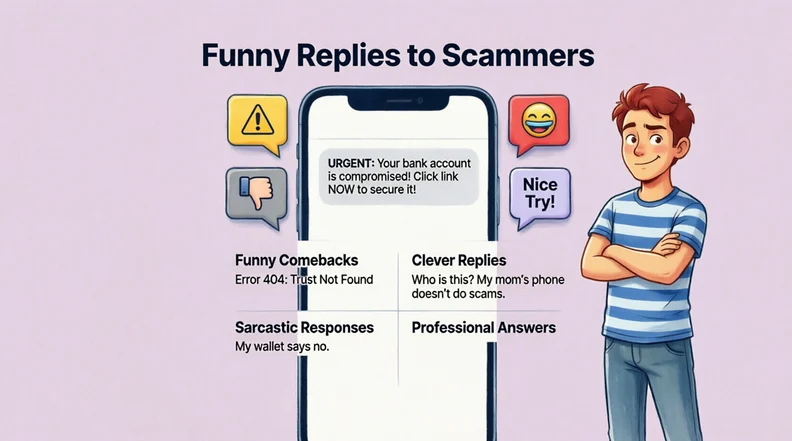
The best funny replies to scammers call out suspicious messages with wit, sarcasm, and confidence without revealing personal information. Keep your response short, protect your privacy, and remember that ignoring and blocking a scammer is often the smartest move.
Top alternatives: “Nice try, Detective Discount,” “My wallet says no,” “Scam detected, conversation rejected,” “Please hold while I contact my imaginary lawyer,” “Your script needs an update.”
Ever received a text claiming you’ve won a million dollars, a DM from a suspicious stranger promising instant wealth, or an email from someone who apparently needs your bank details to deliver your imaginary inheritance? Welcome to the internet, where scammers work overtime and your common sense deserves a promotion. Finding funny replies to scammers can turn an annoying message into a moment of humor.
Whether you’re dealing with fake giveaways, suspicious job offers, romance scams, or messages from someone pretending to be your boss, the right comeback can express your skepticism without turning the situation into a long argument.
1. Funny Replies to Scammers
1. Nice try, Sherlock, but the mystery is solved. Example: Use it when a suspicious message contains obvious clues. Meaning: You have recognized the scam and aren’t convinced.
2. My wallet just left the chat. Example: Use it when someone asks for an unexpected payment. Meaning: You have no intention of sending money.
3. Scam detected, comedy accepted. Example: Use it when a ridiculous message makes you laugh. Meaning: You find the attempt amusing rather than believable.
4. Sorry, my bank account is on vacation. Example: Use it when someone promises a fake financial opportunity. Meaning: You aren’t interested in their money-related pitch.
5. Is this the premium scam package or the free trial? Example: Use it when a message looks poorly planned. Meaning: You are poking fun at the scammer’s approach.
6. My common sense says absolutely not. Example: Use it when a stranger asks for sensitive details. Meaning: You trust your judgment instead of their story.
7. Congratulations, you’ve reached the wrong human. Example: Use it when an unexpected stranger makes an outrageous claim. Meaning: You aren’t the easy target they expected.
8. Even my spam folder is embarrassed for you. Example: Use it when an obvious scam lands in your inbox. Meaning: You think the message is particularly unconvincing.
9. Can I speak to the manager of this scam? Example: Use it when a suspicious pitch sounds almost comical. Meaning: You are joking about the poor quality of the attempt.
10. My imaginary fortune says no. Example: Use it when someone claims you have inherited money. Meaning: You don’t believe the promised reward exists.
11. Plot twist: I actually read the message. Example: Use it when a scammer expects you to overlook obvious details. Meaning: You have noticed the suspicious parts.
12. Thanks, but I already have enough problems for free. Example: Use it when a stranger offers a questionable opportunity. Meaning: You aren’t looking to add more trouble to your day.
2. Sarcastic Replies to Scammers
1. Wow, what a totally believable story. Example: Use it when an excuse sounds suspiciously elaborate. Meaning: You clearly doubt their explanation.
2. And I’m supposed to believe that because? Example: Use it when a stranger makes an extraordinary claim. Meaning: You expect evidence rather than empty promises.
3. That sounds legitimate if I forget how the internet works. Example: Use it when a message contains obvious warning signs. Meaning: You recognize how untrustworthy the offer appears.
4. Your imagination deserves a better career. Example: Use it when a scammer invents an elaborate story. Meaning: You are mocking the creativity behind the deception.
5. What a coincidence, I was just expecting a suspicious stranger. Example: Use it when an unsolicited message claims to be urgent. Meaning: You are expressing disbelief with dry humor.
6. Let me guess, I’m the lucky winner again. Example: Use it when an unknown account announces a prize. Meaning: You recognize a familiar fake giveaway tactic.
7. That explanation has more holes than my old socks. Example: Use it when details in a story contradict each other. Meaning: You believe their explanation is full of flaws.
8. Sure, and my phone is the president. Example: Use it when someone makes a wildly unrealistic claim. Meaning: You find their story too absurd to accept.
9. What an exciting opportunity to lose my money. Example: Use it when a stranger promises suspicious profits. Meaning: You see the financial risk hidden behind the pitch.
10. I admire your confidence, not your credibility. Example: Use it when someone insists their suspicious offer is genuine. Meaning: You separate their boldness from their trustworthiness.
11. That story needs editing before the next performance. Example: Use it when the message sounds rehearsed or inconsistent. Meaning: You think the explanation is poorly constructed.
12. Please continue. I need more material for my comedy collection. Example: Use it when a message is unintentionally funny. Meaning: You find the pitch entertaining rather than convincing.
3. Clever Replies to Scammers
1. My password manager says we haven’t met. Example: Use it when an unknown person requests login details. Meaning: You refuse to share account credentials.
2. Trust is earned, not delivered by random text. Example: Use it when a stranger asks you to trust an offer. Meaning: You believe trust requires verification.
3. I verify first and celebrate later. Example: Use it when someone announces unexpected winnings. Meaning: You prefer checking facts before believing claims.
4. My inbox has a built-in nonsense detector. Example: Use it when a message looks suspicious. Meaning: You are alert to potential deception.
5. A real opportunity doesn’t need my banking PIN. Example: Use it when someone asks for your financial credentials. Meaning: You understand that sensitive banking details must stay private.
6. The only thing I’m investing here is skepticism. Example: Use it when someone pushes a questionable investment. Meaning: You aren’t persuaded by promises of easy profits.
7. Your urgency isn’t my emergency. Example: Use it when a stranger pressures you to act immediately. Meaning: You won’t let artificial deadlines control your decisions.
8. I prefer receipts over promises. Example: Use it when someone makes claims they cannot verify. Meaning: You value reliable evidence.
9. My money has a strict stranger policy. Example: Use it when an unknown contact requests a transfer. Meaning: You don’t send money to unverified people.
10. Suspicious links are not my love language. Example: Use it when a stranger sends an unexpected link. Meaning: You aren’t willing to click potentially dangerous links.
11. I check the source, not the sales pitch. Example: Use it when someone insists their offer is authentic. Meaning: You verify information independently.
12. Nice attempt, but critical thinking came prepared. Example: Use it when a message relies on fear or excitement. Meaning: You won’t let emotions replace careful judgment.
4. Brutal but Witty Replies to Scammers
1. Your credibility clocked out before your message arrived. Example: Use it when a scammer makes an unbelievable claim. Meaning: You have little confidence in their story.
2. This pitch needs a refund. Example: Use it when a suspicious offer is especially unconvincing. Meaning: You think the attempt deserves no attention.
3. I’ve seen more convincing stories on cereal boxes. Example: Use it when the explanation sounds poorly invented. Meaning: You find the message ridiculously unbelievable.
4. Your message failed the first impression test. Example: Use it when an unknown sender immediately asks for money. Meaning: Their approach has made you suspicious.
5. Please upgrade your excuses before contacting me again. Example: Use it when a stranger sends an inconsistent explanation. Meaning: You aren’t impressed by the story.
6. Even my calculator can’t make these numbers believable. Example: Use it when a suspicious investment promises unrealistic returns. Meaning: You doubt the financial claims.
7. Your sales pitch has officially lost the plot. Example: Use it when a message becomes increasingly unbelievable. Meaning: You think the story has become absurd.
8. I came for messages, not financial fiction. Example: Use it when a stranger invents a money-related story. Meaning: You refuse to treat the claim as genuine.
9. That’s a lot of confidence for so little proof. Example: Use it when someone refuses to verify their claims. Meaning: You expect evidence to support their statements.
10. My patience has better things to do. Example: Use it when repeated suspicious messages become annoying. Meaning: You don’t want to waste more time.
11. Your story is doing all the work your evidence isn’t. Example: Use it when someone relies on emotional claims instead of proof. Meaning: You see the lack of reliable supporting information.
12. Consider this conversation professionally declined. Example: Use it when you want a firm, polished dismissal. Meaning: You are ending the interaction decisively.
5. Polite Replies to Scammers
1. Thanks, but I’m not interested. Example: Use it when you want a brief, neutral refusal. Meaning: You are declining without starting an argument.
2. I don’t share personal information with unknown contacts. Example: Use it when a stranger requests identifying details. Meaning: You are protecting your privacy.
3. I’ll verify this independently before taking any action. Example: Use it when someone claims to represent an organization. Meaning: You won’t rely solely on their message.
4. Please remove my number from your contact list. Example: Use it when unwanted messages keep arriving. Meaning: You are requesting that contact stop.
5. I’m unable to proceed with this request. Example: Use it when someone asks you to send money or documents. Meaning: You are refusing the request professionally.
6. I don’t respond to unsolicited financial offers. Example: Use it when an unknown sender promises profits. Meaning: You have a clear boundary around financial messages.
7. I’ll contact the organization through its official channels. Example: Use it when a stranger claims to be a bank representative. Meaning: You intend to verify the claim safely.
8. Thank you, but I won’t be clicking that link. Example: Use it when a suspicious message contains a link. Meaning: You are choosing not to risk opening it.
9. I prefer not to continue this conversation. Example: Use it when you want to disengage calmly. Meaning: You are ending contact without hostility.
10. Please provide verifiable information through an official channel. Example: Use it when a supposed business contact makes an unusual request. Meaning: You expect independent verification.
11. I’m not comfortable sharing those details. Example: Use it when someone requests private information. Meaning: You are setting a respectful personal boundary.
12. Have a good day. I won’t be responding further. Example: Use it when you want to close an unwanted conversation. Meaning: You are ending the interaction politely and firmly.
6. Professional Replies to Scammers
1. I cannot verify your identity from this message. Example: Use it when someone claims to represent your company. Meaning: You require confirmation before proceeding.
2. Please submit your request through the appropriate official channel. Example: Use it when an unknown contact requests workplace information. Meaning: You are directing the request toward a safer process.
3. I do not authorize financial transactions based on unsolicited messages. Example: Use it when a stranger requests a payment. Meaning: You follow a cautious approach to financial decisions.
4. This request requires independent verification. Example: Use it when someone asks for confidential documents. Meaning: You won’t act without confirming the request.
5. I will not disclose confidential information through this channel. Example: Use it when someone requests business credentials. Meaning: You are protecting sensitive information.
6. Please contact me through a verified business address. Example: Use it when an unknown sender claims to be a client. Meaning: You prefer established communication channels.
7. I cannot proceed without confirming the request’s authenticity. Example: Use it when a message requests an unusual action. Meaning: You prioritize verification over urgency.
8. Unexpected requests for payment require additional checks. Example: Use it when a supposed supplier sends new payment instructions. Meaning: You want to prevent fraudulent transactions.
9. I will refer this message to the appropriate department. Example: Use it when a suspicious email appears work-related. Meaning: You intend to have the message reviewed.
10. Please do not send further unsolicited requests. Example: Use it when repeated messages disrupt your work. Meaning: You are setting a clear communication boundary.
11. I follow established procedures for sensitive requests. Example: Use it when someone pressures you to bypass normal checks. Meaning: You won’t ignore security procedures.
12. This conversation will not proceed until verification is complete. Example: Use it when a stranger insists on immediate action. Meaning: You are putting security first.
7. Funny Replies to Fake Giveaway Scammers
1. I won? Someone tell my bank account to start celebrating. Example: Use it when an unknown account announces a prize. Meaning: You doubt the giveaway is genuine.
2. Where’s my trophy for surviving suspicious messages? Example: Use it when you receive another fake winning notification. Meaning: You are joking about the frequency of these scams.
3. My prize better come with a reality check. Example: Use it when a stranger promises an unbelievable reward. Meaning: You are skeptical of the announcement.
4. I didn’t enter, but apparently I’m the main character. Example: Use it when you supposedly win a contest you never joined. Meaning: You find the claim suspicious and amusing.
5. Do I get a certificate in imaginary wealth too? Example: Use it when someone claims you’ve won a fortune. Meaning: You don’t believe the promised money exists.
6. Please send the prize directly to my imagination. Example: Use it when an unknown account offers a fictional reward. Meaning: You are treating the offer as make-believe.
7. Winning is nice. Paying a mystery fee is not. Example: Use it when a supposed prize requires an upfront payment. Meaning: You recognize that the fee is a warning sign.
8. I accept prizes, not suspicious financial homework. Example: Use it when a sender requests banking details to release a reward. Meaning: You won’t provide sensitive information.
9. My lucky day apparently comes with red flags. Example: Use it when a giveaway seems too good to be true. Meaning: You suspect the offer is deceptive.
10. Is the prize real, or is that part of the entertainment? Example: Use it when a stranger makes a vague prize announcement. Meaning: You are questioning the claim’s authenticity.
11. My acceptance speech is ready, but my trust isn’t. Example: Use it when a suspicious message says you’ve won something. Meaning: You aren’t celebrating without verification.
12. Thanks for the imaginary award. I’ll display it nowhere. Example: Use it when a fake giveaway appears particularly obvious. Meaning: You are dismissing the offer with humor.
8. Funny Replies to Phishing Texts and Suspicious Links
1. That link looks like it needs a background check. Example: Use it when a stranger sends an unfamiliar URL. Meaning: You don’t trust the link.
2. My thumb has officially retired from suspicious clicking. Example: Use it when a message urges you to open a link. Meaning: You won’t click an unverified link.
3. Dear mystery link, we are not getting together today. Example: Use it when an unexpected message includes a link. Meaning: You are refusing to engage with potentially dangerous content.
4. My cybersecurity instincts just sat upright. Example: Use it when a message asks you to log in urgently. Meaning: You have noticed a potential security risk.
5. This URL has suspicious energy. Example: Use it when a link looks unfamiliar or misleading. Meaning: You doubt that the link is safe.
6. I’m not clicking my way into a problem. Example: Use it when a sender insists you open an attachment. Meaning: You are avoiding unnecessary security risks.
7. My browser and I have trust issues. Example: Use it when a stranger sends an unexpected website link. Meaning: You are being cautious about online destinations.
8. That login page isn’t getting my autograph. Example: Use it when a suspicious page requests credentials. Meaning: You won’t enter private account information.
9. The only thing I’m opening is my spam folder. Example: Use it when a message looks like phishing. Meaning: You intend to avoid the suspicious message.
10. This link can take a little trip to the trash. Example: Use it when you receive an unwanted promotional or phishing message. Meaning: You plan to delete the message instead of following it.
11. My personal information isn’t a free sample. Example: Use it when a suspicious form asks for sensitive details. Meaning: You won’t give away private information.
12. If it needs panic to get a click, it’s not getting one. Example: Use it when a message threatens immediate account suspension. Meaning: You won’t let fear pressure you into clicking.
9. Funny Replies to Romance Scammers
1. My heart has a verification process. Example: Use it when an online stranger becomes affectionate unusually quickly. Meaning: You aren’t ready to trust someone you barely know.
2. Love is lovely, but I’m not funding a mystery. Example: Use it when a new online acquaintance requests money. Meaning: You won’t confuse affection with financial obligation.
3. Your love story needs fewer money requests. Example: Use it when romantic messages repeatedly lead to financial demands. Meaning: You suspect the relationship is being used for money.
4. Cupid called. He said to verify the profile first. Example: Use it when a stranger makes intense romantic promises. Meaning: You want to establish that the person is genuine.
5. I’m looking for a partner, not a payment plan. Example: Use it when someone you’ve met online asks for financial help. Meaning: You don’t want romance mixed with suspicious financial requests.
6. Sweet words are nice. Verified identities are nicer. Example: Use it when a stranger professes love very quickly. Meaning: You value authenticity alongside affection.
7. My love language is honesty, not emergency transfers. Example: Use it when someone invents a crisis requiring money. Meaning: You expect honesty and refuse financial pressure.
8. Let’s slow down. We haven’t even verified the plot. Example: Use it when an online stranger rushes into a relationship. Meaning: You want to take time before trusting them.
9. Romance is free. Apparently, your messages missed that memo. Example: Use it when someone repeatedly asks you to pay their bills. Meaning: You are questioning the financial demands.
10. My heart says hello, my security settings say no. Example: Use it when a suspicious stranger asks for personal details. Meaning: You are keeping your privacy intact.
11. I believe in love, not suspicious financial emergencies. Example: Use it when a new romantic contact asks for urgent financial help. Meaning: You won’t let romantic feelings override caution.
12. If this is a love story, why is my wallet the lead character? Example: Use it when a conversation keeps returning to money. Meaning: You suspect the person’s intentions may be financial.
10. Funny Replies to Fake Job Offer Scammers
1. Is the salary real, or is it paid in promises? Example: Use it when an unknown recruiter offers unusually high pay. Meaning: You question the offer’s credibility.
2. My dream job doesn’t require a mystery registration fee. Example: Use it when a recruiter requests payment before hiring. Meaning: You recognize an upfront fee as a warning sign.
3. I’d love the job description before the bank details. Example: Use it when a supposed employer requests sensitive information too soon. Meaning: You want to understand and verify the opportunity first.
4. Does this position include benefits or just red flags? Example: Use it when a job offer sounds suspicious. Meaning: You doubt the opportunity is legitimate.
5. I’m applying for a job, not auditioning for a mystery. Example: Use it when a recruiter gives vague instructions. Meaning: You expect a clear and verifiable hiring process.
6. My résumé is ready. My wallet is unavailable. Example: Use it when someone asks you to pay for a supposed job. Meaning: You won’t send money to secure employment.
7. Remote work sounds great. Remote money requests don’t. Example: Use it when an online employer asks for an unexplained payment. Meaning: You are wary of financial demands disguised as hiring.
8. Please send the offer letter, not a financial plot twist. Example: Use it when a recruiter suddenly introduces fees. Meaning: You expect proper employment documentation.
9. I’m looking for a career, not an expensive guessing game. Example: Use it when an offer lacks clear responsibilities or terms. Meaning: You want a transparent opportunity.
10. My interview skills are strong, but my scam tolerance is low. Example: Use it when a supposed recruiter sends suspicious instructions. Meaning: You won’t overlook warning signs just to get a job.
11. A real paycheck shouldn’t start with me paying you. Example: Use it when someone demands money before employment begins. Meaning: You question the legitimacy of the arrangement.
12. Thanks, but I’ll keep my career plans scam-free. Example: Use it when you want to reject a questionable offer. Meaning: You are declining and protecting your finances.
11. Funny Replies to Investment and Crypto Scammers
1. My money prefers facts over financial fairy tales. Example: Use it when someone promises guaranteed investment returns. Meaning: You don’t trust unrealistic profit claims.
2. If the profits are guaranteed, why are you messaging strangers? Example: Use it when an unknown person promotes an investment scheme. Meaning: You are questioning the pitch’s credibility.
3. My portfolio isn’t accepting random friendship requests. Example: Use it when a stranger approaches you with investment advice. Meaning: You won’t trust unsolicited financial recommendations.
4. The only coin I’m collecting is common sense. Example: Use it when someone promotes a suspicious cryptocurrency. Meaning: You are choosing caution over hype.
5. My financial adviser is named Research. Example: Use it when a stranger pressures you to invest quickly. Meaning: You prefer independent research before making decisions.
6. I’m not investing in promises with a profile picture. Example: Use it when an unknown account pitches an opportunity. Meaning: You need more than a stranger’s claims to trust an investment.
7. My money doesn’t do blind dates. Example: Use it when a stranger asks you to send funds. Meaning: You won’t send money without verifying the recipient and opportunity.
8. That return sounds taller than the tallest building. Example: Use it when someone promises unrealistic returns. Meaning: You think the projected profits are exaggerated.
9. I prefer slow growth over fast excuses. Example: Use it when someone uses urgency to sell an investment. Meaning: You value careful financial decisions.
10. My crypto wallet has excellent stranger boundaries. Example: Use it when someone asks you to connect a wallet or transfer cryptocurrency. Meaning: You are cautious about digital assets.
11. Show me the risks before you show me the riches. Example: Use it when an investment promoter discusses only profits. Meaning: You expect transparent information about potential losses.
12. My retirement plan doesn’t include mystery millionaires. Example: Use it when someone promises overnight wealth. Meaning: You don’t believe in unverified shortcuts to riches.
12. Funny Replies to Scam Calls and Fake Authorities
1. Hello, you’ve reached the Department of Unnecessary Phone Calls. Example: Use it when an unwanted caller launches into a suspicious pitch. Meaning: You are making fun of the interruption.
2. Can you repeat that? My scam detector was laughing. Example: Use it when a caller makes an unbelievable claim. Meaning: You don’t take their story seriously.
3. Is this the official office of Making Things Up? Example: Use it when a caller pretends to represent an authority. Meaning: You doubt the caller’s identity and claims.
4. Sorry, my imaginary assistant handles suspicious calls. Example: Use it when you want a playful way to reject a caller. Meaning: You aren’t willing to engage with the pitch.
5. Please hold while my common sense takes this call. Example: Use it when a caller pressures you to act quickly. Meaning: You want to assess the situation rather than rush.
6. My phone has better things to do today. Example: Use it when repeated unwanted calls interrupt your day. Meaning: You don’t want to spend time on the call.
7. Is this an official call or an audition for a comedy show? Example: Use it when a caller gives an implausible explanation. Meaning: You find the story difficult to believe.
8. I don’t discuss private details with mystery voices. Example: Use it when a caller requests personal information. Meaning: You protect your information from unverified callers.
9. Please submit your suspicious request in writing. Example: Use it when you want to avoid discussing an unexpected claim by phone. Meaning: You prefer not to be pressured into an immediate response.
10. My bank already knows how to reach me. Example: Use it when someone claims to be your bank and asks for account details. Meaning: You intend to verify the contact independently.
11. This call isn’t passing the identity check. Example: Use it when a caller claims to represent an official organization. Meaning: You won’t accept an unverified identity.
12. Thank you for calling. My block button says goodbye. Example: Use it when you want to end unwanted contact. Meaning: You are choosing to stop further communication.
13. Short and Confident Replies to Scammers
1. Not interested. Example: Use it when an unsolicited offer doesn’t deserve your attention. Meaning: You are refusing without explanation.
2. Wrong person. Example: Use it when a suspicious sender assumes you will cooperate. Meaning: You are declining to engage.
3. Try someone else. Example: Use it when a stranger sends an unwanted financial pitch. Meaning: You aren’t interested in the offer.
4. Request denied. Example: Use it when someone asks for private details. Meaning: You are setting a firm boundary.
5. Not clicking that. Example: Use it when an unknown sender shares a questionable link. Meaning: You won’t open unverified links.
6. My answer is no. Example: Use it when someone continues pushing after you decline. Meaning: You are making your decision clear.
7. Verify first. Example: Use it when someone claims to represent a company. Meaning: You expect independent confirmation.
8. No money, no details. Example: Use it when a stranger requests payment or sensitive information. Meaning: You refuse to hand over anything valuable.
9. That won’t work here. Example: Use it when a suspicious message relies on pressure. Meaning: You won’t be persuaded by their approach.
10. Conversation closed. Example: Use it when you want to end the exchange. Meaning: You don’t intend to continue.
11. Blocked and moving on. Example: Use it as a caption about dealing with unwanted messages. Meaning: You prefer to protect your time and peace.
12. Security comes first. Example: Use it when someone wants you to bypass verification. Meaning: You prioritize protecting your information.
14. Creative Replies to Scammers
1. Your message has been forwarded to the Department of Nice Try. Example: Use it when a scam attempt is particularly obvious. Meaning: You are dismissing the message with playful humor.
2. Welcome to my inbox. Unfortunately, the nonsense department is closed. Example: Use it when a stranger sends an implausible offer. Meaning: You aren’t interested in entertaining the pitch.
3. Your application for access to my wallet has been rejected. Example: Use it when someone requests money without a credible reason. Meaning: You are firmly refusing the request.
4. This message failed its audition for my attention. Example: Use it when an unsolicited message is unconvincing. Meaning: You don’t find the pitch worthy of your time.
5. Please collect your red flags at the reception desk. Example: Use it when several suspicious details appear in one message. Meaning: You have noticed multiple warning signs.
6. Your offer has been placed in the fictional opportunities folder. Example: Use it when someone promises unrealistic rewards. Meaning: You don’t believe the opportunity is genuine.
7. Error 404: Trust not found. Example: Use it when an unknown sender asks you to trust them immediately. Meaning: You aren’t convinced by their claims.
8. This conversation has been canceled due to suspicious content. Example: Use it when you want a dramatic but playful exit. Meaning: You are ending the interaction.
9. My inbox has rejected your terms and conditions. Example: Use it when someone sends a suspicious offer with complicated conditions. Meaning: You aren’t willing to accept the proposed arrangement.
10. Your message is currently competing with my spam folder. Example: Use it when a message seems like unwanted junk. Meaning: You are treating the contact as untrustworthy.
11. Please allow three to five business days for my disbelief to process. Example: Use it when a stranger makes an outrageous claim. Meaning: You are joking about how unbelievable the message sounds.
12. Your scam has been nominated for an award in fiction. Example: Use it when an invented story is especially elaborate. Meaning: You think the message belongs in a work of fiction.
15. Friendly and Chill Replies to Scammers
1. No thanks, I’m good. Example: Use it when you want to dismiss an unsolicited offer casually. Meaning: You are declining without hostility.
2. I’ll pass, but thanks for the unexpected plot twist. Example: Use it when a suspicious message catches you off guard. Meaning: You are declining with a little humor.
3. Not my thing, but nice try. Example: Use it when a stranger pitches an unconvincing offer. Meaning: You aren’t interested in participating.
4. I’m keeping my day drama-free. Example: Use it when an unknown person tries to involve you in a suspicious situation. Meaning: You prefer not to get involved.
5. My answer is no, and my coffee agrees. Example: Use it when you want a relaxed, humorous refusal. Meaning: You are comfortable saying no.
6. I’ll stick with the boring but safe option. Example: Use it when a stranger promotes a risky shortcut. Meaning: You value safety over questionable rewards.
7. Appreciate the message, but I’m not buying it. Example: Use it when a suspicious offer doesn’t sound credible. Meaning: You doubt the claim and decline the offer.
8. That’s a no from me today. Example: Use it when someone asks you to take an unnecessary risk. Meaning: You are politely refusing.
9. I’m choosing peace over suspicious notifications. Example: Use it when unwanted messages are becoming frustrating. Meaning: You want to avoid unnecessary stress.
10. Let’s leave this conversation right here. Example: Use it when you want to end an uncomfortable exchange. Meaning: You are choosing not to continue.
11. I’m all set, thanks. Example: Use it when someone offers an unrequested service or deal. Meaning: You don’t need or want what they’re offering.
12. Take care. I’m heading back to my real life now. Example: Use it when you want a casual exit from an unwanted conversation. Meaning: You are ending the interaction and moving on.
Frequently Asked Questions
What does a funny reply to a scammer mean?
It is a humorous or witty response that calls out a suspicious message without taking it seriously.
What is the funniest thing to say to a scammer?
Try “Error 404: Trust not found” for a short, clever response to a suspicious message.
Can funny replies to scammers sound flirty?
Yes, playful wording can sound flirty, but avoid encouraging suspicious strangers to continue contacting you.
How should I reply to a scammer professionally?
Say, “I cannot verify your identity, so I will not proceed with this request.”
What should I say if I don’t want to respond to a scammer?
You don’t need to reply. Block the account, report the message, and move on.
Is humor appropriate when replying to scammers?
Humor can be entertaining, but ignoring suspicious messages is often safer than engaging.
Should I insult a scammer in my reply?
A witty response is fine, but avoid threats, personal information, and prolonged arguments.
Can I use funny scammer replies on social media?
Yes, you can adapt these one-liners for captions, posts, and conversations about suspicious messages.
Should I click a link to prove a scammer is fake?
No. Never click suspicious links or download unexpected attachments to test a sender’s credibility.
What if a scammer keeps messaging me?
Stop responding, block the sender, and report the account through the relevant platform.
Conclusion
Scammers may fill your inbox with unbelievable offers, suspicious links, and dramatic stories, but you don’t have to let their messages ruin your day. The right funny replies to scammers can add humor to an otherwise frustrating experience while helping you express your boundaries confidently. Choose a clever comeback when appropriate, keep your personal information private, and never feel obligated to respond to strangers.
Remember, sometimes the best reply is no reply at all. Blocking and reporting suspicious accounts can be more effective than trading messages.