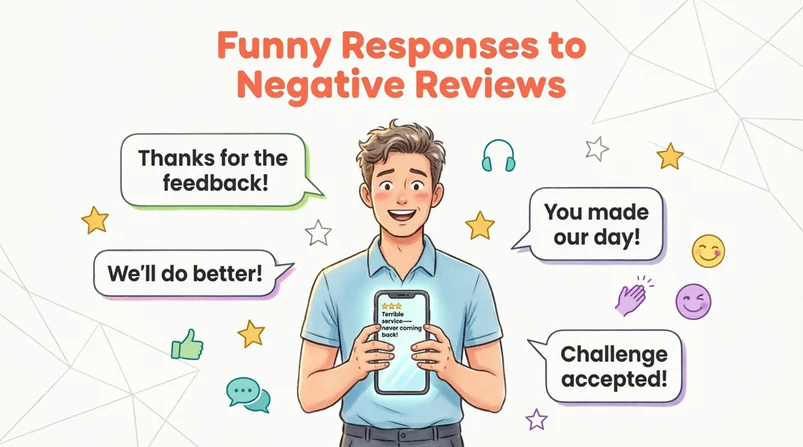
The best funny responses to negative reviews acknowledge the complaint while adding a little humor, wit, or personality. Whether you’re replying to a grumpy customer, a sarcastic comment, or an unfair rating, the right words can make your response memorable without damaging your reputation.
Top alternatives: “We appreciate the honesty!”, “Well, that wasn’t our finest moment!”, “Thanks for keeping us humble!”, “We’re listening and learning!”, “Let’s make your next visit better!”
Getting a negative review can feel like opening a birthday gift and finding a parking ticket inside. Whether you run a small business, manage a restaurant, sell products online, or handle customer feedback at work, an unhappy review can sting, especially when you feel the complaint misses the mark. That’s where funny responses to negative reviews can help you show personality without turning a small problem into a public argument. A clever reply can make readers smile, demonstrate that you can take criticism, and show potential customers that there’s a real person behind your business.
A lighthearted response works best when the situation allows humor, while serious complaints deserve genuine empathy and practical solutions. From witty one-liners to polite professional comebacks, these responses give you plenty of options for handling awkward feedback with confidence.
1. Funny Responses to Negative Reviews
1. Well, that escalated quickly! Example: Use it when a review turns a minor inconvenience into a dramatic story. Meaning: You acknowledge the intensity with gentle humor.
2. We promise the sequel will be better! Example: Use it after a customer describes an underwhelming experience. Meaning: You suggest a fresh start playfully.
3. Ouch, our customer-service feelings! Example: Use it for a mildly critical review about a small service mistake. Meaning: You respond with humor without attacking the reviewer.
4. Adding this to our character development! Example: Use it when feedback highlights something your team needs to improve. Meaning: You show that criticism can lead to growth.
5. Well, that wasn’t our finest hour! Example: Use it when your team genuinely dropped the ball. Meaning: You admit the mistake with a little self-awareness.
6. Our five-star dreams took a coffee break! Example: Use it when a review mentions an unexpectedly disappointing visit. Meaning: You make light of the rating without dismissing the complaint.
7. Thanks for keeping us humble! Example: Use it when a customer points out a minor service flaw. Meaning: You accept criticism with a friendly attitude.
8. Plot twist: We can do better! Example: Use it when a review exposes an experience below your usual standards. Meaning: You signal your intention to improve.
9. We didn’t stick the landing on this one! Example: Use it when a product or service failed to meet expectations. Meaning: You acknowledge the disappointing result.
10. Our apology is currently doing push-ups! Example: Use it for a lighthearted response to a minor inconvenience. Meaning: You express regret with a playful twist.
11. Not the review we rehearsed for! Example: Use it when feedback catches your business off guard. Meaning: You show humility without becoming defensive.
12. We’ll aim for fewer plot holes next time! Example: Use it when a customer describes a confusing or inconsistent experience. Meaning: You promise a more satisfying experience through humor.
2. Witty Responses to Negative Reviews
1. Feedback received, excuses rejected! Example: Use it when your team wants to acknowledge a legitimate complaint. Meaning: You emphasize accountability over defensiveness.
2. Our standards just got a reminder! Example: Use it after feedback reveals a service issue. Meaning: You show that the criticism has your attention.
3. Consider this our friendly wake-up call! Example: Use it when a review highlights an overlooked problem. Meaning: You treat criticism as a reason to improve.
4. Your point is noted, in bold! Example: Use it when a reviewer raises a clear concern. Meaning: You communicate that their message will not be ignored.
5. We hear you loud and clear! Example: Use it when customers complain about communication or service. Meaning: You acknowledge their concerns directly.
6. A fair point deserves a fair response! Example: Use it when a review makes a valid observation. Meaning: You encourage constructive discussion.
7. This feedback has entered the meeting room! Example: Use it when your team intends to discuss a complaint internally. Meaning: You suggest that the issue will receive attention.
8. We’re taking notes, not offense! Example: Use it when criticism is blunt but useful. Meaning: You demonstrate maturity and openness.
9. Point taken, improvement pending! Example: Use it when you need time to address a concern. Meaning: You recognize the issue and signal follow-through.
10. Every review tells us something! Example: Use it when responding to thoughtful feedback. Meaning: You value customer experiences as learning opportunities.
11. We appreciate the reality check! Example: Use it when a customer identifies a genuine shortcoming. Meaning: You accept the reminder with humility.
12. Challenge accepted, standards included! Example: Use it when you want to reassure customers that improvements matter. Meaning: You turn criticism into motivation.
3. Sarcastic Responses to Negative Reviews
1. Well, five stars weren’t in the forecast today! Example: Use it for a mild complaint where playful sarcasm suits your brand. Meaning: You acknowledge the rating with a light joke.
2. Our crystal ball missed that one! Example: Use it when an unexpected service issue catches your team off guard. Meaning: You poke fun at the unpredictability of the situation.
3. And just like that, our perfection streak ended! Example: Use it when your business receives a review about a minor mistake. Meaning: You use exaggerated humor to admit imperfection.
4. Our trophy shelf will survive somehow! Example: Use it when a reviewer jokes about your business’s standards. Meaning: You show that you can handle criticism without taking yourself too seriously.
5. Well, that feedback certainly skipped the small talk! Example: Use it when a review is unusually blunt. Meaning: You recognize its directness with a playful remark.
6. We see the stars weren’t aligned! Example: Use it when a customer describes an isolated disappointing experience. Meaning: You frame the situation as an unfortunate mismatch.
7. Our flawless reputation needs a little maintenance! Example: Use it when a complaint reveals something worth fixing. Meaning: You admit that your business has room to improve.
8. That review arrived with no sugar coating! Example: Use it when feedback is particularly straightforward. Meaning: You acknowledge the reviewer’s honesty.
9. Well, somebody brought the honest review energy! Example: Use it when the criticism is candid but not abusive. Meaning: You recognize the blunt feedback with a little humor.
10. Our imaginary award committee is reconsidering! Example: Use it when your brand has a playful public personality. Meaning: You poke fun at the idea of always being excellent.
11. The feedback department is wide awake now! Example: Use it when a review highlights an overlooked issue. Meaning: You signal attention through mild sarcasm.
12. No confetti for this performance, noted! Example: Use it after an experience that clearly disappointed a customer. Meaning: You admit that the result did not deserve celebration.
4. Polite Responses to Negative Reviews
1. Thank you for sharing your experience with us. Example: Use it as a respectful opening to almost any customer complaint. Meaning: You acknowledge the reviewer without becoming defensive.
2. We’re sorry we fell short of your expectations. Example: Use it when the service or product disappointed someone. Meaning: You express regret for the unsatisfactory experience.
3. Your feedback is important to our team. Example: Use it when you want to encourage constructive communication. Meaning: You show that the customer’s opinion matters.
4. We appreciate the opportunity to improve. Example: Use it when a complaint identifies an area for growth. Meaning: You treat feedback as useful guidance.
5. We’re sorry your visit didn’t go as planned. Example: Use it when a customer reports a disappointing visit. Meaning: You recognize the gap between expectations and reality.
6. Thank you for bringing this to our attention. Example: Use it when a customer reports a specific issue. Meaning: You acknowledge the concern professionally.
7. We’d welcome the chance to make things right. Example: Use it when your business can offer a practical solution. Meaning: You show a willingness to resolve the problem.
8. We understand your disappointment. Example: Use it when a customer explains why an experience upset them. Meaning: You recognize their feelings.
9. We appreciate your patience and honesty. Example: Use it when a reviewer explains a problem clearly. Meaning: You thank them for communicating their experience.
10. We hope to provide a better experience next time. Example: Use it when you want to encourage a future visit. Meaning: You express a positive intention without making unrealistic promises.
11. We’re listening and taking your concerns seriously. Example: Use it when the customer needs reassurance that the complaint matters. Meaning: You communicate attentiveness and respect.
12. Thank you for giving us room to grow. Example: Use it when the reviewer offers constructive criticism. Meaning: You respond with gratitude and humility.
5. Professional Responses to Negative Reviews
1. Thank you for your feedback. We’ll review this with our team. Example: Use it when a complaint needs internal discussion. Meaning: You communicate a clear and professional next step.
2. We’re sorry the experience did not meet our standards. Example: Use it when your business acknowledges a service shortcoming. Meaning: You recognize that the experience fell below expectations.
3. We’d appreciate the opportunity to discuss this further. Example: Use it when the issue requires additional information. Meaning: You invite constructive communication.
4. Your concerns deserve our attention. Example: Use it when the review describes a significant service problem. Meaning: You show that the complaint will be treated seriously.
5. We’re reviewing what happened and how to improve. Example: Use it when the cause of the issue is not yet clear. Meaning: You promise consideration rather than an unsupported explanation.
6. We appreciate you bringing this matter to our attention. Example: Use it when a customer reports a problem publicly. Meaning: You acknowledge their effort to communicate.
7. We’d like to work toward a suitable resolution. Example: Use it when you need to establish a constructive next step. Meaning: You focus on resolving the complaint.
8. Thank you for helping us identify an area for improvement. Example: Use it when a review highlights a process weakness. Meaning: You show that feedback can guide better service.
9. We’re sorry this experience did not reflect our usual service. Example: Use it when an isolated incident falls below your standards. Meaning: You acknowledge the shortcoming without dismissing the customer.
10. Please allow us the opportunity to look into this. Example: Use it when more details are needed before responding fully. Meaning: You communicate a willingness to investigate.
11. We value your perspective and appreciate your time. Example: Use it when closing a respectful response to criticism. Meaning: You maintain a courteous and professional tone.
12. We hope to earn back your confidence through better service. Example: Use it when the customer has lost trust in your business. Meaning: You emphasize improvement over empty promises.
6. Clever Comebacks to Negative Reviews
1. Every review is a lesson, and we’re studying! Example: Use it when feedback identifies a practical improvement. Meaning: You turn criticism into a learning opportunity.
2. We’re upgrading our experience, one lesson at a time! Example: Use it when your business is working on better service. Meaning: You communicate progress with optimism.
3. Your feedback made it onto our improvement list! Example: Use it when a complaint suggests a useful change. Meaning: You show that the review has practical value.
4. We believe in better endings! Example: Use it when a customer leaves disappointed. Meaning: You express hope for a more positive future experience.
5. Consider this chapter one of our comeback story! Example: Use it when your team wants to recover from a service mistake. Meaning: You frame improvement as a fresh beginning.
6. We appreciate the feedback, even without the confetti! Example: Use it after a critical review that lacks praise. Meaning: You value honesty rather than applause.
7. Our next chapter deserves a better rating! Example: Use it when you genuinely intend to improve the customer experience. Meaning: You express determination to do better.
8. Noted, reviewed, and ready for improvement! Example: Use it when responding to a clear and actionable complaint. Meaning: You emphasize attention and action.
9. Your review just joined our team huddle! Example: Use it when customer feedback will be discussed internally. Meaning: You show that the concern matters to your team.
10. We prefer solutions over excuses! Example: Use it when acknowledging a mistake publicly. Meaning: You emphasize accountability.
11. Feedback is the shortcut to doing better! Example: Use it when a reviewer provides constructive suggestions. Meaning: You communicate a willingness to learn.
12. We’ll let our improvements do the talking! Example: Use it when you want to move beyond a public back-and-forth. Meaning: You focus attention on future results.
7. Friendly and Casual Responses to Negative Reviews
1. Ah, we missed the mark on this one! Example: Use it when a customer describes a minor disappointment. Meaning: You admit the shortcoming in a relaxed way.
2. Thanks for the heads-up! Example: Use it when someone points out a problem you can address. Meaning: You appreciate being informed.
3. Oops, definitely room to improve here! Example: Use it after an avoidable mistake. Meaning: You accept the issue without making the reply overly formal.
4. We’ll work on making your next visit better! Example: Use it when responding to a disappointed visitor. Meaning: You express a friendly intention to improve.
5. Fair enough, we can do better! Example: Use it when the complaint is reasonable. Meaning: You accept criticism without arguing.
6. Thanks for keeping it real with us! Example: Use it when the reviewer shares honest feedback. Meaning: You value straightforward communication.
7. Not our best day, that’s for sure! Example: Use it when service fell below your usual standard. Meaning: You acknowledge a disappointing experience casually.
8. Message received, coffee included! Example: Use it for a minor complaint when your brand has a relaxed personality. Meaning: You add a harmless touch of humor.
9. We’ll take another swing at getting it right! Example: Use it when you hope to win back a disappointed customer. Meaning: You express willingness to try again.
10. Thanks for helping us spot the rough edges! Example: Use it when feedback reveals a small but useful improvement. Meaning: You appreciate the chance to refine your service.
11. Let’s call this a lesson learned! Example: Use it when your team recognizes a mistake. Meaning: You show that the experience can lead to improvement.
12. Hope we can turn that frown around! Example: Use it when the complaint is minor and the customer seems open to another visit. Meaning: You offer a cheerful invitation to a better experience.
8. Confident Responses to Negative Reviews
1. We take feedback seriously and improvement even more seriously! Example: Use it when you want to demonstrate accountability. Meaning: You project confidence in your willingness to improve.
2. One experience doesn’t define our commitment to quality. Example: Use it when an isolated complaint describes a service failure. Meaning: You reaffirm your standards without dismissing the review.
3. We’re proud of our work and always open to learning. Example: Use it when balancing brand confidence with humility. Meaning: You show pride without claiming perfection.
4. We stand by our values and welcome honest feedback. Example: Use it when a review challenges your business approach. Meaning: You demonstrate conviction and openness.
5. Better service is always worth the effort. Example: Use it when promising to address a legitimate concern. Meaning: You communicate a commitment to continuous improvement.
6. We believe in earning trust, not demanding it. Example: Use it when a reviewer questions your reliability. Meaning: You emphasize that customer confidence must be deserved.
7. We know we can do better, and we intend to. Example: Use it when your team accepts responsibility for a disappointing experience. Meaning: You pair self-awareness with determination.
8. Our goal remains the same: a better customer experience. Example: Use it when responding to a service-related complaint. Meaning: You keep the focus on customer satisfaction.
9. We welcome feedback that helps us raise our standards. Example: Use it when a review offers constructive criticism. Meaning: You demonstrate confidence in your ability to grow.
10. We’re focused on progress, not public arguments. Example: Use it when a review threatens to become confrontational. Meaning: You establish a calm boundary and prioritize solutions.
11. We let consistent service speak for itself. Example: Use it when you want to avoid debating your reputation. Meaning: You emphasize performance over online disputes.
12. We appreciate the feedback and remain committed to doing better. Example: Use it when closing a firm but respectful response. Meaning: You maintain confidence while acknowledging the customer’s experience.
9. Creative Responses to Negative Reviews
1. Our customer experience could use a software update! Example: Use it when feedback identifies an outdated process. Meaning: You frame improvement as an upgrade.
2. Time to rewrite this chapter! Example: Use it when a customer deserves a better experience next time. Meaning: You signal a fresh start.
3. This feedback has officially entered our idea lab! Example: Use it when a suggestion could inspire a useful change. Meaning: You treat criticism as a source of innovation.
4. We’re adding a better ending to this story! Example: Use it after a disappointing customer experience. Meaning: You express hope for a more satisfying resolution.
5. Our improvement playlist just gained a new track! Example: Use it when your team receives actionable feedback. Meaning: You turn learning into a playful metaphor.
6. Consider this a behind-the-scenes improvement moment! Example: Use it when your team needs to fix an internal process. Meaning: You highlight the work that happens after criticism.
7. We found another puzzle piece for better service! Example: Use it when a complaint helps explain a recurring issue. Meaning: You show that feedback helps complete the picture.
8. Our next version will aim higher! Example: Use it when a product or service needs refinement. Meaning: You communicate a forward-looking mindset.
9. Feedback received, improvement story loading! Example: Use it when a lighthearted brand voice suits the situation. Meaning: You suggest that positive changes are underway.
10. We’re turning this review into a roadmap! Example: Use it when the complaint offers specific suggestions. Meaning: You present feedback as guidance for future action.
11. Our service deserves a better plot twist! Example: Use it after a disappointing interaction. Meaning: You express a desire to change the outcome.
12. New goal unlocked: make the next experience better! Example: Use it when your team wants to communicate an improvement goal. Meaning: You turn a setback into a clear objective.
10. Short and Punchy Responses to Negative Reviews
1. Fair point. We’ll improve. Example: Use it when a reviewer makes a valid criticism. Meaning: You acknowledge the issue directly.
2. Message received! Example: Use it when you need a concise acknowledgment. Meaning: You show that the feedback has been heard.
3. We hear you! Example: Use it when a customer wants acknowledgment. Meaning: You communicate that their concern matters.
4. Room to grow! Example: Use it after feedback about a minor shortcoming. Meaning: You recognize the opportunity to improve.
5. Noted with thanks! Example: Use it when responding to constructive criticism. Meaning: You acknowledge the feedback politely.
6. We’ll do better! Example: Use it when your team accepts responsibility for a problem. Meaning: You express a clear intention to improve.
7. Honesty appreciated! Example: Use it when a reviewer shares candid feedback. Meaning: You show gratitude for their openness.
8. Point taken! Example: Use it when the complaint raises a reasonable point. Meaning: You recognize the criticism without arguing.
9. We’re on it! Example: Use it when the team is actively addressing the problem. Meaning: You suggest that action is underway.
10. Lesson learned! Example: Use it after identifying a fixable mistake. Meaning: You frame the experience as an opportunity for growth.
11. Let’s make it right! Example: Use it when you can offer a reasonable resolution. Meaning: You focus on solving the problem.
12. Better starts here! Example: Use it when you want to signal a positive change. Meaning: You present the complaint as a starting point for improvement.
11. Lighthearted Responses to One-Star Reviews
1. One star, but plenty of room for improvement! Example: Use it when a low rating highlights a real service issue. Meaning: You acknowledge the rating while remaining hopeful.
2. We’d love to earn a brighter review next time! Example: Use it when you hope to welcome the customer back. Meaning: You invite another chance to deliver better service.
3. Our stars need a little alignment! Example: Use it when a customer describes a disappointing experience. Meaning: You use a gentle joke to recognize the poor result.
4. That rating got our attention! Example: Use it when a low score points to an issue worth investigating. Meaning: You show that the review will not be ignored.
5. We’re aiming for a better constellation! Example: Use it when a playful brand voice fits a minor complaint. Meaning: You express a desire for a higher rating through humor.
6. We see where we lost a star! Example: Use it when the reviewer explains a specific problem. Meaning: You recognize the shortcoming.
7. One star is a signal, not the finish line! Example: Use it when the review motivates your team to improve. Meaning: You treat criticism as a reason to keep working.
8. Our next goal has five-star energy! Example: Use it when you want to express optimism after a poor review. Meaning: You show enthusiasm for improving the experience.
9. We’d rather fix the issue than count the stars! Example: Use it when a customer needs a practical solution. Meaning: You prioritize service recovery over ratings.
10. That rating has started an important conversation! Example: Use it when a review reveals an issue that needs attention. Meaning: You recognize its value as feedback.
11. We’re working on a brighter experience! Example: Use it when the complaint reveals an opportunity for improvement. Meaning: You promise effort without guaranteeing perfection.
12. Here’s hoping our next chapter earns more stars! Example: Use it when the customer may consider returning. Meaning: You encourage a fresh start.
12. Responses to Unfair or Exaggerated Negative Reviews
1. We’re sorry you feel that way, and we’d like to understand more. Example: Use it when a review seems exaggerated but deserves a calm response. Meaning: You invite clarification without escalating the disagreement.
2. We appreciate your perspective, even when experiences differ. Example: Use it when your understanding of an incident differs from the reviewer’s. Meaning: You recognize different viewpoints respectfully.
3. We’d be happy to clarify the details privately. Example: Use it when the public review leaves out important context. Meaning: You invite a more productive discussion away from the public thread.
4. We take every concern seriously and aim to be fair. Example: Use it when you need to respond to a disputed complaint. Meaning: You emphasize impartiality.
5. Let’s focus on what happened and how to resolve it. Example: Use it when the review becomes emotional or argumentative. Meaning: You redirect the conversation toward facts and solutions.
6. We’d welcome the chance to hear more about your experience. Example: Use it when the review provides insufficient detail. Meaning: You seek clarification rather than making assumptions.
7. We want to understand your concern before drawing conclusions. Example: Use it when important details are unclear. Meaning: You demonstrate fairness and patience.
8. Our records may differ, so we’d appreciate a conversation. Example: Use it when documented details appear inconsistent with the review. Meaning: You suggest resolving the discrepancy respectfully.
9. We respect your opinion and remain open to discussion. Example: Use it when you disagree with the reviewer’s interpretation. Meaning: You maintain a calm and professional tone.
10. Let’s work toward a clearer understanding. Example: Use it when a complaint appears to stem from a misunderstanding. Meaning: You encourage constructive communication.
11. We’d rather resolve a misunderstanding than debate it online. Example: Use it when public replies are becoming unproductive. Meaning: You set a reasonable boundary.
12. We’re happy to review the situation fairly. Example: Use it when you need to investigate a disputed claim. Meaning: You show willingness to consider the available information.
13. Warm and Empathetic Responses to Negative Reviews
1. We’re genuinely sorry this experience disappointed you. Example: Use it when a customer expresses genuine frustration. Meaning: You acknowledge their disappointment with sincerity.
2. You deserved a smoother experience than this. Example: Use it when a service problem created unnecessary inconvenience. Meaning: You recognize the impact on the customer.
3. We understand why this left you frustrated. Example: Use it when a review explains a clear source of frustration. Meaning: You validate the customer’s feelings.
4. Thank you for giving us the chance to learn from this. Example: Use it when the reviewer offers constructive feedback. Meaning: You express appreciation and openness to change.
5. We’re sorry we made things harder than they needed to be. Example: Use it when a mistake caused avoidable hassle. Meaning: You acknowledge the inconvenience.
6. Your experience matters to us. Example: Use it when the customer needs reassurance that the complaint is important. Meaning: You place customer care at the center of your response.
7. We wish your visit had been a happier one. Example: Use it when a customer leaves disappointed after a visit. Meaning: You express regret without sounding defensive.
8. Thank you for being honest about what went wrong. Example: Use it when the reviewer clearly describes a service problem. Meaning: You appreciate their willingness to speak up.
9. We’d like the opportunity to rebuild your confidence. Example: Use it when a disappointing experience has damaged trust. Meaning: You express a desire to restore the relationship.
10. We’re sorry the experience felt frustrating from start to finish. Example: Use it when the review describes several connected problems. Meaning: You acknowledge the overall experience.
11. We appreciate you sharing something we need to hear. Example: Use it when criticism highlights an uncomfortable but useful truth. Meaning: You show humility and gratitude.
12. We hope our next opportunity leaves you feeling valued. Example: Use it when you want to encourage a future interaction. Meaning: You express a desire to provide more thoughtful service.
14. Responses to Negative Reviews With a Touch of Humor
1. Our service deserves a little fine-tuning! Example: Use it when a review identifies a minor quality issue. Meaning: You acknowledge the need for improvement with a light touch.
2. We promise our next performance will get more rehearsal! Example: Use it after a clumsy service experience. Meaning: You joke about preparation while accepting the criticism.
3. The feedback is in, and the improvement plan is awake! Example: Use it when your team is ready to address a concern. Meaning: You signal attention and action.
4. Our customer experience could use a little polish! Example: Use it when a customer points out a rough edge in your service. Meaning: You admit the need to refine the experience.
5. We clearly missed a step in the happy-customer dance! Example: Use it when a small service mistake disappoints someone. Meaning: You use playful imagery to acknowledge the problem.
6. We’ll save the confetti for a better experience! Example: Use it when a review describes an underwhelming result. Meaning: You recognize that the experience fell short.
7. Our review response is serious, even if our jokes aren’t! Example: Use it when your brand is playful but the complaint deserves attention. Meaning: You balance humor with accountability.
8. We’d like our next impression to be a better one! Example: Use it when a customer leaves with a negative view of your business. Meaning: You express hope for a more positive experience.
9. That feedback deserves more than a shrug and a smile! Example: Use it when a complaint needs a meaningful response. Meaning: You show that you intend to take action.
10. We’re putting our improvement hats on! Example: Use it after receiving constructive criticism. Meaning: You communicate a willingness to work on the issue.
11. A better experience is officially on our to-do list! Example: Use it when the complaint suggests a practical improvement. Meaning: You show that progress is a priority.
12. Let’s make the next review a happier story! Example: Use it when a customer might return after a resolution. Meaning: You encourage a more positive future experience.
15. Funny Responses to Negative Reviews for Social Media
1. Our customer-service group chat is discussing this! Example: Use it when a lighthearted brand reply suits a minor complaint. Meaning: You suggest that the feedback has caught your team’s attention.
2. This review came with a side of honesty! Example: Use it when a customer offers blunt but useful feedback. Meaning: You recognize the directness with humor.
3. We’re turning feedback into our next glow-up! Example: Use it when your brand uses casual social-media language. Meaning: You frame improvement as a positive transformation.
4. Our next update is taking notes! Example: Use it when the complaint concerns a product or service that can be improved. Meaning: You show openness to change.
5. Well, that comment made our team pause and think! Example: Use it when a review raises a concern worth discussing. Meaning: You recognize the impact of the feedback.
6. We’re taking the hint, respectfully! Example: Use it when a complaint is blunt but reasonable. Meaning: You accept the criticism without becoming defensive.
7. Our improvement era starts now! Example: Use it when a playful, trend-aware tone fits your brand. Meaning: You express enthusiasm for doing better.
8. Feedback understood, customer happiness in progress! Example: Use it when responding to a fixable service problem. Meaning: You show a customer-focused mindset.
9. We appreciate the honesty, even when it stings a little! Example: Use it when the reviewer makes a fair but uncomfortable point. Meaning: You communicate humility.
10. Our team just found a new reason to level up! Example: Use it when a complaint offers an opportunity for improvement. Meaning: You turn criticism into motivation.
11. We’ll keep the lesson and improve the experience! Example: Use it when you want to respond positively to public feedback. Meaning: You focus on learning instead of arguing.
12. Here’s to better service and fewer disappointed customers! Example: Use it when closing a friendly response to a legitimate complaint. Meaning: You express a clear commitment to improvement.
Frequently Asked Questions
What does a negative review mean?
A negative review shares dissatisfaction with a product, service, business, or customer experience.
Are funny responses to negative reviews appropriate?
Yes, when the complaint is minor and humor feels respectful, relevant, and appropriate.
Can a funny response improve a business’s reputation?
A thoughtful, funny response can show personality, accountability, and a willingness to improve.
How should you respond to a serious negative review?
Acknowledge the concern sincerely, apologize when appropriate, and offer a practical next step.
What is a professional way to reply to a bad review?
Thank the reviewer, recognize the issue, and explain how you can help resolve it.
Can sarcasm make a negative review worse?
Yes. Sarcasm can sound dismissive or hostile, especially when the customer has a legitimate complaint.
Should you reply to every negative review?
Responding to meaningful feedback is helpful, especially when customers need clarification or a resolution.
What if a negative review seems unfair?
Stay calm, state verifiable facts politely, and invite the reviewer to discuss the matter privately.
Can you use emojis in review responses?
Yes, but use them sparingly and only when they fit your brand and the situation.
What should you avoid when replying to negative reviews?
Avoid personal attacks, arguments, private customer details, blame, and promises you cannot keep.
Conclusion
Negative reviews aren’t always fun to read, but your response can make a meaningful difference. The right combination of humor, professionalism, confidence, and empathy can turn an awkward moment into an opportunity to show your brand’s personality. Whether you choose a witty one-liner, a polite acknowledgment, or a clever comeback, remember to consider the customer’s actual concern before hitting reply. A little humor works best when it doesn’t dismiss someone’s experience.
Save your favorite funny responses to negative reviews, adapt them to your situation, and keep your replies authentic. You don’t need to win every online argument. Sometimes, the best response is the one that shows you care and know how to improve. Share your favorite comeback and keep the good ideas coming!