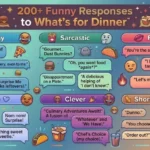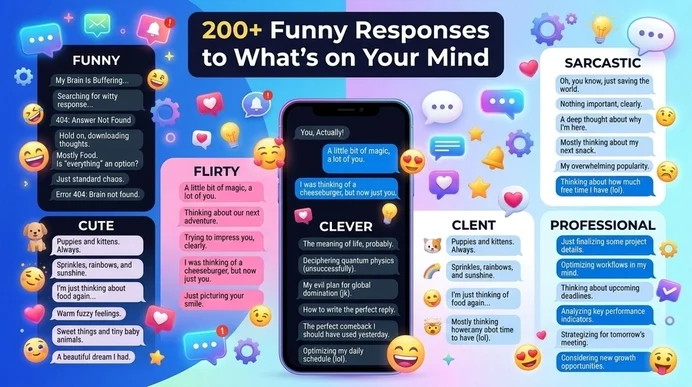
Looking for funny responses to “What’s on your mind?” Try something witty, playful, flirty, or unexpected to keep the conversation entertaining. Whether you’re texting a friend, chatting with your crush, or answering a coworker, the right reply can make an ordinary question memorable.
Top alternatives: “Just wondering where my snacks are,” “My brain is buffering,” “A million things, none of them productive,” “You, but don’t let it go to your head,” “Currently negotiating with my last brain cell.”
Someone asks, “What’s on your mind?” and suddenly your brain decides to go completely blank. Funny, right? Whether you’re texting a friend, replying to a crush’s DM, chatting with your partner, or having an unexpected conversation at work, this simple question can lead anywhere. Sometimes the person genuinely wants to know what you’re thinking, while other times they’re simply looking for a little conversation. That’s where a clever response makes all the difference. Instead of giving the usual boring answer, why not surprise them with something funny, flirty, sarcastic, or sweet?
These funny responses to what’s on your mind will help you express your personality, break awkward silences, and keep conversations flowing naturally. From hilarious one-liners to charming replies, you’ll find something for practically every mood and situation.
1. Funny Responses to What’s on Your Mind
Sometimes, the best answer is simply something unexpected that makes the other person laugh. These funny replies are perfect for friends, casual chats, and everyday texting.
- Mostly food, honestly. Example: Use it when someone catches you thinking about lunch. Meaning: Food is currently your biggest priority.
- Trying to remember why I walked into this room. Example: Use it when you’re feeling forgetful. Meaning: You’re joking about having a distracted mind.
- My brain is buffering. Example: Send it when you need a moment to think. Meaning: Your thoughts aren’t loading properly.
- A vacation and unlimited snacks. Example: Use it when someone asks about your current thoughts. Meaning: You’re dreaming about relaxation and treats.
- Why does Monday come every week? Example: Use it during a tiring workday. Meaning: You’re humorously questioning the weekly routine.
- Nothing important, just world domination plans. Example: Send it to a friend who enjoys playful humor. Meaning: You’re exaggerating your ambitions for entertainment.
- Whether pizza counts as a balanced diet. Example: Use it during a food discussion. Meaning: You’re making a lighthearted joke about eating habits.
- My last brain cell is working overtime. Example: Use it when you’re mentally exhausted. Meaning: You’re joking about having very little energy left.
- Why is my phone always at one percent? Example: Use it when your battery is dying. Meaning: You’re distracted by an everyday inconvenience.
- Absolutely nothing. It’s a full-time job. Example: Use it when you’re relaxing with friends. Meaning: You’re proudly celebrating your laziness.
- A million things, but none are paying rent. Example: Use it when your mind feels crowded. Meaning: You’re joking about having too many random thoughts.
- Whether I should take another nap. Example: Use it during a lazy afternoon. Meaning: You’re prioritizing rest over everything else.
2. Sarcastic Responses to What’s on Your Mind
A little sarcasm can turn an ordinary question into an entertaining exchange. These responses work best with people who understand your sense of humor.
- Wouldn’t you like to know? Example: Use it when a friend gets too curious. Meaning: You’re playfully keeping your thoughts private.
- Definitely not your tax returns. Example: Use it during a teasing conversation. Meaning: You’re making an unexpected sarcastic joke.
- Something too complicated for a Tuesday. Example: Use it when you’re having a stressful day. Meaning: Your thoughts feel unnecessarily complicated.
- If I told you, we’d both need therapy. Example: Use it with a close friend who enjoys dark humor. Meaning: You’re exaggerating how complicated your thoughts are.
- The same thing that’s on yours, probably. Example: Use it when someone is being mysterious. Meaning: You’re turning their question back on them.
- My thoughts are currently classified information. Example: Use it when you don’t want to explain yourself. Meaning: You’re humorously protecting your privacy.
- Something productive, but let’s not get ahead of ourselves. Example: Use it when procrastinating. Meaning: You’re joking about your lack of motivation.
- Why, are you taking a survey? Example: Use it when someone asks too many questions. Meaning: You’re teasing them about their curiosity.
- A peaceful life without unnecessary questions. Example: Use it with a playful friend. Meaning: You want some quiet time.
- My thoughts are none of your business, respectfully. Example: Use it when someone is being nosy. Meaning: You’re setting a boundary with humor.
- How to answer questions without answering questions. Example: Use it when someone keeps questioning you. Meaning: You’re joking about avoiding direct answers.
- I was enjoying the silence until this interview started. Example: Use it when a friend asks repeatedly. Meaning: You’re playfully complaining about the interrogation.
3. Flirty Responses to What’s on Your Mind
When your crush or someone special asks what you’re thinking, you have the perfect opportunity to add a little charm. These flirty responses create a playful atmosphere without trying too hard.
- You, actually. Example: Send it when your crush asks what you’re thinking. Meaning: They’re occupying your thoughts.
- Should I tell you, or should I make you guess? Example: Use it during playful texting. Meaning: You’re creating a little romantic mystery.
- Someone with a really cute smile. Example: Send it to someone you’re attracted to. Meaning: You’re giving them a subtle compliment.
- Wondering when I’ll see you again. Example: Use it after a memorable date. Meaning: You’re looking forward to spending time together.
- Your name keeps showing up in my thoughts. Example: Send it to someone you secretly like. Meaning: You’re admitting that they’re on your mind.
- Something I’d rather whisper in your ear. Example: Use it when the conversation becomes romantic. Meaning: You’re suggesting a more intimate conversation.
- Whether you’re thinking about me too. Example: Send it when flirting with your crush. Meaning: You want to know if the attraction is mutual.
- How someone can be this distracting. Example: Use it when someone keeps catching your attention. Meaning: You’re expressing romantic interest.
- Planning our next coffee date. Example: Send it after meeting someone you like. Meaning: You’re hinting that you’d enjoy another date.
- You, but I was trying to play it cool. Example: Use it when you don’t want to hide your feelings. Meaning: You’re admitting your attraction playfully.
- Whether I should confess that I like you. Example: Send it when you’re ready to flirt more openly. Meaning: You’re hinting at deeper feelings.
- How lucky I’d be to have you around. Example: Use it during a sweet romantic conversation. Meaning: You’re showing appreciation and affection.
4. Brutally Honest Responses to What’s on Your Mind
Sometimes you don’t feel like decorating your thoughts with unnecessary words. These straightforward responses combine honesty, confidence, and a touch of humor.
- Honestly, I’m tired. Example: Use it when someone asks during a long day. Meaning: You’re being honest about your exhaustion.
- Too many things to explain right now. Example: Use it when your mind feels overwhelmed. Meaning: You’re not ready to discuss everything.
- How to make life a little easier. Example: Use it when thinking about your responsibilities. Meaning: You’re looking for a simpler routine.
- Things I should probably stop overthinking. Example: Use it when you’re stuck in your thoughts. Meaning: You’re acknowledging your tendency to overanalyze.
- My future, my finances, and my next meal. Example: Use it during an honest conversation. Meaning: You’re balancing serious concerns with everyday needs.
- Whether I’m spending my time wisely. Example: Use it when reflecting on your priorities. Meaning: You’re evaluating how you’re using your time.
- A conversation I should have had already. Example: Use it when something important is bothering you. Meaning: You’re thinking about an unresolved issue.
- How much I need a break. Example: Use it when work becomes overwhelming. Meaning: You’re admitting that you need some rest.
- The things I wish I could say out loud. Example: Use it when you’re holding back your feelings. Meaning: You’re thinking about unexpressed emotions.
- What I really want instead of what everyone expects. Example: Use it during a personal conversation. Meaning: You’re considering your own happiness.
- How to stop wasting energy on things I can’t control. Example: Use it when reflecting on stressful situations. Meaning: You’re trying to focus on what matters.
- Honestly, just trying to figure things out. Example: Use it when life feels uncertain. Meaning: You’re acknowledging that you don’t have every answer.
5. Cute Responses to What’s on Your Mind
Want to sound adorable without being overly dramatic? These cute replies are perfect for close friends, partners, and people who bring a smile to your face.
- Little thoughts and big dreams. Example: Use it during a sweet conversation. Meaning: You’re thinking about your hopes and everyday moments.
- Wondering if someone misses me. Example: Send it to someone special. Meaning: You’re hoping they are thinking about you.
- Probably something silly. Example: Use it when you’re feeling playful. Meaning: Your thoughts are lighthearted and amusing.
- A hug would solve approximately 90% of my problems. Example: Send it to someone you trust. Meaning: You’re expressing a desire for comfort.
- Thinking about happy little things. Example: Use it when you’re in a good mood. Meaning: You’re appreciating life’s small pleasures.
- Whether my favorite person is smiling today. Example: Send it to your partner. Meaning: You care about their happiness.
- Cookies, cuddles, and a cozy blanket. Example: Use it during a relaxed conversation. Meaning: You’re dreaming about simple comforts.
- A tiny adventure sounds nice. Example: Use it when discussing weekend plans. Meaning: You’re in the mood for something fun.
- How to make someone smile today. Example: Send it to a close friend. Meaning: You’re thinking about spreading happiness.
- My happy place and the people in it. Example: Use it when feeling sentimental. Meaning: You’re appreciating the people who make life special.
- Whether I can adopt another plant. Example: Use it when talking about your hobbies. Meaning: You’re joking about wanting another little companion.
- Just collecting reasons to smile. Example: Use it when you’re feeling positive. Meaning: You’re focusing on life’s pleasant moments.
6. Clever Responses to What’s on Your Mind
If you enjoy wordplay and intelligent humor, these clever responses can make you sound quick-witted without being too serious.
- A thought that hasn’t passed quality control yet. Example: Use it when you’re still organizing an idea. Meaning: Your thoughts need a little more editing.
- The answer to a question nobody has asked. Example: Use it during a random discussion. Meaning: You’re thinking ahead of the conversation.
- A solution looking for a problem. Example: Use it when you’re brainstorming. Meaning: You’re exploring ideas without a specific purpose.
- An idea that deserves its own meeting. Example: Use it with colleagues or friends. Meaning: You have something interesting to discuss.
- The difference between being busy and being productive. Example: Use it during a work conversation. Meaning: You’re questioning how people use their time.
- A question mark with commitment issues. Example: Use it when you’re confused. Meaning: You’re humorously describing your uncertainty.
- An unfinished thought with excellent potential. Example: Use it when developing a creative idea. Meaning: You’re still working on something promising.
- The plot twist in today’s episode of my life. Example: Use it when something unexpected happens. Meaning: You’re anticipating another surprising moment.
- How many thoughts can fit into one coffee break. Example: Use it while chatting over coffee. Meaning: Your mind is busy even during breaks.
- The fine art of doing nothing efficiently. Example: Use it when relaxing. Meaning: You’re joking about mastering the art of rest.
- A debate between logic and my imagination. Example: Use it when you’re undecided. Meaning: You’re balancing practical thinking with creativity.
- Something brilliant, pending confirmation. Example: Use it when sharing an unfinished idea. Meaning: You’re confidently joking about your intelligence.
7. Creative Responses to What’s on Your Mind
Give ordinary conversations an unexpected twist with these imaginative replies. They’re especially useful when you want to stand out in texts and casual conversations.
- A thousand tabs open, and none are responding. Example: Use it when you’re mentally overwhelmed. Meaning: Your thoughts are scattered in every direction.
- Writing the next chapter of my imaginary success story. Example: Use it when dreaming about the future. Meaning: You’re imagining exciting possibilities.
- A conversation between my ambition and my pillow. Example: Use it when you want to work but feel sleepy. Meaning: You’re torn between productivity and comfort.
- If my thoughts had a soundtrack, it would be a comedy. Example: Use it when your mind feels unpredictable. Meaning: Your thoughts are full of amusing ideas.
- A mystery even my search history can’t solve. Example: Use it when you’re feeling curious. Meaning: Your thoughts are difficult to explain.
- Designing a life with fewer notifications. Example: Use it when you’re tired of digital distractions. Meaning: You want more peace and less screen time.
- A beautiful mess with excellent background music. Example: Use it when you’re feeling creative. Meaning: Your thoughts are disorganized but interesting.
- Imagining a world where weekends last five days. Example: Use it on a Monday morning. Meaning: You’re wishing for more free time.
- A brilliant escape plan involving sunshine and coffee. Example: Use it when work feels exhausting. Meaning: You’re dreaming about a relaxing getaway.
- The possibilities of being accidentally productive. Example: Use it when procrastinating. Meaning: You’re hoping to accomplish something without planning it.
- An idea that might change everything or nothing. Example: Use it when exploring a new thought. Meaning: You’re open to possibilities without making promises.
- Building castles in the clouds, one thought at a time. Example: Use it when daydreaming. Meaning: You’re enjoying your imagination and big dreams.
8. Professional Responses to What’s on Your Mind
When a coworker, manager, or client asks what you’re thinking, a professional response is usually better than an overly personal joke. These replies keep things friendly, respectful, and workplace-appropriate.
- I’m considering a few ways to improve the current approach. Example: Use it during a team discussion. Meaning: You’re thinking about practical improvements.
- Just reviewing our priorities for the day. Example: Use it when your manager checks in. Meaning: You’re focused on your responsibilities.
- I’m thinking about the next steps for this project. Example: Use it during a planning meeting. Meaning: You’re considering how to move forward.
- A couple of ideas I’d like to explore. Example: Use it during brainstorming. Meaning: You have suggestions worth discussing.
- I’m reflecting on the feedback we received. Example: Use it after a review meeting. Meaning: You’re considering how to improve.
- How we can make this process more efficient. Example: Use it when discussing workflow. Meaning: You’re focused on productivity.
- I’m weighing a few possible solutions. Example: Use it when facing a workplace challenge. Meaning: You’re evaluating different options.
- Just organizing my thoughts before sharing them. Example: Use it when someone asks unexpectedly. Meaning: You want to communicate clearly.
- I’m considering how this aligns with our goals. Example: Use it during a strategy meeting. Meaning: You’re thinking about the bigger picture.
- The best way to approach our upcoming deadline. Example: Use it during project planning. Meaning: You’re thinking about time management.
- I’m looking at the details we might have overlooked. Example: Use it during a team review. Meaning: You’re paying attention to potential issues.
- A few ideas that could be worth discussing. Example: Use it when you want to contribute. Meaning: You’re inviting constructive conversation.
9. Dramatic Responses to What’s on Your Mind
Sometimes a little theatrical energy makes everything more entertaining. These exaggerated replies are perfect for friends who appreciate your dramatic personality.
- The entire story of my life, unfortunately. Example: Use it when you’re feeling overwhelmed. Meaning: You have plenty of thoughts and emotions.
- The universe has some explaining to do. Example: Use it after an unexpected event. Meaning: You’re humorously questioning life’s surprises.
- A thousand unanswered questions and one dramatic soundtrack. Example: Use it when overthinking. Meaning: You’re turning ordinary confusion into a performance.
- My future, my destiny, and what I’m eating tonight. Example: Use it during a random chat. Meaning: You’re mixing serious dreams with everyday concerns.
- The tragedy of having absolutely nothing in the fridge. Example: Use it before dinner. Meaning: You’re dramatically complaining about having no food.
- An emotional documentary nobody asked for. Example: Use it when you’re feeling sentimental. Meaning: Your thoughts feel like a dramatic story.
- The mysteries of life and why my plans never work. Example: Use it after a disappointing day. Meaning: You’re joking about life’s unpredictable nature.
- A plot twist that could change the whole season. Example: Use it when anticipating something important. Meaning: You’re expecting a major development.
- The weight of the world and my laundry pile. Example: Use it when chores are getting out of control. Meaning: You’re exaggerating everyday responsibilities.
- My kingdom, my crown, and my missing charger. Example: Use it when joking with friends. Meaning: You’re combining royal drama with a normal problem.
- The emotional damage caused by an unread message. Example: Use it when waiting for a reply. Meaning: You’re dramatically expressing your impatience.
- Everything, everywhere, all at once, including dinner. Example: Use it when your mind feels busy. Meaning: You’re humorously describing mental overload.
10. Chill and Casual Responses to What’s on Your Mind
Not every question needs a clever speech. Sometimes a relaxed, effortless response is all you need to keep the conversation going.
- Nothing much, just chilling. Example: Use it when relaxing at home. Meaning: You’re enjoying a peaceful moment.
- Just thinking about random stuff. Example: Use it during a casual chat. Meaning: Your thoughts aren’t focused on anything particular.
- The usual everyday nonsense. Example: Use it with a close friend. Meaning: You’re thinking about ordinary things.
- Just taking things as they come. Example: Use it when someone asks about your plans. Meaning: You’re keeping a relaxed attitude.
- A little bit of everything, honestly. Example: Use it when your mind is wandering. Meaning: Several different thoughts are occupying your attention.
- Nothing serious, promise. Example: Use it when someone notices you’re quiet. Meaning: You’re letting them know everything is fine.
- Just enjoying the moment. Example: Use it during a peaceful afternoon. Meaning: You’re appreciating the present.
- Trying to decide what to watch tonight. Example: Use it during an evening conversation. Meaning: You’re thinking about your entertainment plans.
- Just letting my thoughts wander. Example: Use it when daydreaming. Meaning: You’re allowing yourself to think freely.
- A few things, but nothing urgent. Example: Use it when you’re occupied but relaxed. Meaning: You have thoughts without immediate concerns.
- Just figuring out my next move. Example: Use it when planning something. Meaning: You’re casually considering your options.
- Honestly, just enjoying some quiet time. Example: Use it when you want a peaceful moment. Meaning: You appreciate having time to yourself.
11. Confident Responses to What’s on Your Mind
Confidence makes even a short answer memorable. These responses are ideal when you want to sound self-assured, positive, and comfortable with your thoughts.
- My goals and how I’m going to achieve them. Example: Use it during a conversation about your future. Meaning: You’re focused on personal growth.
- The next big thing I’m working toward. Example: Use it when discussing your ambitions. Meaning: You’re thinking about your next achievement.
- Becoming a better version of myself. Example: Use it when someone asks about your priorities. Meaning: You’re committed to self-improvement.
- How to turn today’s opportunities into tomorrow’s success. Example: Use it during a motivational discussion. Meaning: You’re thinking about long-term progress.
- My peace, my priorities, and my plans. Example: Use it when discussing personal boundaries. Meaning: You’re putting your well-being first.
- Making things happen instead of just imagining them. Example: Use it when discussing your ambitions. Meaning: You’re ready to take action.
- A future that looks even better than my expectations. Example: Use it when feeling optimistic. Meaning: You’re confident about what lies ahead.
- How to make my next move count. Example: Use it when planning an important decision. Meaning: You’re being intentional about your choices.
- Less talking, more achieving. Example: Use it when discussing your goals. Meaning: You’re focused on taking practical action.
- The possibilities I haven’t explored yet. Example: Use it when thinking about new opportunities. Meaning: You’re open to growth and discovery.
- Building something I’m genuinely proud of. Example: Use it when discussing your personal projects. Meaning: You’re motivated by meaningful accomplishments.
- Staying focused and letting the results speak. Example: Use it when someone asks about your plans. Meaning: You’re confident in your efforts.
12. Sweet Responses to What’s on Your Mind
A thoughtful answer can make someone feel appreciated. These sweet responses are especially suitable for partners, close friends, and people who genuinely care about you.
- The people who make my life better. Example: Use it when talking with someone close. Meaning: You’re appreciating the people around you.
- How grateful I am for the little things. Example: Use it during a meaningful conversation. Meaning: You’re feeling thankful for everyday happiness.
- Wondering how your day is going. Example: Send it to someone you care about. Meaning: You’re showing genuine interest in their life.
- The memories I wish I could relive. Example: Use it when reminiscing with a friend. Meaning: You’re thinking about special moments.
- How quickly time passes when you’re happy. Example: Use it after spending time with someone special. Meaning: You’re appreciating a beautiful experience.
- The people I never want to lose. Example: Use it during an emotional conversation. Meaning: You’re thinking about meaningful relationships.
- How to make tomorrow a little brighter. Example: Use it when discussing future plans. Meaning: You’re looking forward to positive experiences.
- The kindness someone showed me today. Example: Use it when remembering a thoughtful gesture. Meaning: You’re reflecting on someone’s kindness.
- How lucky I am to have good people around me. Example: Use it when talking with close friends. Meaning: You’re expressing gratitude for your relationships.
- The moments that make ordinary days special. Example: Use it when feeling appreciative. Meaning: You’re finding happiness in simple experiences.
- Sending good thoughts to someone I care about. Example: Use it when someone asks what you’re doing. Meaning: You’re thinking warmly about another person.
- How nice it is to have someone who asks. Example: Use it when someone genuinely checks on you. Meaning: You’re appreciating their concern.
13. Emotional Responses to What’s on Your Mind
When the question comes from someone you trust, you might want to share something more meaningful. These replies help communicate feelings without making the conversation unnecessarily complicated.
- A lot of things I’ve been keeping to myself. Example: Use it when you’re ready to open up. Meaning: You have feelings you haven’t shared yet.
- Trying to understand what I’m feeling lately. Example: Use it when emotions are confusing. Meaning: You’re working through your feelings.
- Some memories that still mean a lot to me. Example: Use it during a personal conversation. Meaning: You’re reflecting on meaningful experiences.
- Wondering if I’m heading in the right direction. Example: Use it when thinking about life decisions. Meaning: You’re questioning your current path.
- Things I wish I had handled differently. Example: Use it when reflecting on the past. Meaning: You’re thinking about lessons and regrets.
- How much I’ve changed over the years. Example: Use it during a reflective moment. Meaning: You’re recognizing your personal growth.
- The people and moments I miss. Example: Use it when feeling nostalgic. Meaning: You’re remembering important connections.
- Trying to find a little more peace within myself. Example: Use it during a heartfelt conversation. Meaning: You’re prioritizing emotional well-being.
- Some questions I haven’t found answers to yet. Example: Use it when facing uncertainty. Meaning: You’re acknowledging that some things remain unresolved.
- The future and everything I hope it brings. Example: Use it when discussing your dreams. Meaning: You’re thinking about possibilities and expectations.
- How to let go of things that no longer serve me. Example: Use it when moving forward from a difficult experience. Meaning: You’re ready for emotional growth.
- Just hoping everything falls into place eventually. Example: Use it when life feels uncertain. Meaning: You’re holding on to hope.
14. Short and Witty Responses to What’s on Your Mind
Sometimes short replies have the biggest impact. These quick one-liners are perfect for WhatsApp, Instagram DMs, text messages, and casual conversations.
- Food. Always food. Example: Use it when you’re hungry. Meaning: Food is your constant thought.
- You wish you knew. Example: Use it when teasing a friend. Meaning: You’re keeping your thoughts mysterious.
- Brain maintenance. Example: Use it when you need a mental break. Meaning: You’re trying to recharge.
- Top-secret thoughts. Example: Use it when you don’t want to explain. Meaning: You’re playfully keeping things private.
- Coffee and consequences. Example: Use it during a coffee break. Meaning: You’re thinking about caffeine and life’s decisions.
- Just vibes. Example: Use it when you’re relaxed. Meaning: You’re not thinking about anything specific.
- My next adventure. Example: Use it when planning something exciting. Meaning: You’re looking forward to new experiences.
- A little chaos. Example: Use it when your day is unpredictable. Meaning: Your thoughts are slightly disorganized.
- The big picture. Example: Use it during a serious discussion. Meaning: You’re thinking about long-term goals.
- Absolutely everything. Example: Use it when you’re overwhelmed. Meaning: Your mind is full of different thoughts.
- A better tomorrow. Example: Use it when feeling optimistic. Meaning: You’re focused on positive possibilities.
- Nothing and everything. Example: Use it when you can’t explain your thoughts. Meaning: Your mind feels both empty and full.
15. Unexpected and Hilarious Responses to What’s on Your Mind
Want to catch someone off guard with a reply they won’t see coming? These unexpected responses add personality, humor, and a little surprise to everyday conversations.
- Whether fish ever get thirsty. Example: Use it during a random conversation. Meaning: You’re sharing a wonderfully pointless question.
- If money can’t buy happiness, can it at least buy snacks? Example: Use it when discussing finances. Meaning: You’re joking about life’s small pleasures.
- Why my imaginary assistant isn’t doing my chores. Example: Use it when you’re avoiding housework. Meaning: You’re joking about wanting extra help.
- Whether my plants are judging my life choices. Example: Use it when talking about your houseplants. Meaning: You’re giving your plants imaginary personalities.
- How to become a professional napper. Example: Use it when you’re feeling sleepy. Meaning: You’re joking about turning relaxation into a career.
- If time is money, why am I still broke? Example: Use it during a conversation about work. Meaning: You’re making fun of the relationship between time and money.
- Why do we park in driveways and drive on parkways? Example: Use it when sharing random thoughts. Meaning: You’re pointing out an amusing language mystery.
- Whether my fridge light misses me when the door closes. Example: Use it when you’re bored in the kitchen. Meaning: You’re turning an ordinary object into a funny character.
- How to explain my search history to future generations. Example: Use it with friends who love internet humor. Meaning: You’re joking about your unusual online curiosity.
- If I disappeared for a day, would anyone notice my snacks are missing? Example: Use it during a playful chat. Meaning: You’re exaggerating your love for snacks.
- Why does the weekend need to be so short? Example: Use it on Sunday evening. Meaning: You’re wishing your free time lasted longer.
- Whether I should become a morning person or simply change time zones. Example: Use it when discussing early mornings. Meaning: You’re joking about your struggle to wake up.
Frequently Asked Questions (FAQs)
What does “What’s on your mind?” mean?
It means someone wants to know what you’re thinking, feeling, or worrying about.
Is “What’s on your mind?” a flirty question?
It can be flirty when someone special uses it to show interest in your thoughts.
How do you respond professionally to “What’s on your mind?”
Share a relevant thought, workplace concern, project idea, or suggestion in a respectful way.
What if I don’t actually want to share what’s on my mind?
Try saying, “Nothing serious right now,” or “Just sorting through a few thoughts.”
Is humor appropriate when someone asks what’s on your mind?
Yes, humor works well in casual conversations when the other person appreciates playful replies.
How do you respond to “What’s on your mind?” from your crush?
Try “You, actually,” or “Wondering when I’ll see you again” for a charming response.
What is a funny way to say nothing is on your mind?
Say, “My brain is on vacation,” or “Currently experiencing an empty thought.”
Can I use sarcastic responses with friends?
Yes, as long as your friends understand your humor and don’t feel personally offended.
How do you answer when you’re overthinking?
Try “A million thoughts and absolutely no conclusions” to express your mood humorously.
What should I say when someone asks what’s on my mind over text?
Choose a short, natural reply that matches your mood and the relationship.
Conclusion
The next time someone asks, “What’s on your mind?” you don’t have to settle for a boring answer. A funny one-liner, clever comeback, sweet message, or flirty response can turn an ordinary moment into an enjoyable conversation. The best reply depends on your personality, your mood, and the person asking. Whether you’re making your friends laugh, keeping your crush interested, or responding professionally at work, choose words that feel natural to you.
Save these funny responses to what’s on your mind for your next conversation, share your favorites with friends, and don’t be afraid to add your own twist. After all, great conversations begin with memorable replies!