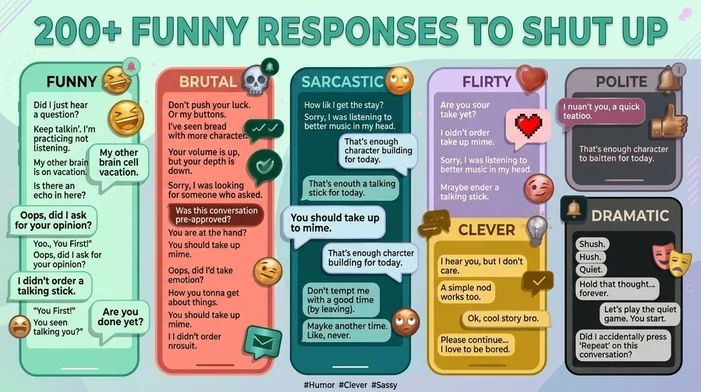
The best funny responses to shut up are witty, sarcastic, confident, and playful comebacks that turn an awkward moment into a laugh. Whether someone says it jokingly or rudely, the right reply can help you respond without losing your cool.
Top 5 replies: “Make me!”, “My mouth has unlimited talking rights.”, “You first, I’m taking notes.”, “Sorry, my mute button is broken.”, “I’ll consider that suggestion never.”
Ever been in the middle of a conversation when someone suddenly hits you with a blunt “Shut up”? Whether it happens in a group chat, during playful teasing with friends, in a text message, or while flirting with your crush, that two-word phrase can leave you wondering what to say next. Sometimes, ignoring it feels boring, but responding with the perfect comeback makes the moment much more entertaining. That’s where funny responses to shut up come in handy. A clever reply can turn an awkward exchange into a hilarious moment without making things unnecessarily uncomfortable.
From playful jokes and sarcastic comebacks to confident and polite responses, having a few lines ready makes conversations easier. So, if you’re looking for something witty to say, these replies will help you find the perfect words for every situation.
1. Funny Responses to Shut Up
Sometimes, the best response to “Shut up” is a joke that catches the other person completely off guard. These funny comebacks keep the mood light while adding a little humor to the conversation.
- My mouth doesn’t come with a mute button.
Example: When a friend jokingly tells you to stop talking during a funny story.
Meaning: Shows that you’re not ready to stop chatting. - Sorry, my subscription includes unlimited talking.
Example: When someone complains about your nonstop storytelling.
Meaning: Turns your talkative personality into a playful joke. - You first, I’m taking notes.
Example: When someone tells you to be quiet during friendly teasing.
Meaning: Gives the other person a humorous challenge. - I would, but my audience deserves better.
Example: When friends interrupt your entertaining explanation.
Meaning: Playfully suggests that people enjoy listening to you. - My silence is currently out of stock.
Example: When someone wants you to stop talking in a group chat.
Meaning: Makes your refusal sound like a funny shopping problem. - Hold on, I’m not finished being interesting.
Example: When someone interrupts your story halfway through.
Meaning: Shows that you want to finish what you’re saying. - That’s a lot of attitude for someone listening to me.
Example: When a friend complains about your constant talking.
Meaning: Lightly teases the person for paying attention. - I can’t hear you over my own brilliance.
Example: During a playful argument with your best friend.
Meaning: Expresses exaggerated confidence for comedic effect. - My talking privileges are permanent.
Example: When someone jokingly asks you to stop commenting.
Meaning: Shows that you have no intention of giving up your humor. - Sorry, the podcast is still recording.
Example: When you’re telling a long story and someone interrupts.
Meaning: Compares your conversation to an ongoing entertainment show. - Did you just try to pause my personality?
Example: When someone tells you to quiet down at a party.
Meaning: Makes fun of the idea that your personality has an off switch. - I would be quiet, but then who would entertain you?
Example: When a friend playfully complains about your jokes.
Meaning: Suggests that your conversation makes their day more interesting.
2. Brutal Responses to Shut Up
When someone says “Shut up” with a rude attitude, a sharp comeback can help you stand your ground. These responses are direct, confident, and slightly cutting without becoming unnecessarily offensive.
- Respectfully, earn the authority first.
Example: When someone tries to control your conversation without a reason.
Meaning: Reminds them that respect works both ways. - Your opinion doesn’t come with a remote control.
Example: When someone repeatedly tells you what to do.
Meaning: Shows that their comments cannot control your behavior. - I’ll stop when your attitude improves.
Example: When someone speaks to you disrespectfully.
Meaning: Makes it clear that their tone needs adjusting. - You can disagree without being disrespectful.
Example: During an argument that starts getting personal.
Meaning: Sets a boundary while keeping your response mature. - That’s an interesting way to admit you have no argument.
Example: When someone interrupts because they cannot answer your point.
Meaning: Suggests that their response lacks substance. - Try having a conversation instead of giving orders.
Example: When someone uses a commanding tone with you.
Meaning: Encourages respectful communication. - Your volume isn’t a valid argument.
Example: When someone raises their voice to silence you.
Meaning: Reminds them that being loud doesn’t make them right. - I didn’t realize you were in charge of my vocabulary.
Example: When someone acts like they control what you can say.
Meaning: Challenges their unnecessary authority. - A little respect would make your point stronger.
Example: When someone makes a rude comment during a discussion.
Meaning: Calls attention to their poor attitude. - Don’t confuse confidence with permission to be rude.
Example: When someone mistakes their arrogance for confidence.
Meaning: Separates self-assurance from disrespectful behavior. - If you have a point, make it without the attitude.
Example: When a disagreement turns into personal attacks.
Meaning: Asks for a meaningful conversation instead of insults. - I’ll listen when you learn how to speak respectfully.
Example: When someone repeatedly talks down to you.
Meaning: Establishes a clear boundary about acceptable communication.
3. Sarcastic Responses to Shut Up
A little sarcasm can make an ordinary comeback unforgettable. If the conversation is playful and both people enjoy teasing, these witty responses add just the right amount of attitude.
- Oh, what a fascinating contribution to the conversation.
Example: When someone interrupts your explanation with “Shut up.”
Meaning: Sarcastically points out how unhelpful their comment is. - Thank you for your unsolicited silence advice.
Example: When someone gives you unnecessary instructions.
Meaning: Makes fun of their attempt to control the conversation. - I’ll file that under things I won’t be doing.
Example: When a friend tells you to stop talking.
Meaning: Shows playful disagreement with their request. - Was that your best conversation starter?
Example: When someone opens a discussion with a rude comment.
Meaning: Questions their lack of conversational creativity. - Wow, such beautiful manners.
Example: When someone rudely interrupts you in public.
Meaning: Highlights their lack of politeness through sarcasm. - I’ll be quiet when the sun forgets to rise.
Example: When your friends tease you about talking too much.
Meaning: Exaggerates your determination to keep talking. - Did you order silence or just make a random request?
Example: When someone unexpectedly tells you to shut up.
Meaning: Makes their demand sound like a strange customer order. - What a lovely way to lose an argument.
Example: When someone resorts to insults during a debate.
Meaning: Suggests that their comment proves they have no better response. - I’ll take that as your daily dose of wisdom.
Example: When someone makes an unnecessary remark.
Meaning: Uses irony to dismiss their unhelpful advice. - Sorry, I didn’t know honesty needed your approval.
Example: When someone wants you to stop expressing your opinion.
Meaning: Defends your right to speak openly. - Should I also ask permission to breathe?
Example: When someone tries to control every little thing you do.
Meaning: Highlights how unreasonable their behavior seems. - Noted, reviewed, and completely ignored.
Example: When a friend jokingly gives you an order.
Meaning: Shows humorous disregard for their suggestion.
4. Flirty Responses to Shut Up
When your crush or partner says “Shut up” while teasing you, you can turn the moment into something charming. These flirty replies add a little romance without making the conversation awkward.
- Make me, cutie.
Example: When your crush playfully tells you to stop teasing them.
Meaning: Turns their comment into a lighthearted flirt. - Only if you promise to kiss me.
Example: When your partner jokingly asks you to be quiet.
Meaning: Suggests a romantic alternative to talking. - You just love hearing my voice.
Example: When someone special complains about your constant chatting.
Meaning: Playfully suggests that they secretly enjoy your attention. - I’d rather hear you say something sweet.
Example: When your crush uses a teasing tone.
Meaning: Encourages them to replace the teasing with affection. - Come closer and say that again.
Example: When you’re flirting face-to-face with someone you like.
Meaning: Creates a playful invitation for a closer interaction. - My favorite person wants me quiet? Impossible.
Example: When your partner jokingly complains about your talking.
Meaning: Shows affection while keeping the mood fun. - I can be quiet, but you’ll miss me.
Example: When your crush says you talk too much.
Meaning: Suggests that your presence is something they enjoy. - Your attention is the reason I keep talking.
Example: When someone special listens to all your stories.
Meaning: Turns the conversation into a sweet compliment. - One kiss and I’ll consider it.
Example: When your partner playfully asks you to stop talking.
Meaning: Makes a romantic suggestion with a humorous twist. - You make silence sound like a difficult option.
Example: When you’re enjoying a playful conversation with your crush.
Meaning: Suggests that talking to them is too enjoyable to stop. - I thought you liked my little speeches.
Example: When someone special teases you about talking nonstop.
Meaning: Invites them to admit that they enjoy your attention. - I’ll whisper instead, just for you.
Example: When you’re flirting with someone during a quiet moment.
Meaning: Adds a gentle and affectionate touch to the exchange.
5. Polite Responses to Shut Up
Not every situation needs a sarcastic comeback. Sometimes, a calm and respectful answer is the smartest way to handle someone who tells you to be quiet.
- I’d appreciate it if you spoke respectfully.
Example: When someone tells you to shut up during a serious discussion.
Meaning: Politely asks them to change their tone. - I’m happy to listen when you’re ready to talk calmly.
Example: When a disagreement becomes heated.
Meaning: Shows that you’re open to communication without accepting disrespect. - Let me finish my thought, please.
Example: When someone interrupts you before you finish speaking.
Meaning: Requests the opportunity to express yourself. - We can disagree without being rude.
Example: When someone becomes disrespectful during a conversation.
Meaning: Encourages a more constructive exchange. - I understand, but I’d like to finish speaking.
Example: During a discussion where someone repeatedly interrupts.
Meaning: Acknowledges their comment while protecting your turn to speak. - There’s no need to speak to me that way.
Example: When someone uses an unnecessarily harsh tone.
Meaning: Sets a polite but firm personal boundary. - Let’s keep this conversation respectful.
Example: When a group discussion starts becoming uncomfortable.
Meaning: Encourages everyone to communicate appropriately. - I hear you, but please hear me too.
Example: When someone dismisses your side of an argument.
Meaning: Requests mutual understanding. - We can discuss this without telling each other what to do.
Example: When someone tries to dominate a conversation.
Meaning: Promotes equal and respectful communication. - I’d rather resolve this than argue.
Example: When a disagreement starts going nowhere.
Meaning: Shows that finding a solution matters more than winning. - Please allow me to explain my point.
Example: When someone interrupts your explanation.
Meaning: Politely asks for space to finish your statement. - Let’s take a moment and start again.
Example: When emotions make a conversation difficult.
Meaning: Suggests a calmer way to continue.
6. Professional Responses to Shut Up
At work, in meetings, or during professional discussions, a sarcastic comeback might create unnecessary problems. These workplace-friendly replies help you maintain your dignity and communicate confidently.
- I’d like to finish my point before we move on.
Example: When a colleague interrupts your presentation.
Meaning: Protects your opportunity to contribute professionally. - Let’s keep our discussion constructive.
Example: When a workplace conversation becomes disrespectful.
Meaning: Redirects attention toward productive communication. - I appreciate your input, but I’d like to complete my explanation.
Example: During a meeting when someone cuts you off.
Meaning: Acknowledges their contribution while requesting time to speak. - Please allow me to share the relevant information.
Example: When a colleague dismisses your explanation.
Meaning: Politely reinforces the importance of your contribution. - I’m open to feedback, not interruptions.
Example: When someone repeatedly cuts you off during a discussion.
Meaning: Separates constructive criticism from disruptive behavior. - Let’s address the issue rather than the person.
Example: When a disagreement becomes personal at work.
Meaning: Keeps the conversation focused on the actual problem. - I believe everyone deserves an opportunity to speak.
Example: When someone dominates a team meeting.
Meaning: Supports fair participation and professional respect. - I’d appreciate a more appropriate tone.
Example: When a coworker speaks rudely to you.
Meaning: Requests professional communication without escalating the issue. - I’m happy to continue when we’re ready for a respectful discussion.
Example: When a workplace disagreement becomes heated.
Meaning: Sets a boundary while remaining professional. - Let’s focus on the facts and find a solution.
Example: When a colleague uses rude comments instead of discussing the work.
Meaning: Brings the discussion back to practical matters. - I have something relevant to contribute here.
Example: When your opinion is dismissed during a meeting.
Meaning: Confidently reminds others that your input matters. - We can discuss different opinions professionally.
Example: When someone reacts negatively to your suggestion.
Meaning: Encourages respectful disagreement in the workplace.
7. Clever Responses to Shut Up
Want a reply that makes people pause for a second before laughing? Clever comebacks use unexpected wordplay, smart observations, and a little creativity to turn an ordinary insult into an entertaining moment.
- Silence is golden, but I’m not accepting donations.
Example: When a friend tells you to stop talking.
Meaning: Uses wordplay to reject their request humorously. - My words have better attendance than your arguments.
Example: During a playful debate with someone who keeps interrupting.
Meaning: Suggests that their arguments are not very convincing. - I would, but my thoughts have already left the building.
Example: When someone catches you talking too much.
Meaning: Uses an unexpected excuse to make them laugh. - You can’t mute a conversation with bad manners.
Example: When someone rudely interrupts your explanation.
Meaning: Highlights that respect matters more than control. - My silence requires a written application.
Example: When friends joke about your nonstop talking.
Meaning: Turns being quiet into a funny administrative process. - I prefer dialogue over dictatorship.
Example: When someone acts like they control the entire discussion.
Meaning: Defends your right to participate in a conversation. - A pause is possible, but a permanent shutdown is unlikely.
Example: When someone asks you to stop talking indefinitely.
Meaning: Suggests that you might pause but won’t disappear from the discussion. - My voice is not a limited-edition feature.
Example: When someone teases you about speaking too often.
Meaning: Makes your talkative nature sound like a special feature. - Interesting request, unfortunately incompatible with my personality.
Example: When a friend tells you to be quiet.
Meaning: Shows humorous resistance to their suggestion. - I believe communication is a two-way street.
Example: When someone tries to silence your opinion.
Meaning: Reminds them that conversations require participation from both sides. - I wasn’t aware we had entered silent mode.
Example: When someone unexpectedly tells you to shut up.
Meaning: Compares their request to changing a device setting. - My thoughts have a mind of their own.
Example: When you’re excitedly sharing several ideas.
Meaning: Suggests that your thoughts keep coming regardless of interruptions.
8. Cute Responses to Shut Up
If the person saying “Shut up” is a close friend, partner, or someone you’re comfortable with, a cute response can keep things sweet. These replies are perfect for playful texts and adorable teasing.
- But I have so many things to tell you.
Example: When your best friend jokingly asks you to stop talking.
Meaning: Shows that you enjoy sharing things with them. - Okay, but only for five adorable seconds.
Example: When someone playfully complains about your chatter.
Meaning: Makes your temporary silence sound cute. - My little mouth has more stories.
Example: When you’re excitedly talking to someone close.
Meaning: Adds an innocent and playful touch to the conversation. - I can’t help it, you’re my favorite audience.
Example: When your partner listens to your everyday stories.
Meaning: Shows affection through a sweet compliment. - Fine, but don’t miss me too much.
Example: When someone jokingly asks you to be quiet.
Meaning: Turns the moment into affectionate teasing. - Can I at least finish my cute little story?
Example: When a friend interrupts your exciting update.
Meaning: Politely asks for a few more moments of attention. - My words just want to be friends with you.
Example: When you’re having a playful conversation with your crush.
Meaning: Makes talking sound like an expression of friendship. - Okay, sending you a silent hug instead.
Example: When someone special wants a break from conversation.
Meaning: Replaces words with a sweet gesture of affection. - I promise my next sentence will be adorable.
Example: When your partner jokes about your endless talking.
Meaning: Offers a cute reason to keep listening. - You’re too cute to listen to my silence.
Example: When you’re teasing someone you have feelings for.
Meaning: Turns the request into a playful compliment. - Just one more tiny sentence, please.
Example: When your friend interrupts your story.
Meaning: Makes your request sound innocent and humorous. - My heart has more to say than my mouth can handle.
Example: When you’re sharing something sweet with your partner.
Meaning: Expresses affection in a slightly dramatic way.
9. Dramatic Responses to Shut Up
Some moments deserve a little theatrical energy. If your friends enjoy dramatic humor, these over-the-top replies can turn a simple “Shut up” into the highlight of the conversation.
- You cannot silence a legend in progress.
Example: When friends jokingly interrupt your story.
Meaning: Makes your ordinary conversation sound historically important. - And just like that, my speaking career faces opposition.
Example: When someone tells you to stop talking in a group chat.
Meaning: Pretends that their comment has ended your imaginary career. - I was born to speak, not to whisper.
Example: When someone complains about your loud storytelling.
Meaning: Exaggerates your love of conversation. - The world isn’t ready for my silence.
Example: When a friend playfully tells you to be quiet.
Meaning: Suggests that your silence would be an extraordinary event. - Tell my unfinished story I loved it.
Example: When someone interrupts you halfway through a dramatic story.
Meaning: Treats your unfinished conversation like a tragic ending. - This is the end of an era.
Example: When you pretend to stop talking after being teased.
Meaning: Makes a small moment sound historically significant. - My final words will be available after the commercial break.
Example: When friends interrupt your entertaining explanation.
Meaning: Compares your conversation to a dramatic television show. - The silence department has rejected my application.
Example: When someone asks you to stop chatting.
Meaning: Turns your refusal into an imaginary official announcement. - I refuse to let my vocabulary die today.
Example: When someone jokingly tells you to shut up.
Meaning: Dramatically celebrates your love of words. - Somebody alert the history books.
Example: When you pretend that being quiet is a major event.
Meaning: Exaggerates the importance of your imaginary silence. - My speech deserves a standing ovation, not an interruption.
Example: When you’re delivering a funny story to friends.
Meaning: Pretends that your conversation is a grand performance. - Let the record show that I was interrupted.
Example: When someone cuts you off during a group discussion.
Meaning: Makes the interruption sound like an official historic incident.
10. Chill and Casual Responses to Shut Up
Not every comment needs a big reaction. Sometimes, a relaxed comeback is enough to keep things moving without turning a small disagreement into a serious argument.
- Okay, I’ll give you a minute.
Example: When a friend jokingly asks for some quiet.
Meaning: Responds casually without taking the comment personally. - Haha, fair enough.
Example: When someone playfully complains about your talking.
Meaning: Acknowledges their comment in a relaxed way. - Alright, your turn to talk.
Example: When you’re having a friendly conversation.
Meaning: Passes the conversation back to the other person. - I’ll save the rest for later.
Example: When someone interrupts your long story.
Meaning: Suggests that you can continue the discussion another time. - No worries, I’m taking a snack break.
Example: When friends tease you about speaking nonstop.
Meaning: Makes your pause sound like a casual break. - Fine, enjoy the peace while it lasts.
Example: When a close friend asks you to stop chatting.
Meaning: Lightly suggests that your talking will resume soon. - Okay, I’ll switch to listening mode.
Example: When someone wants to share their side of the story.
Meaning: Shows that you’re willing to let them speak. - You got it, chief.
Example: When a friend jokingly gives you an instruction.
Meaning: Responds with relaxed and playful agreement. - I’ll take five.
Example: When someone asks for a little break from conversation.
Meaning: Indicates a temporary pause without creating tension. - Fair point, let’s hear your version.
Example: When you’re discussing different opinions with a friend.
Meaning: Opens the door for the other person to contribute. - Cool, I’ll let you have the floor.
Example: During a friendly discussion with several people.
Meaning: Gives someone else a chance to speak. - Alright, peace and quiet incoming.
Example: When someone jokingly asks you to lower the chatter.
Meaning: Promises a short break in a humorous way.
11. Confident Responses to Shut Up
Confidence is about knowing when to speak and when to walk away. These replies help you stand your ground without sounding desperate for the last word.
- I have every right to express myself.
Example: When someone tries to silence your opinion.
Meaning: Affirms your right to participate in the discussion. - I won’t apologize for having a voice.
Example: When someone repeatedly criticizes your willingness to speak.
Meaning: Shows confidence in expressing your thoughts. - You don’t have to agree, but you should listen.
Example: During a disagreement where someone dismisses your point.
Meaning: Encourages mutual respect without demanding agreement. - I’m comfortable speaking my mind.
Example: When someone questions your confidence in a group discussion.
Meaning: Shows that you are not embarrassed by your opinions. - I know when to speak and when to walk away.
Example: When an argument becomes unnecessarily disrespectful.
Meaning: Demonstrates self-control and emotional maturity. - My opinion doesn’t need your permission.
Example: When someone tries to control what you say.
Meaning: Reinforces your independence. - I can be respectful without being silent.
Example: When someone expects you to agree without responding.
Meaning: Explains that politeness doesn’t mean giving up your voice. - I don’t need to shout to make my point.
Example: When another person raises their voice during an argument.
Meaning: Shows calm confidence and self-control. - Being heard isn’t the same as being difficult.
Example: When someone labels you argumentative for sharing your thoughts.
Meaning: Defends your right to contribute. - I choose my words, not my silence.
Example: When someone tries to dictate how you communicate.
Meaning: Shows independence and control over your responses. - Respect goes both ways, remember that.
Example: When someone expects respect but refuses to show it.
Meaning: Reminds them that mutual respect is essential. - I’m not here to disappear from the conversation.
Example: When your contribution is repeatedly dismissed.
Meaning: Communicates that your presence and opinions matter.
12. Short and Witty Responses to Shut Up
Sometimes, fewer words make the biggest impression. These short responses are perfect for text messages, Instagram comments, quick comebacks, and group chats.
- Make me!
Example: When a friend playfully challenges you to stop talking.
Meaning: Turns their request into a humorous challenge. - Not today!
Example: When someone jokingly asks you to be quiet.
Meaning: Shows playful resistance. - Dream on!
Example: When someone thinks they can easily silence you.
Meaning: Suggests that their request is unlikely to happen. - Nice try!
Example: When someone tries to interrupt your story.
Meaning: Shows that their attempt didn’t work. - Absolutely not!
Example: When a friend teases you about your nonstop talking.
Meaning: Rejects the request with playful confidence. - Talk to the hand!
Example: When someone keeps making unnecessary comments.
Meaning: Uses a familiar humorous gesture to dismiss their remark. - After you!
Example: When someone tells you to stop talking first.
Meaning: Turns their instruction back on them. - Mute yourself!
Example: During a friendly argument in a group chat.
Meaning: Returns the joke in a short, playful way. - Try again!
Example: When someone gives you a rude command.
Meaning: Suggests that they need a better approach. - Unsubscribe from me!
Example: When someone jokes about your constant updates.
Meaning: Makes your talking sound like an optional subscription. - That’s a no from me!
Example: When someone tells you to stop sharing your thoughts.
Meaning: Expresses humorous disagreement. - Silence isn’t my aesthetic!
Example: When friends tease you for being talkative.
Meaning: Makes your love of conversation sound like a personal style.
13. Emotional Responses to Shut Up
Sometimes, hearing “Shut up” can genuinely hurt, especially when it comes from someone you care about. These responses help you explain how their words affect you without turning the moment into another argument.
- That actually hurt more than you think.
Example: When someone close to you dismisses your feelings.
Meaning: Honestly communicates emotional disappointment. - I was only trying to share how I feel.
Example: When someone interrupts you during a personal conversation.
Meaning: Explains that your intention was to connect, not argue. - You could have said that more kindly.
Example: When a friend responds harshly to something you say.
Meaning: Expresses that their choice of words was hurtful. - I deserve to be heard, too.
Example: When someone repeatedly ignores your perspective.
Meaning: Reminds them that your feelings deserve attention. - I wasn’t trying to annoy you.
Example: When someone misunderstands your attempt to start a conversation.
Meaning: Clarifies that you had no intention of upsetting them. - I wish you would listen instead of dismissing me.
Example: When someone refuses to hear your side of a disagreement.
Meaning: Expresses a desire for understanding. - It’s okay to disagree, but please don’t disrespect me.
Example: When someone uses harsh words during an argument.
Meaning: Establishes an emotional boundary. - I was hoping for a conversation, not an insult.
Example: When you try to discuss something important with a friend.
Meaning: Explains your disappointment with their reaction. - Sometimes, listening matters more than responding.
Example: When someone interrupts you while you’re sharing a concern.
Meaning: Encourages empathy and patience. - I don’t want to fight; I just want to be understood.
Example: When a personal discussion starts becoming tense.
Meaning: Shows that emotional connection matters more than winning. - Your words matter to me, so please choose them carefully.
Example: When someone you love speaks harshly to you.
Meaning: Explains why their tone affects you. - I’ll give you space, but I hope we can talk later.
Example: When the other person needs a break from a difficult conversation.
Meaning: Respects their space while keeping the door open for communication.
14. Sweet Responses to Shut Up
A sweet comeback can make a teasing moment feel more affectionate. Use these replies with people you trust when you want to replace an ordinary argument with warmth and positivity.
- Only because I like talking to you.
Example: When your partner jokingly asks you to stop talking.
Meaning: Shows that their company makes conversation enjoyable. - Okay, sending positive vibes instead.
Example: When a friend needs a break from your chatter.
Meaning: Replaces talking with a cheerful sentiment. - But sharing my day with you is my favorite thing.
Example: When someone special teases you about your stories.
Meaning: Expresses how much you value your connection. - I’ll save my stories for our next coffee date.
Example: When a friend playfully asks you to pause your updates.
Meaning: Suggests another enjoyable opportunity to spend time together. - You make even my silly stories worth telling.
Example: When your partner listens to your everyday adventures.
Meaning: Makes them feel appreciated. - Fine, but you owe me a smile.
Example: When someone jokingly tells you to be quiet.
Meaning: Turns the moment into a friendly request. - I guess I’ll let your beautiful voice take over.
Example: When you’re playfully teasing your crush.
Meaning: Gives the other person a charming compliment. - I only talk this much around my favorite people.
Example: When a close friend complains about your chatter.
Meaning: Shows that your talkative nature comes from feeling comfortable. - I’ll be quiet, but my affection isn’t going anywhere.
Example: When your partner needs a little peace and quiet.
Meaning: Expresses care while respecting their space. - Your happiness is worth a little silence.
Example: When someone you care about needs a break.
Meaning: Shows that you value their comfort. - Okay, sending you a little love instead.
Example: When a friend playfully asks you to stop chatting.
Meaning: Replaces words with an affectionate message. - You deserve peace, but you also deserve my jokes.
Example: When your best friend teases you about your humor.
Meaning: Combines affection with a little playful confidence.
15. Responses to Shut Up in Texts and Group Chats
A message saying “Shut up” can feel different when it appears on WhatsApp, Instagram, Snapchat, or in a busy group chat. These replies are short, entertaining, and easy to copy into your next conversation.
- Typing is my cardio.
Example: When someone complains about your frequent group chat messages.
Meaning: Makes your constant texting sound like a fitness routine. - Sorry, my keyboard has no off switch.
Example: When a friend asks you to stop sending messages.
Meaning: Blames your nonstop typing on your imaginary keyboard problem. - This group chat needs my entertainment.
Example: When friends tease you for sending too many messages.
Meaning: Suggests that your messages keep the group lively. - Screenshot this moment, I might actually go silent.
Example: When you jokingly promise to stop messaging.
Meaning: Makes your temporary silence sound like a rare event. - My thumbs have their own agenda.
Example: When someone complains about your rapid-fire texts.
Meaning: Humorously suggests that your fingers cannot be controlled. - Don’t worry, the next message is already loading.
Example: When someone tells you to stop sending messages.
Meaning: Teases them about your upcoming response. - Group chat without me? Unthinkable.
Example: When your friends jokingly tell you to be quiet in the chat.
Meaning: Suggests that you’re an important part of the group’s entertainment. - My notifications are just doing their job.
Example: When someone complains about receiving too many messages from you.
Meaning: Makes your texting habits sound like a technical issue. - I’ll stop after one last message.
Example: When someone playfully asks you to stop texting.
Meaning: Offers a humorous promise that might not last. - You can mute the chat, not my personality.
Example: When someone threatens to mute your messages.
Meaning: Shows playful confidence about your online presence. - BRB, entering my silent era for three minutes.
Example: When friends ask you to take a break from messaging.
Meaning: Uses internet slang to announce a temporary pause. - Don’t tempt me, I have memes prepared.
Example: When someone tells you to stop posting in the group chat.
Meaning: Suggests that you have even more entertaining content ready.
Frequently Asked Questions (FAQs)
1. What does “Shut Up” mean?
It usually means stop talking, but the tone can make it playful, rude, or serious.
2. Is “Shut Up” ever a compliment?
Yes, sometimes it expresses surprise or disbelief rather than asking someone to be quiet.
3. How do you respond to “Shut Up” from your crush?
Try a playful reply like “Make me” or “Only if you promise to miss my voice.”
4. What is a polite response to “Shut Up”?
Say, “I’d appreciate it if you let me finish speaking.”
5. How do you respond to “Shut Up” professionally?
Say, “Let’s keep this discussion respectful and constructive.”
6. What if someone says “Shut Up” jokingly?
Use a lighthearted comeback that matches their playful tone.
7. What if you don’t actually mean “Shut Up”?
Clarify your intention by saying, “I’m joking, I didn’t mean to be rude.”
8. Is humor appropriate when someone tells you to shut up?
Yes, when both people are comfortable joking. Avoid humor if the situation is tense.
9. How do you respond without sounding rude?
Stay calm and say, “You can disagree, but please let me finish.”
10. What is a short funny reply to “Shut Up”?
“Make me!” is a quick, playful response for friendly situations.
Conclusion
Knowing how to respond when someone says “Shut up” can make everyday conversations more entertaining and less awkward. Whether you prefer funny one-liners, clever comebacks, flirty replies, or confident responses, the right words can help you express your personality without losing your cool. Remember, not every comment deserves a sarcastic answer. Sometimes, a simple joke works best, while other situations call for a calm and respectful response.
Choose a comeback that matches the moment and feels natural to you. Save this collection, share your favorite replies with friends, and keep a few ready for your next unexpected conversation. After all, a little wit can make any chat more memorable!